
Introduction
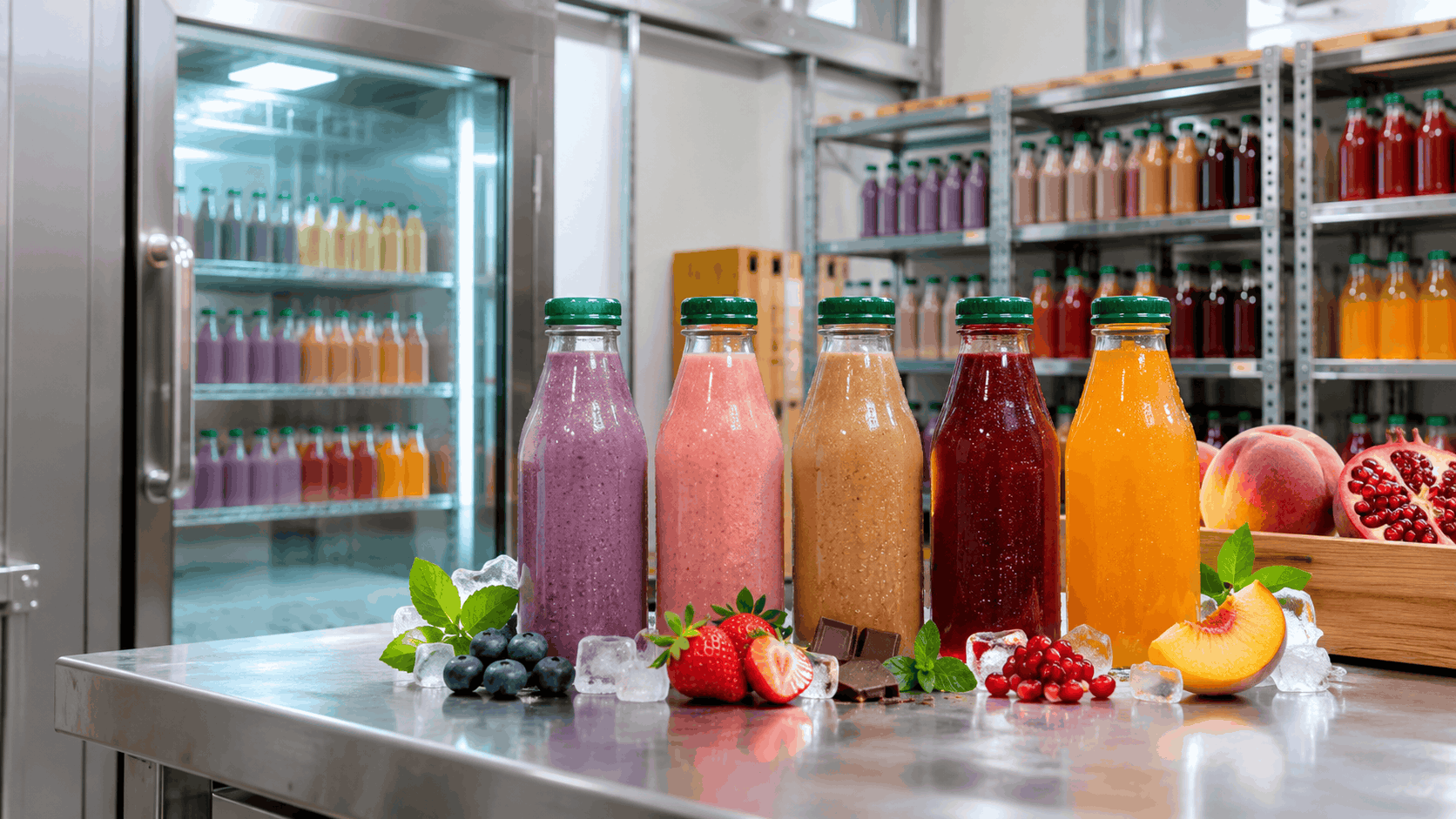
Bottled beverages are widely consumed across India, from refreshing fruit juices and iced teas to flavoured drinks and other ready-to-drink products. However, maintaining their original taste, freshness, appearance, and safety requires proper storage throughout manufacturing, transportation, distribution, and retail. Incorrect storage conditions can affect beverage quality, damage packaging, and reduce the product's expected shelf life.
Effective beverage storage is therefore essential for manufacturers, distributors, retailers, and businesses operating in the food and beverage industry. Understanding temperature requirements, sunlight exposure, packaging conditions, and stock management can help maintain product consistency and deliver a better consumer experience.
Best Storage Practices for Bottled Beverages
Maintain Appropriate Storage Temperature
Temperature is one of the most important factors affecting bottled beverage quality. Excessive heat can accelerate chemical reactions, affect flavour and colour, and potentially compromise product stability. Temperature fluctuations may also affect beverages that require refrigeration.
Manufacturers should establish suitable beverage storage conditions according to the product formulation, processing method, packaging material, and shelf-life validation. Shelf-stable beverages should be stored according to their label instructions, while products requiring refrigeration must be maintained within their specified temperature range.
Protect Bottles from Direct Sunlight
Direct sunlight and excessive exposure to artificial light can affect certain beverage ingredients, particularly those sensitive to light and heat. This may result in changes in colour, flavour, and overall product quality.
Bottled beverages should preferably be stored in clean, shaded, and well-ventilated areas away from direct sunlight. Warehouses, retail storage spaces, and distribution facilities should be designed to minimise unnecessary heat exposure. Proper storage practices help protect product quality before beverages reach consumers.
Choose Clean, Dry, and Hygienic Storage Areas
Maintaining hygienic storage conditions is essential for protecting packaged beverages from external contamination and packaging damage. Storage areas should be clean, dry, adequately ventilated, and protected from dust, pests, chemicals, and excessive moisture.
Beverage cartons and bottles should be placed on suitable racks or pallets rather than directly on the floor. Adequate spacing between products and walls also supports cleaning, inspection, and pest-control activities. These practices are particularly important for beverage manufacturers and distributors managing large quantities of packaged products.
Handle Bottles and Packaging Carefully
Packaging plays an important role in maintaining beverage quality. Glass bottles, PET bottles, and other packaging formats are designed to protect their contents when used and handled under suitable conditions. However, improper handling during loading, unloading, stacking, and transportation can cause leakage, breakage, damaged caps, or compromised seals.
Businesses should use appropriate cartons, protective packaging, and suitable stacking arrangements to minimise physical damage. Before dispatch and retail distribution, bottles should be inspected for visible damage, leakage, and seal integrity. Proper handling helps preserve the product and maintain consumer confidence.
Follow FIFO and FEFO Stock Rotation
Effective inventory management is another important part of beverage storage. FIFO (First In, First Out) and FEFO (First Expire, First Out) are commonly used stock rotation methods in the Indian food industry.
FIFO ensures that older stock is distributed before newer stock, while FEFO prioritises products with the earliest expiry dates. Following these systems helps businesses manage inventory efficiently, reduce avoidable wastage, and prevent expired products from remaining in storage or retail display areas.
Follow Proper Fruit Juice Storage Guidelines
Fruit juice and fruit-based beverages require particular attention because their ingredients and processing methods influence product stability. Temperature, exposure to light, packaging integrity, and storage duration can affect their quality.
Unopened shelf-stable juices should be stored according to the manufacturer's instructions. Refrigerated products must remain under the recommended temperature conditions. Once opened, beverages should be handled according to their label instructions, kept refrigerated where specified, and consumed within the recommended period.
Benefits of Proper Beverage Storage
Following appropriate storage practices helps maintain the expected taste, aroma, colour, and overall quality of bottled drinks. It also supports beverage shelf life management by reducing unnecessary exposure to environmental conditions that may accelerate deterioration.
For manufacturers, distributors, and retailers, organised storage improves inventory management, minimises packaging damage, reduces product wastage, and supports food safety practices. Consistent handling throughout the supply chain also helps maintain brand reputation and consumer trust.
Challenges and Future Trends in Beverage Storage
The Indian beverage industry faces several storage and distribution challenges, particularly during hot weather, long-distance transportation, and seasonal demand fluctuations. Maintaining suitable temperatures, preventing packaging damage, and ensuring proper inventory rotation require consistent monitoring and coordination.
Technology is creating new opportunities to address these challenges. Digital temperature monitoring, improved warehouse management systems, advanced packaging materials, and better supply-chain tracking can help businesses monitor storage conditions and manage products more effectively. These developments are expected to support more efficient beverage distribution and quality management.
Conclusion
Proper beverage storage is essential for maintaining product quality, protecting packaging, and managing shelf life effectively. By controlling temperature, avoiding direct sunlight, maintaining hygienic storage areas, handling bottles carefully, and following FIFO and FEFO practices, businesses can improve storage efficiency and reduce product losses.
At EXIITO, we understand the importance of quality-focused beverage manufacturing, suitable packaging, and consistent product handling. Explore our beverage product range to discover our offerings.
Looking for beverage manufacturing or private-label solutions? Visit EXIITO or contact our team to discuss your business requirements.