
Introduction
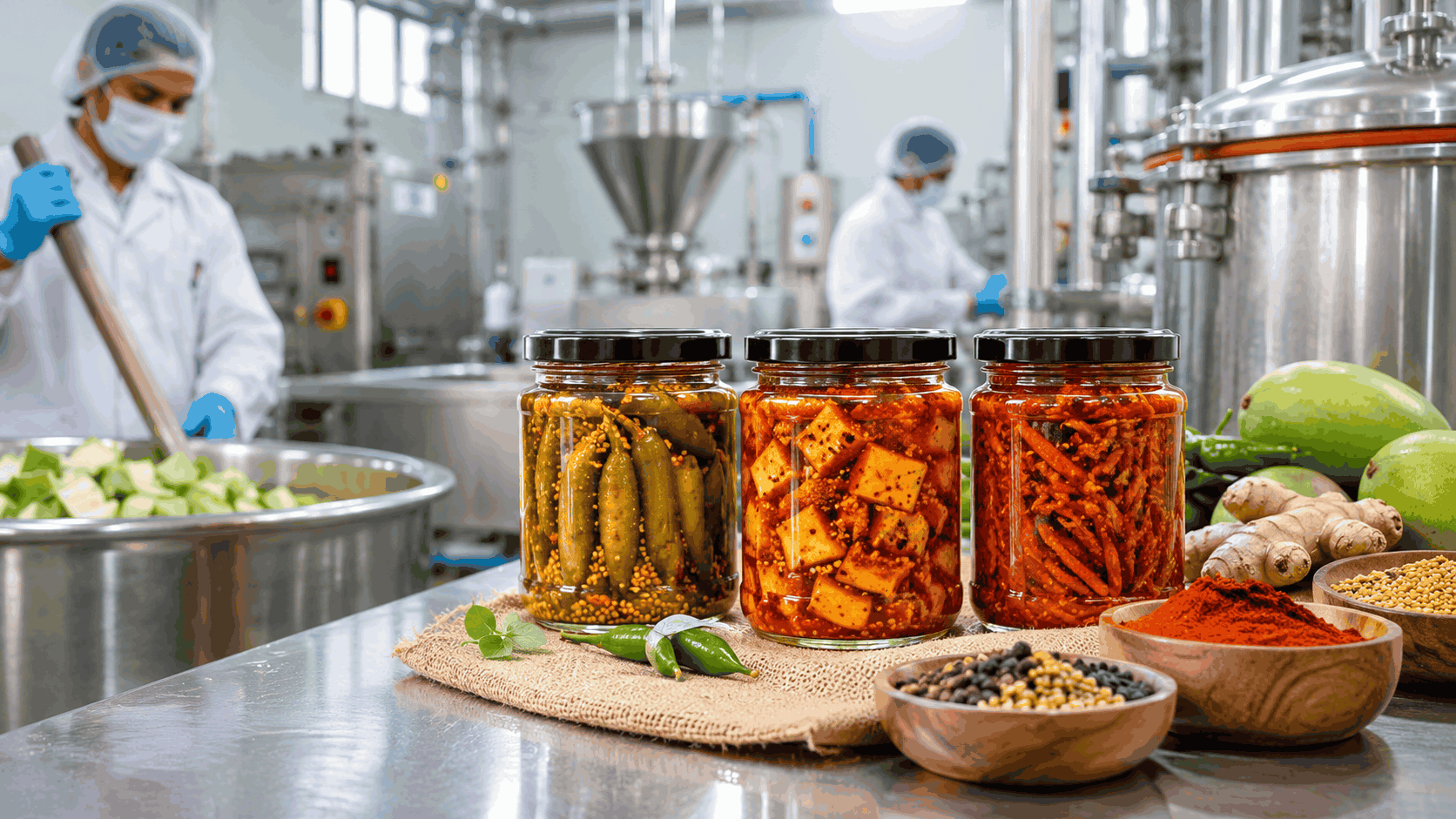
Pickles are popular food products known for their distinctive taste, traditional flavours, and longer storage potential. However, maintaining their quality, texture, flavour, and safety requires proper preservation techniques. In commercial pickle manufacturing, food preservation plays an important role in controlling microbial growth, reducing spoilage, and maintaining product consistency throughout storage and distribution.
From traditional salt curing to acidity control and modern packaging solutions, manufacturers use different preservation methods depending on the ingredients, recipe, processing requirements, and expected shelf life. Understanding these techniques helps food manufacturers produce safe, consistent, and market-ready pickle products.
Understanding Food Preservation in Pickle Manufacturing
Food preservation involves applying suitable techniques to slow down or prevent the growth of microorganisms that can cause food spoilage. In pickle manufacturing, preservation generally relies on controlling acidity, salt concentration, moisture availability, and processing conditions.
Ingredients such as raw mangoes, lemons, chillies, spices, salt, oil, and permitted food-grade acids contribute to the characteristics of different pickle varieties. Their proportions and processing conditions must be carefully controlled to achieve the desired flavour and product stability.
Commercial pickle manufacturing requires more than traditional pickle-making practices. It involves standardized recipes, controlled processing, hygienic handling, and suitable packaging to maintain consistent quality between production batches.
Major Food Preservation Methods Used in Commercial Pickle Manufacturing
Salt-Based Preservation
Salt is one of the traditional ingredients used in pickle processing. It helps draw moisture from vegetables and fruits through osmosis and reduces water availability for certain microorganisms. This supports preservation while contributing to the characteristic taste and texture of pickles.
During mango pickle production, salt is added according to the formulation and processing requirements. Consistent salt measurement and distribution are important because insufficient or excessive salt can affect the final product's taste, texture, and preservation performance.
Acidification and Acidity Control
Acidity is another important factor in food preservation. Many pickles develop their characteristic sour flavour through natural fermentation or the addition of food-grade acids, such as vinegar.
In commercial pickle processing, acidity must be controlled according to the product formulation and applicable food-safety requirements. Measuring pH helps manufacturers monitor acidity and verify that the product meets its validated safety specifications.
For products made through fermentation, appropriate microorganisms, ingredients, temperature, and fermentation time must be managed carefully. Acidification and fermentation are different processes, so manufacturers should select the method suitable for their particular pickle formulation.
Oil-Based Preservation
Oil is commonly used in traditional Indian pickle varieties, including mango pickle. It helps coat ingredients, contributes to flavour, and can reduce direct exposure to air when used appropriately.
However, oil alone does not guarantee food safety or prevent spoilage. The correct balance of salt, acidity, ingredient preparation, moisture control, and hygienic processing remains essential. Manufacturers must also ensure that ingredients are properly prepared and that the formulation is validated for its intended storage conditions.
Controlled Heat Processing
Heat treatment can help reduce microorganisms and improve product stability when the pickle formulation and packaging are suitable for the process.
Commercial manufacturers may use pasteurisation or other validated thermal processing methods depending on the product's acidity, packaging material, and storage requirements. Temperature and processing time must be carefully monitored to achieve the required safety outcome without unnecessarily affecting flavour, colour, and texture.
Not every pickle requires the same heat treatment. Processing conditions should be established through appropriate product testing and technical validation.
The Importance of Hygiene and Food Safety
Food preservation techniques are effective only when supported by proper hygiene and quality control. Contamination during raw material handling, preparation, processing, or packaging can affect product safety and shelf life.
Commercial manufacturers should maintain clean processing equipment, sanitized food-contact surfaces, hygienic employee practices, and controlled storage conditions. Raw materials should be inspected before processing to identify damaged, spoiled, or unsuitable ingredients.
Regular quality checks, batch records, and appropriate food-safety management systems help manufacturers identify potential problems and maintain consistency. These practices are particularly important when producing multiple varieties, such as mango, garlic, chilli, and mixed pickles.
Learn more about EXIITO's food manufacturing approach and quality-focused practices.
Food Packaging and Shelf Life of Pickles
Packaging is an important part of food preservation because it protects the finished product from contamination, moisture, and environmental exposure. Suitable food-grade jars, bottles, containers, and sealed packaging formats can help maintain product quality during transportation, storage, and retail distribution.
Packaging materials must be compatible with the pickle's acidity, oil content, and other formulation characteristics. Proper sealing, clean filling conditions, and suitable storage instructions also contribute to maintaining product quality.
The shelf life of pickles depends on several factors, including ingredients, acidity, salt concentration, processing methods, packaging integrity, and storage conditions. Manufacturers should establish shelf-life claims through appropriate testing rather than relying only on traditional recipes or assumptions.
For businesses exploring packaged pickle products, EXIITO's pickle product range provides examples of different pickle varieties, including mango, garlic, and mixed pickles.
Challenges and Future Trends in Pickle Processing
Commercial pickle manufacturers face challenges such as maintaining consistent taste, managing raw material variations, preventing contamination, and achieving reliable shelf life. Seasonal ingredient availability and differences in moisture content can also influence production quality.
Modern food processing is increasingly focused on improved process monitoring, better packaging materials, efficient quality testing, and standardized production practices. These developments can help manufacturers improve consistency while maintaining the traditional flavours consumers appreciate.
Businesses interested in developing their own packaged food products can also explore EXIITO's private label, white label, and contract manufacturing services.
Conclusion
Food preservation is a fundamental part of successful commercial pickle manufacturing. Techniques such as salt-based preservation, acidity control, oil-based preparation, and validated heat processing help maintain product quality and safety when applied correctly.
Combining traditional pickle-making knowledge with modern food processing, hygienic manufacturing, quality control, and suitable food packaging allows manufacturers to produce consistent products with dependable shelf life. Careful monitoring at every production stage remains essential for delivering safe and quality-focused pickles.
Partner with EXIITO for Food Manufacturing Solutions
Looking for reliable food manufacturing solutions for your brand? EXIITO supports own-brand and partner manufacturing across food categories, including beverages, namkeen, makhana, and pickles.
Explore our pickle manufacturing and product range or discover our food manufacturing services to learn more about partnership opportunities.
Visit EXIITO Beverages to explore our products and manufacturing solutions.