
Introduction
In today's competitive food industry, packaging does much more than protect a product. It is often the first interaction customers have with a food brand and can influence how they perceive its quality, safety, and value. Attractive food packaging helps products stand out on retail shelves, communicate important information, and create a memorable impression.
A well-planned Food Packaging Design combines visual appeal, functionality, product protection, and clear communication. For food manufacturers and emerging brands, the right packaging strategy can strengthen consumer confidence and establish a consistent brand identity. As consumer expectations continue to evolve, packaging has become an important part of building long-term relationships with customers.
How Attractive Food Packaging Influences Consumer Behaviour
Consumers often notice packaging before they examine the product itself. Colours, typography, images, shapes, and overall presentation can attract attention and influence initial perceptions. A clean and professional design may communicate quality, while confusing layouts or unclear information can make customers hesitate.
Attractive Food Packaging should reflect the product's nature and the expectations of its target audience. For example, a premium food product may use elegant colours and minimal graphics, while a traditional food brand may choose visual elements that communicate its regional identity. When packaging matches the product and brand message, customers can develop a stronger connection with the product.
This is why understanding Food Packaging and Consumer Behaviour is important when developing packaging strategies. Brands should consider how customers recognise products, interpret visual elements, and respond to packaging information before finalising a design.
Building a Strong Food Brand Identity Through Packaging
Packaging is one of the most visible elements of a brand's identity. Consistent use of logos, colours, fonts, illustrations, and label layouts helps customers recognise a product across different retail outlets and online platforms.
Effective Food Packaging Design and Branding should communicate what makes a brand different. A consistent design approach across product variants creates a recognisable appearance and makes the brand easier to remember. It also helps businesses maintain a professional image as their product range expands.
For new food businesses, packaging offers an opportunity to introduce their brand personality from the beginning. A carefully designed label can communicate the product category, key features, and brand values without overwhelming the customer. Over time, consistent presentation can contribute to a stronger Food Brand Identity and improve brand recognition.
Important Elements of Effective Packaging Design for Food Products
Good Packaging Design for Food Products requires a balance between appearance and practical performance. Colours and graphics may attract attention, but packaging must also suit the product, protect its quality, and provide a convenient customer experience.
Visual Appeal and Product Presentation
Colour combinations, typography, product images, and layout should work together to create a clear visual message. The design should be easy to understand and appropriate for the intended market. Creative Food Packaging Ideas can help brands differentiate their products, but creativity should not make essential information difficult to find.
Clear Labelling and Product Information
Customers need reliable information before making a purchase. Product names, ingredient details, nutritional information, allergen declarations, net quantity, manufacturing and expiry dates, storage instructions, and other applicable declarations should be presented clearly and accurately. Food labels should also comply with relevant regulatory requirements.
Transparent communication helps customers make informed decisions and supports Consumer Trust in Food Brands. Attractive design should never come at the expense of accurate product information.
Functionality and Product Protection
Packaging must be suitable for the food product's characteristics, storage conditions, transportation, and expected shelf life. The selected material and format should help protect against relevant risks such as moisture, contamination, leakage, or physical damage.
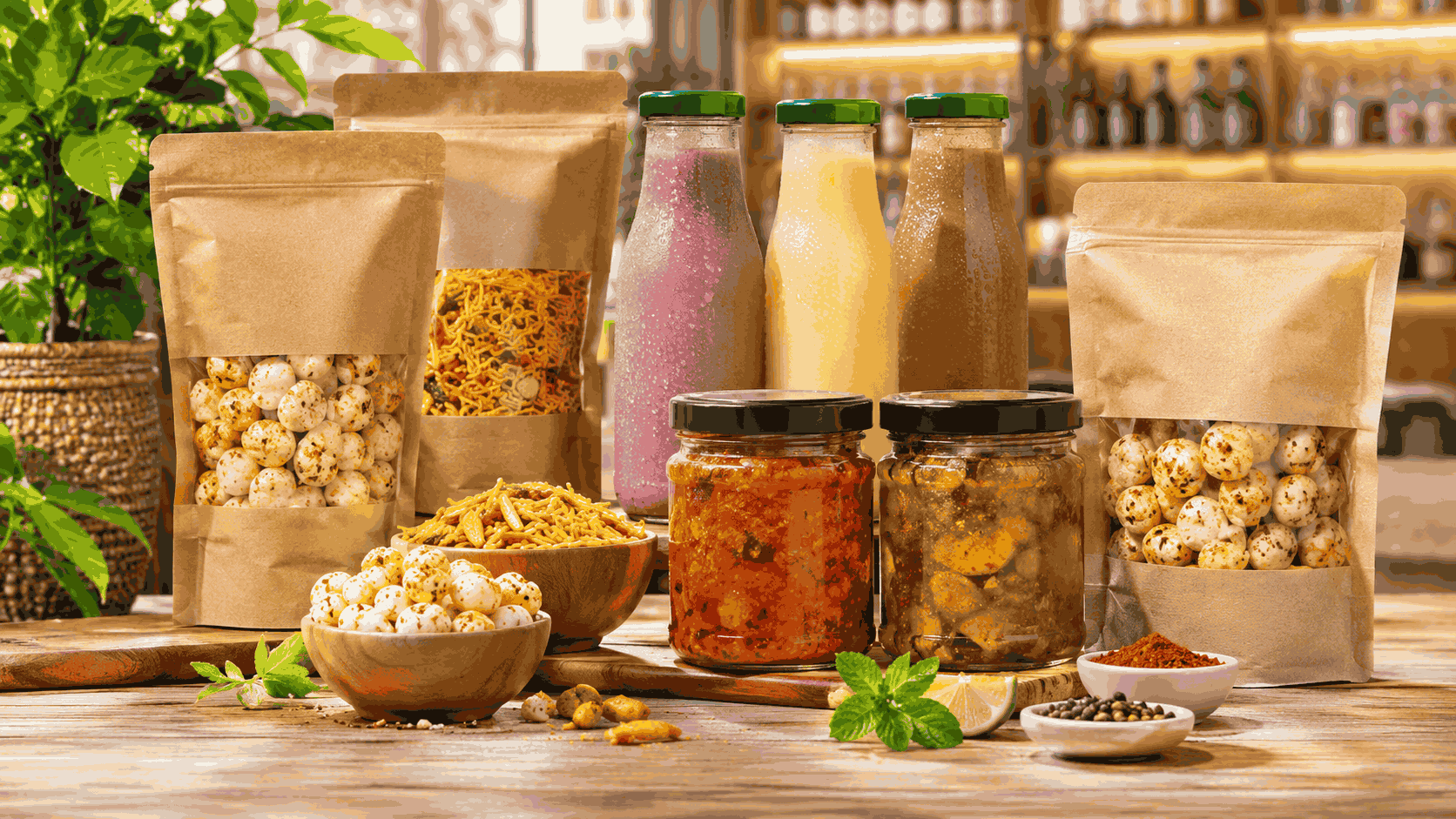
For example, glass jars, plastic containers, pouches, and bottles serve different packaging requirements. Choosing an appropriate format helps maintain product quality while supporting convenient handling, storage, and presentation.
The Role of Sustainable Food Packaging
Environmental awareness is increasingly influencing packaging decisions. Many consumers are paying attention to packaging materials, recyclability, unnecessary layers, and the environmental impact of products they purchase.
Sustainable Food Packaging can support a brand's responsible image when material choices are practical and suitable for the product. Businesses can explore recyclable materials, packaging designs that reduce unnecessary material use, and formats that support efficient transportation.
However, sustainability claims should be accurate and supported by the actual properties of the packaging. Brands should avoid making broad environmental promises without reliable evidence. A responsible approach considers product protection, material performance, customer convenience, and environmental impact together.
Food Packaging Trends in India
The Indian food market includes diverse consumer preferences, regional tastes, and product categories. As competition grows across retail stores and digital platforms, brands are paying greater attention to packaging that combines attractive presentation with practical convenience.
Current Food Packaging Trends in India include clean label layouts, distinctive brand graphics, convenient packaging formats, improved product information, and growing interest in sustainable materials. Packaging suitable for e-commerce and modern retail is also important because products must remain protected during storage, handling, and delivery.
Digital printing and customised packaging options are giving brands more flexibility to develop distinctive product presentations. Nevertheless, businesses should select trends according to their target customers, product requirements, budget, and packaging performance rather than following every new design idea.
Conclusion
Attractive packaging plays an important role in shaping customer perceptions, building brand recognition, and strengthening trust. A successful Food Packaging Design brings together visual appeal, clear labelling, functional performance, and suitable materials. When these elements work together, packaging becomes more than a protective layer; it becomes a valuable part of the brand experience.
Food businesses planning to develop or expand their product range should give packaging the same attention as product quality and formulation. Explore EXIITO's food manufacturing services for support with product development, packaging coordination, and manufacturing requirements. You can also learn about EXIITO's R&D and Quality Control and Quality Assurance processes. For business enquiries, contact the EXIITO team.