
Introduction
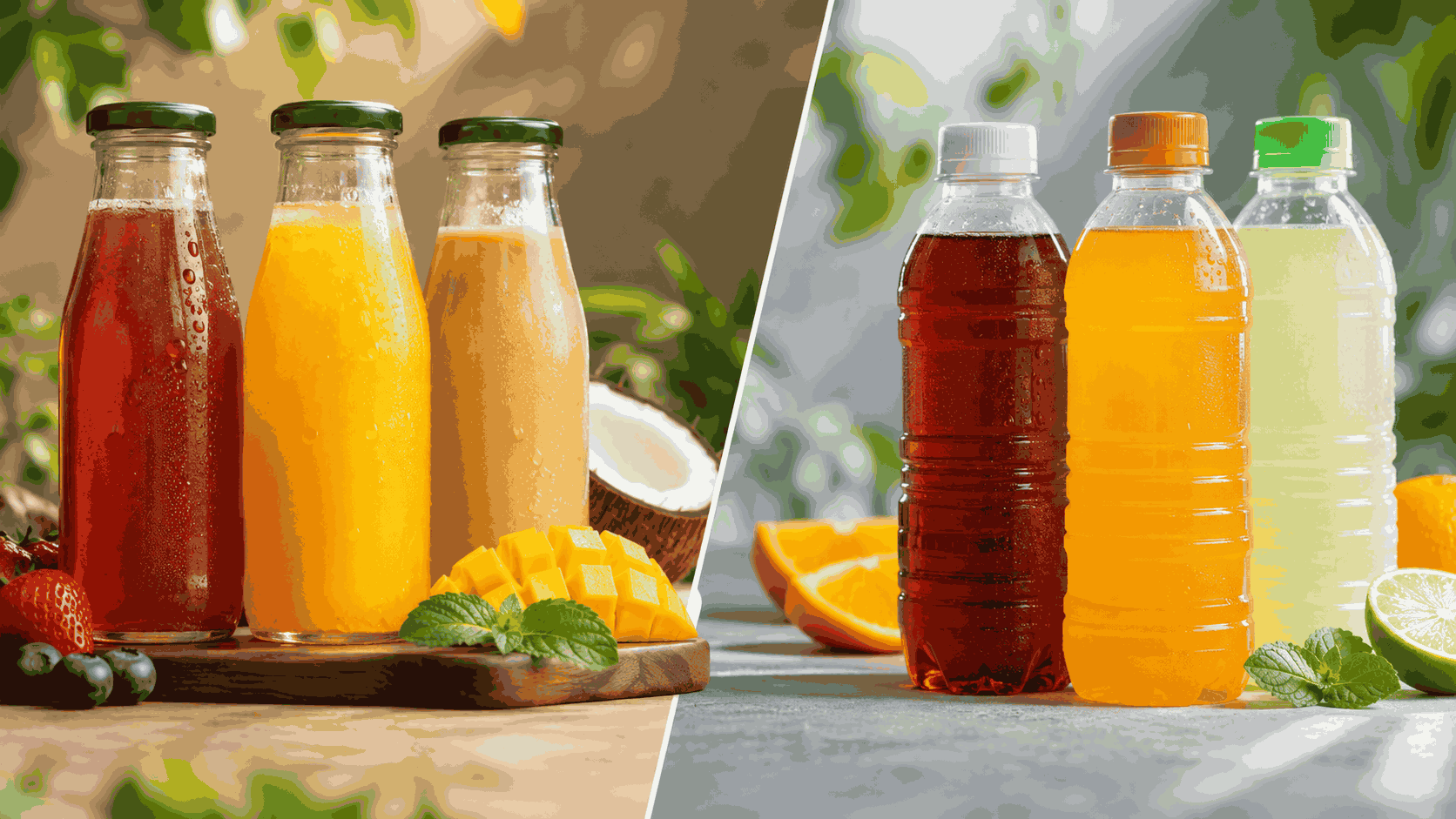
Packaging plays an important role in how consumers experience a beverage. It protects the product, supports storage and transportation, communicates brand identity, and influences purchasing decisions. As India's beverage market continues to develop, manufacturers are exploring different packaging options to meet changing consumer expectations and business requirements.
Among the most commonly used options, glass and plastic bottles offer different advantages. Choosing between them depends on factors such as product characteristics, shelf-life requirements, transportation costs, sustainability goals, and brand positioning. Understanding the differences between these materials helps beverage businesses make informed packaging decisions.
Understanding Different Types of Beverage Packaging
Beverage Packaging involves selecting suitable containers and closures to protect drinks during filling, storage, transportation, and distribution. The choice of material can influence product quality, convenience, appearance, and overall packaging costs.
The most common Types of Beverage Packaging include glass bottles, plastic bottles, metal cans, cartons, and flexible packaging. Each format serves different product categories and manufacturing requirements. However, glass and plastic bottles remain important choices for beverage brands because they offer distinct benefits in terms of protection, design, and usability.
Glass Bottle Packaging: Premium Appearance and Product Protection
Glass Bottle Packaging is widely associated with premium presentation and traditional beverage packaging. Glass is non-reactive under normal food-contact conditions and provides an effective barrier against gases and moisture. It can also help protect beverages from external odours and maintain their original flavour when properly sealed.
Advantages of Glass Bottles for Beverages
Glass Bottles for Beverages are available in different shapes, sizes, and colours, allowing brands to create distinctive product designs. Transparent glass can highlight the beverage's natural appearance, while coloured glass can help protect light-sensitive products when appropriately selected.
Glass bottles are also reusable and recyclable, depending on local collection and recycling systems. However, their weight and fragility can increase transportation, handling, and breakage costs. These factors should be considered when planning large-scale distribution.
Plastic Bottle Packaging: Lightweight and Convenient
Plastic Bottle Packaging is another widely used option in the beverage industry. It offers flexibility in design, lightweight construction, and convenience for manufacturers, retailers, and consumers. Plastic bottles can be produced in different shapes and sizes to suit various beverage categories.
Understanding PET Bottle Packaging
PET Bottle Packaging is commonly used for packaged drinking water, juices, soft drinks, and other beverages. PET, or polyethylene terephthalate, is valued for its lightweight structure, clarity, and impact resistance. Compared with glass, PET bottles are generally easier to transport and less likely to break during handling.
Plastic Bottles for Beverages can also support different closure systems and packaging designs. However, manufacturers must select suitable food-contact materials and ensure that bottles are compatible with the beverage formulation, filling temperature, and storage conditions.
Glass vs Plastic Packaging: Which Is Better?
The comparison of Glass vs Plastic Packaging does not have one universal answer. Both materials can be suitable when selected according to the beverage's requirements.
Glass may be preferable for premium beverages, products requiring strong gas barriers, or brands that prioritise reusable packaging. Plastic, particularly PET, may be more suitable when lightweight packaging, convenient handling, and efficient transportation are important.
Cost is another consideration. Glass bottles can involve higher transportation expenses because of their weight and may require additional care during storage. Plastic bottles can reduce transportation weight, although the final cost depends on bottle design, material specifications, production volumes, and closure requirements.
The environmental impact of each option also depends on how packaging is manufactured, transported, reused, collected, and recycled. Neither material should automatically be considered the more sustainable choice in every situation.
Choosing the Right Beverage Packaging Materials
Selecting suitable Beverage Packaging Materials requires evaluating the product and its manufacturing process. Beverage acidity, ingredients, carbonation, filling temperature, storage conditions, and expected shelf life can all influence material selection.
For example, acidic beverages require packaging materials that are compatible with their formulation. Products filled at elevated temperatures need containers designed and tested for those conditions. Closures and seals must also provide reliable protection against leakage and unwanted contamination.
Food Grade Plastic Bottles must comply with applicable food-contact requirements and be suitable for their intended use. Similarly, glass containers, caps, liners, and other packaging components should be checked for quality and compatibility before commercial production.
Sustainable Beverage Packaging and Future Trends
Sustainable Beverage Packaging is becoming an important consideration for modern brands. Manufacturers are exploring lightweight bottle designs, recyclable materials, reusable containers, and recycled PET where permitted and suitable.
Glass recycling and refill systems can also support resource efficiency when collection and reuse infrastructure is available. At the same time, businesses must consider packaging performance, transportation distances, material recovery, and consumer disposal habits.
Future developments are likely to focus on improving packaging efficiency while maintaining product safety, quality, and convenience. Brands that evaluate environmental performance alongside practical manufacturing requirements can make more responsible packaging decisions.
Conclusion
Choosing between glass and plastic requires balancing product protection, brand positioning, cost, convenience, and sustainability. Glass offers a premium appearance and strong barrier properties, while plastic, particularly PET, provides lightweight and practical packaging options. The right choice depends on the beverage and the manufacturer's requirements.
At EXIITO Beverages, product development and manufacturing considerations are important parts of creating beverage products. Explore EXIITO's manufacturing services and R&D and Quality Control support to learn more. For product development or manufacturing enquiries, contact the EXIITO team.