
Introduction
Pickles are an important part of Indian food culture, with different regions offering unique flavours, ingredients, and preparation methods. From traditional mango and lime pickles to mixed vegetable varieties, these products are enjoyed in households and food businesses across the country. However, maintaining their taste, texture, aroma, and quality during storage and transportation requires suitable packaging.
Pickle Packaging plays an important role in protecting products from contamination, leakage, and unsuitable environmental conditions. The right packaging material helps maintain product quality, supports storage requirements, and gives consumers a convenient and reliable product experience.
Why Packaging Is Important for Pickle Preservation
Pickles commonly contain ingredients such as vegetables, fruits, salt, spices, oil, and acidic components. Their composition makes packaging compatibility particularly important. Unsuitable materials may interact with the product, while poor sealing can allow leakage or unwanted exposure to external contaminants.
Effective Packaging of Pickles helps protect the product throughout filling, storage, transportation, and retail distribution. It also supports hygiene and helps preserve the expected flavour and appearance when combined with appropriate processing and storage practices.
Manufacturers should select packaging according to the pickle's acidity, oil content, moisture level, processing method, and intended shelf life. A suitable packaging system should protect the product without affecting its characteristics.
Understanding Different Pickle Packaging Materials
Selecting the right Pickle Packaging Materials is essential for maintaining product quality. Glass jars, plastic containers, and flexible pouches are commonly considered for commercial pickle packaging. Each option offers different advantages depending on the product and business requirements.
Glass Jars for Pickles
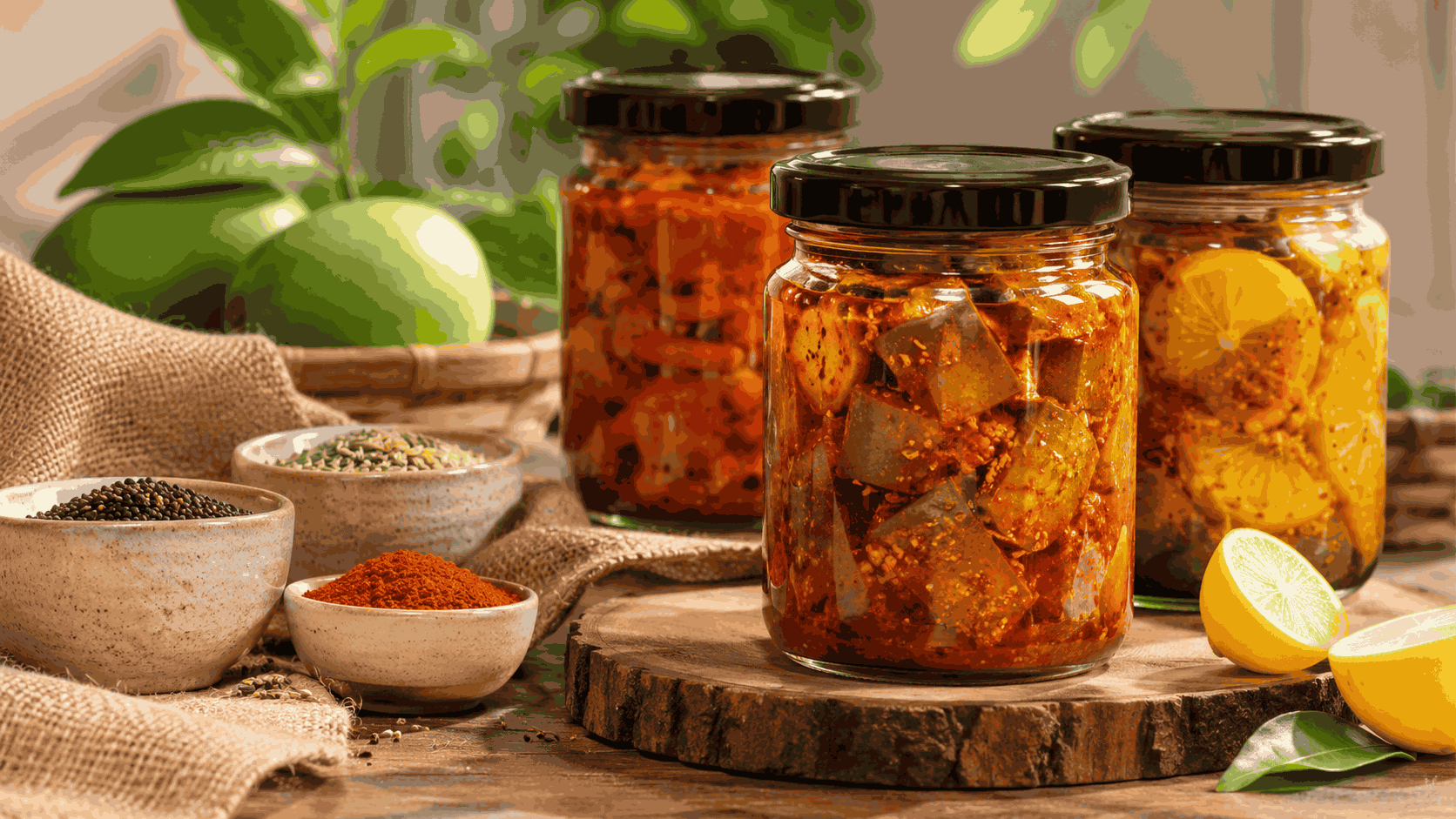
Glass Jars for Pickles are a popular choice for traditional and premium pickle products. Glass is generally non-reactive with acidic foods and provides a strong barrier against moisture and gases when properly sealed. Its transparent appearance also allows consumers to see the product before purchasing.
Glass jars are available in various shapes, sizes, and designs to meet diverse packaging requirements and enhance retail product presentation. However, they are heavier and more fragile than many alternative materials. Manufacturers must also select suitable lids, liners, and sealing systems to reduce leakage and maintain product protection.
Plastic Containers for Pickles
Plastic Containers for Pickles offer lightweight construction and convenient handling. They are available in different shapes and sizes and can be suitable for products requiring practical storage and transportation options.
However, not every plastic material is appropriate for every pickle formulation. The container must be food-grade and compatible with the product's acidity, oil content, and storage conditions. Manufacturers should verify material specifications and suitability before commercial use.
Pickle Pouch Packaging
Pickle Pouch Packaging offers another option for brands looking for flexible and convenient packaging formats. Laminated pouches can be designed with suitable barrier properties to help protect products from external exposure.
These pouches may be used for small retail packs, single-use portions, or larger commercial formats. Their lightweight construction can also support efficient storage and transportation. However, the pouch material, sealing strength, and resistance to oil and acidic ingredients must be evaluated carefully.
Choosing the Right Food Grade Packaging Materials
Food Grade Packaging Materials are essential for protecting consumers and maintaining product quality. Packaging materials that come into contact with pickles should meet applicable food-contact requirements and be suitable for the product's composition.
Manufacturers should consider acidity, oil migration, material compatibility, closure quality, and storage temperature before finalising a packaging option. Packaging components such as lids, caps, liners, and seals also require attention because the complete packaging system determines how effectively the product is protected.
Businesses should conduct suitable packaging compatibility checks and quality inspections before introducing a new container or pouch into commercial production.
How Packaging Supports Product Shelf Life
Food Packaging for Shelf Life involves selecting materials and closures that help maintain product quality during the intended storage period. Pickles may be affected by contamination, leakage, unsuitable temperatures, and exposure to air or moisture.
A properly sealed container can help reduce external contamination and prevent product leakage. Appropriate barrier properties can also support the preservation of flavour, colour, and texture. However, packaging alone cannot guarantee a longer shelf life. The product's formulation, acidity, processing, hygiene, storage conditions, and handling practices are equally important.
Food Preservation and Packaging: Quality Checks Matter
Food Preservation and Packaging work together to maintain product safety and consistency. Manufacturers should inspect containers for defects, check closure and sealing performance, and verify that packaging materials are compatible with the pickle formulation.
Proper filling practices, hygienic production environments, batch identification, and storage instructions further support product quality. Regular checks can help identify issues such as damaged containers, weak seals, and leakage before products reach consumers.
Future Trends in Pickle Packaging Solutions
Modern Pickle Packaging Solutions are increasingly focused on convenience, product protection, and sustainability. Brands are exploring easy-open closures, resealable formats, improved barrier materials, and packaging designs that support efficient storage.
At the same time, recyclable materials and packaging formats that reduce unnecessary material use are receiving attention. Manufacturers need to balance these developments with food safety, material compatibility, and reliable product protection.
Conclusion
Choosing suitable packaging materials is essential for protecting pickles and maintaining their quality during storage and distribution. Glass jars, plastic containers, and flexible pouches each offer different benefits, but the final selection should depend on product composition, compatibility, sealing performance, and shelf-life requirements.
At EXIITO Beverages, product development, manufacturing processes, and quality management are important considerations. Explore EXIITO's manufacturing services and R&D and Quality Control support to learn more about its beverage manufacturing capabilities.