
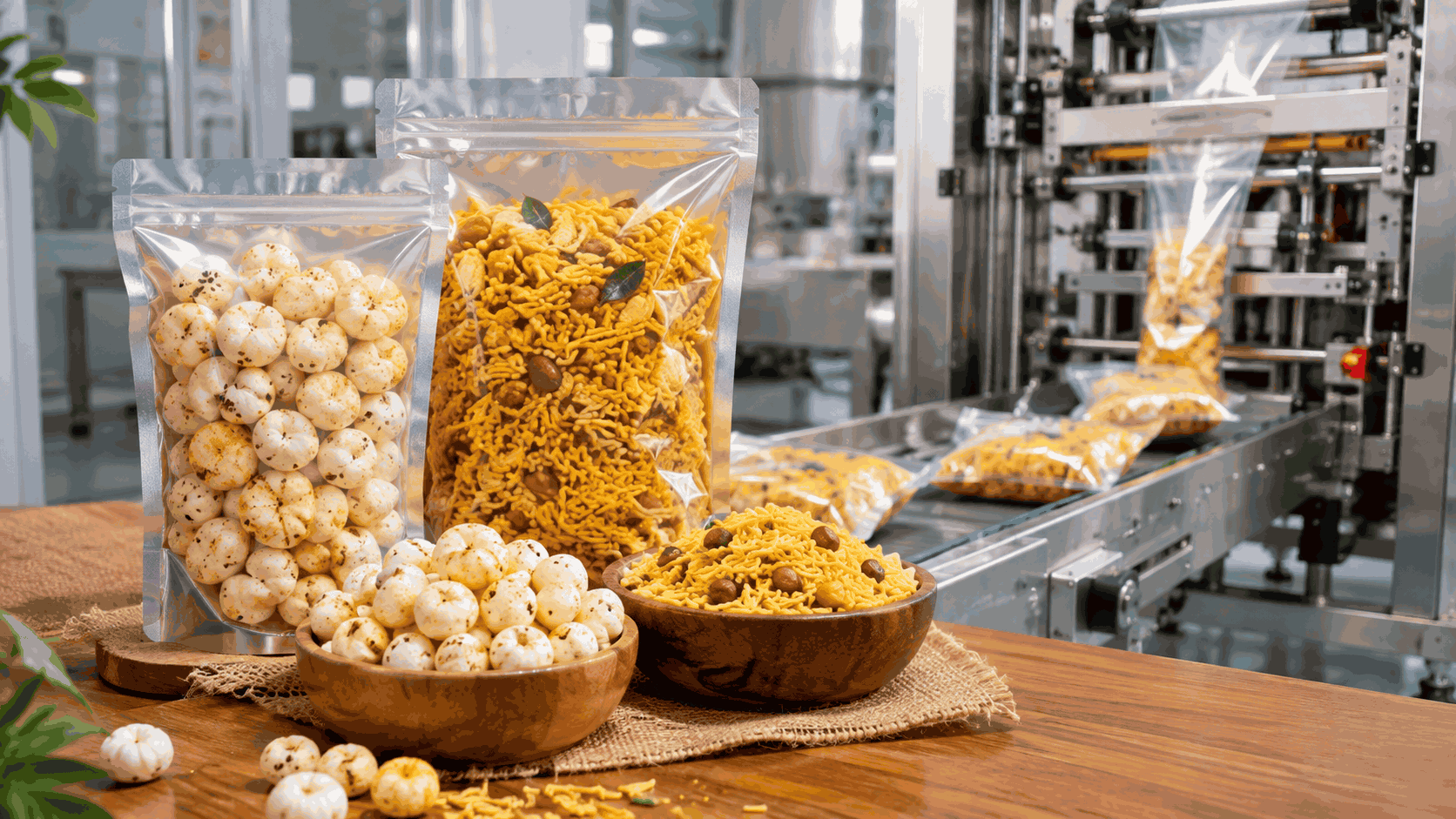
Introduction
The Indian snack industry is evolving as consumers look for convenient, attractive, and well-protected packaged products. Namkeen and makhana have become popular snack choices, creating opportunities for manufacturers to introduce new flavours, packaging formats, and product varieties. However, maintaining freshness, crispness, and product quality during storage and transportation remains an important challenge.
Modern Snack Packaging technologies help manufacturers protect products from moisture, oxygen, contamination, and physical damage. Selecting suitable packaging materials and processes can improve product presentation, support shelf-life requirements, and create a better experience for consumers.
Why Modern Packaging Matters for Namkeen and Makhana
Namkeen and makhana have different product characteristics, but both require packaging that protects their texture and quality. Namkeen may contain oil, spices, and seasoning ingredients, while roasted makhana is generally valued for its light and crispy texture. Exposure to moisture and unsuitable storage conditions can affect the quality of both products.
Effective Snack Food Packaging creates a protective barrier between the product and its surroundings. It also helps prevent leakage, reduces handling damage, and supports product hygiene. For manufacturers, packaging is not simply the final production step; it is an important part of maintaining consistency from the factory to the consumer.
Modern Food Packaging Technology for Snack Products
Advancements in Food Packaging Technology have introduced different materials, sealing methods, and protective packaging systems. Manufacturers can select technologies according to product composition, storage requirements, production capacity, and distribution conditions.
Flexible Packaging for Namkeen and Makhana
Flexible Packaging is widely used for packaged snacks because it can be designed in different sizes, shapes, and material combinations. Pouches, laminated films, stand-up bags, and resealable packs offer practical options for retail products.
For namkeen, suitable laminated packaging can help protect against moisture, oxygen, and external contamination. For makhana, packaging needs to preserve crispness and reduce exposure to humidity. Resealable pouches can also provide convenience for consumers who do not finish the product immediately.
The choice of film structure should depend on the snack's characteristics, required barrier performance, sealing conditions, and expected storage period.
Choosing the Right Snack Packaging Materials
Selecting appropriate Snack Packaging Materials is essential for product protection and packaging performance. Common options include plastic films, multilayer laminates, paper-based materials with protective barriers, and other flexible packaging structures.
Manufacturers should consider moisture transmission, oxygen exposure, puncture resistance, seal strength, printing quality, and compatibility with the product. Namkeen containing oil may require packaging materials with suitable resistance to grease and oil migration. Makhana generally needs packaging that provides effective moisture protection to help maintain its crisp texture.
Good packaging design also considers pack size, ease of handling, transportation, storage, and visual appeal. The right material should balance product protection with practical manufacturing and cost requirements.
Moisture Protection and Nitrogen Flushing
Importance of Moisture Proof Packaging
Moisture Proof Packaging is particularly important for products such as roasted makhana and crispy namkeen. When these snacks absorb moisture, they may lose their desired texture and become less appealing to consumers.
Packaging with suitable moisture-barrier properties helps limit moisture movement between the product and its environment. Proper sealing is equally important because even a high-quality film may not protect the snack effectively if the pack has leaks or weak seals.
Nitrogen Flushing in Food Packaging
Nitrogen Flushing in Food Packaging is a technique used in snack manufacturing to replace some of the air inside a package with nitrogen before sealing. Reducing oxygen exposure can help slow oxidation, which is particularly relevant for products containing fats and oils.
In addition, the gas inside the pack can provide cushioning that helps reduce breakage of delicate products such as makhana during transportation. However, the results depend on packaging design, gas levels, sealing quality, and the product itself. Nitrogen flushing should be combined with appropriate packaging materials and quality checks.
Sustainable Food Packaging and Future Developments
Sustainable Food Packaging is becoming an important consideration for snack manufacturers. Businesses are exploring recyclable packaging structures, material reduction, improved pack designs, and alternatives that use resources more efficiently.
However, sustainability should not come at the expense of product quality. Packaging materials must still provide suitable barrier properties, protect the snack, and maintain food-contact safety. Manufacturers should evaluate recyclability, available waste-management infrastructure, material performance, and total packaging requirements before selecting a solution.
Future developments in snack packaging are likely to focus on improved barrier materials, convenient resealable designs, better sealing performance, and more efficient packaging processes.
Benefits of Effective Packaging Solutions
Well-designed packaging can help maintain freshness, protect texture, reduce product damage, and improve consumer convenience. It also gives brands an opportunity to communicate product information, establish a recognisable identity, and differentiate their products in competitive retail markets.
For manufacturers, suitable Food Packaging Solutions can support consistent production, efficient storage, and smoother distribution. The most effective approach combines appropriate material selection, reliable sealing, hygienic handling, and regular packaging quality checks.
Conclusion
Modern packaging technologies play an important role in protecting namkeen and makhana products from moisture, oxygen, and physical damage. Flexible packaging, suitable barrier materials, reliable sealing, and nitrogen flushing can help manufacturers maintain product quality and deliver a better consumer experience.
At EXIITO Beverages, product development, manufacturing processes, and quality management are important considerations. Explore EXIITO's manufacturing services and R&D and Quality Control support to learn more about its beverage manufacturing capabilities.