
Introduction
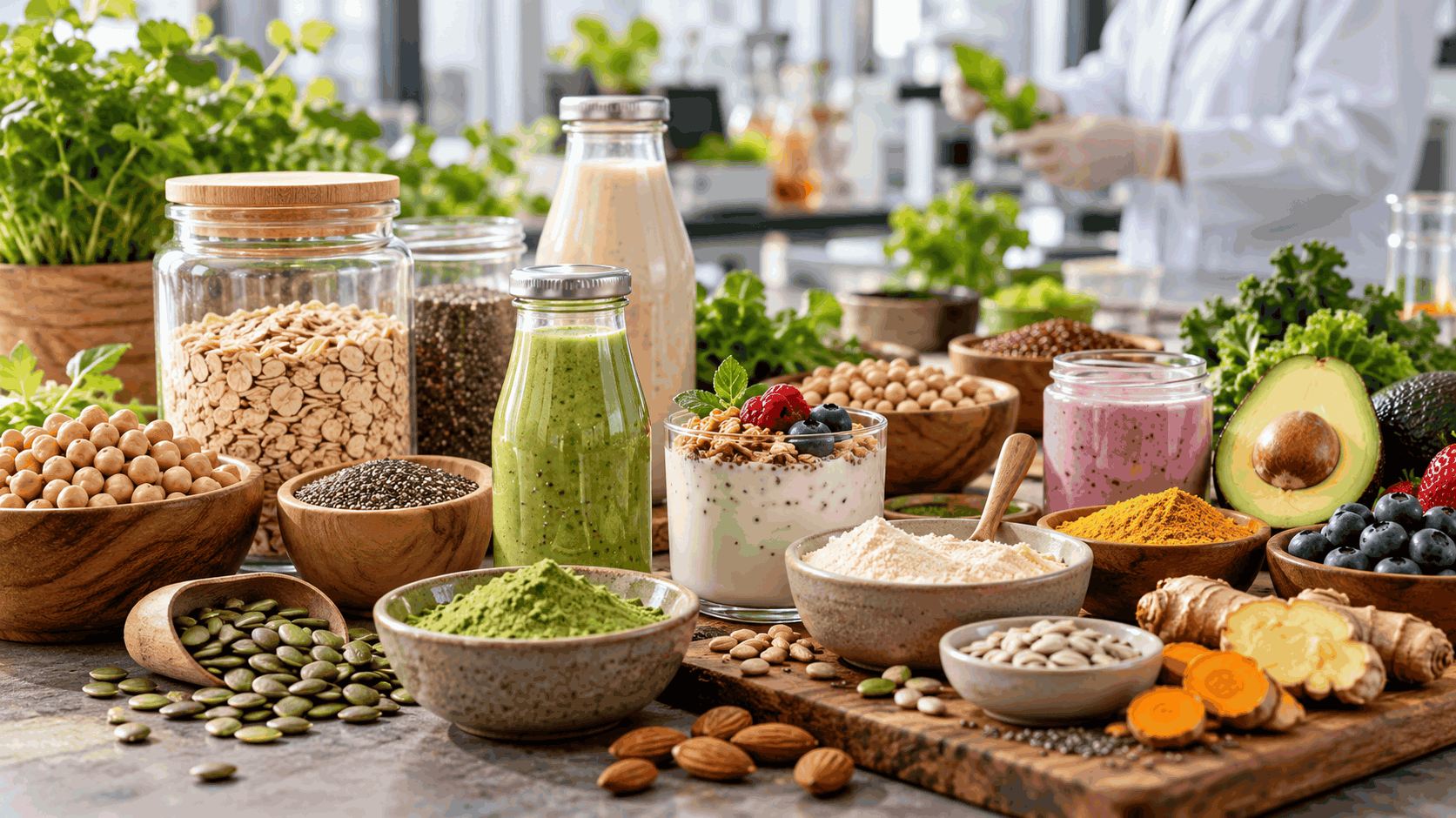
Emerging food ingredients are transforming the way manufacturers develop, formulate, and market food and beverage products. Changing consumer preferences, growing interest in healthier choices, sustainability concerns, and advances in food science are encouraging businesses to explore innovative ingredients that improve flavour, texture, nutritional value, and product quality. From plant-based proteins and natural flavouring agents to functional ingredients and sustainable alternatives, the food industry is experiencing a shift towards more creative and consumer-focused product development.
For food manufacturers, understanding food ingredient trends is essential for staying competitive and identifying new market opportunities. By combining ingredient innovation with effective food formulation and development, businesses can create products that meet evolving expectations while maintaining consistency, safety, and commercial viability.
Understanding the Importance of Emerging Food Ingredients
Emerging food ingredients are ingredients gaining attention because of their nutritional properties, functional benefits, sustainability potential, or ability to support new product concepts. These ingredients help manufacturers explore new recipes, improve existing formulations, and respond to changing market demands.
Modern consumers increasingly look for products that offer more than taste alone. They may consider ingredient transparency, nutritional composition, convenience, environmental impact, and suitability for their dietary preferences when making purchasing decisions. Consequently, manufacturers are exploring innovative food ingredients that support product differentiation without compromising quality or affordability.
Food ingredient innovation also enables companies to experiment with different flavour combinations, textures, colours, and product formats. When carefully selected and tested, these ingredients can contribute to new product launches and help businesses strengthen their position in competitive markets.
Plant-Based Food Ingredients Expanding Product Possibilities
Plant-based food ingredients are gaining attention as manufacturers explore alternatives to conventional animal-derived ingredients. Pea protein, chickpea flour, lentil protein, oat ingredients, and other plant-derived materials can be incorporated into different food formulations depending on their functional properties and intended applications.
These ingredients offer opportunities for developing plant-based snacks, protein-enriched foods, dairy alternatives, and other innovative products. However, their performance varies according to solubility, flavour, texture, processing conditions, and interactions with other ingredients. Manufacturers must evaluate these characteristics before selecting an ingredient for commercial production.
Plant-based ingredients can also introduce formulation challenges, including earthy flavours, changes in texture, and differences in moisture absorption. Careful ingredient selection, sensory testing, and process optimisation help manufacturers address these challenges while developing products that appeal to their target consumers.
Functional Food Ingredients Supporting New Product Concepts
Functional ingredients are becoming more widely used in food product development to deliver targeted nutritional benefits and improve specific product characteristics, such as texture, stability, and overall quality. Depending on the formulation, these ingredients may include dietary fibres, selected vitamins and minerals, probiotics, prebiotics, protein ingredients, and other components with established functions.
Dietary fibres can help improve the nutritional composition of suitable products, while certain stabilisers and emulsifiers support texture and product consistency. Protein ingredients can contribute to protein enrichment, and selected cultures may be used in appropriate fermented food applications.
However, the benefits of functional ingredients depend on the ingredient itself, its quantity, processing conditions, and the finished product. Manufacturers must verify stability, compatibility, safety, and applicable regulatory requirements before making nutritional or health-related claims.
For businesses developing new products, a structured formulation process helps balance functional performance with taste, texture, shelf life, and production requirements. This method encourages product innovation while helping manufacturers ensure that the finished product consistently meets established quality standards and performance requirements.
Natural Food Ingredients and Clean Label Formulations
Natural food ingredients and clean label food ingredients are receiving attention as consumers increasingly examine product labels and ingredient lists. Manufacturers are exploring fruit and vegetable concentrates, herbs, spices, natural colours, and suitable flavouring ingredients to develop products aligned with consumer preferences.
Clean label is not a single universally defined technical category. It generally reflects consumer interest in understandable ingredient lists, transparency, and formulations that avoid certain ingredients perceived as unnecessary. Businesses must therefore define what clean label means for their target market instead of assuming that every consumer has the same expectations.
Replacing an ingredient also requires technical evaluation. For example, changing a colourant, preservative, or stabilising agent may affect appearance, microbial stability, texture, or shelf life. Manufacturers need to assess these effects through controlled trials and appropriate testing before introducing the revised formulation.
By combining ingredient transparency with reliable quality control, food businesses can develop products that respond to market expectations without overlooking food safety or performance.
Alternative Protein Ingredients and Food Innovation
Alternative protein ingredients are creating opportunities for manufacturers interested in diversifying their product portfolios. In addition to established sources such as soy, peas, and pulses, researchers and businesses are investigating proteins derived from fungi, algae, and other emerging sources.
These ingredients may support the development of meat alternatives, protein-rich snacks, specialised food products, and new beverage formulations. Their suitability depends on factors such as amino acid composition, digestibility, flavour, processing behaviour, allergen considerations, and regulatory approval.
For beverage manufacturers, protein enrichment can be particularly challenging because proteins may interact with acidity, minerals, flavours, and other ingredients. These interactions can influence solubility, sedimentation, viscosity, and overall sensory quality. Conducting small-scale trials before full-scale manufacturing helps identify potential issues, validate product quality, and ensure the process is suitable for commercial production.
Successful alternative protein development requires a balance between nutritional objectives, consumer acceptance, ingredient costs, and manufacturing feasibility.
Sustainable Food Ingredients and Responsible Sourcing
Sustainable food ingredients are becoming an important consideration as manufacturers examine resource use, sourcing practices, waste reduction, and environmental performance throughout their supply chains. Ingredients sourced from responsibly managed agricultural systems and suitable by-products of food processing may offer opportunities to improve resource efficiency.
For example, certain fruit and vegetable processing by-products can be evaluated for their potential use as fibre-rich ingredients, natural colour sources, or flavour components. Their suitability depends on composition, safety, contamination risks, processing requirements, and the consistency of available supplies.
Responsible sourcing also requires manufacturers to consider traceability, supplier reliability, transportation, storage, and seasonal availability. An ingredient that appears environmentally beneficial may still present practical challenges if it requires extensive processing or cannot be supplied consistently.
A well-planned sourcing strategy helps businesses evaluate the complete impact of an ingredient rather than relying on marketing claims alone. This makes sustainability a more practical part of food product innovation.
Emerging Food Technology Improving Ingredient Applications
Emerging food technology is helping manufacturers understand ingredient behaviour and develop more consistent formulations. Improved analytical testing, automated processing systems, advanced mixing techniques, and better process monitoring can support ingredient evaluation and production efficiency.
Technologies such as high-pressure processing, fermentation, and specialised drying methods may offer useful applications for particular products when their technical and regulatory requirements are satisfied. These approaches can influence ingredient functionality, microbial stability, texture, and other quality characteristics.
Digital tools can also support recipe documentation, batch monitoring, traceability, and the comparison of formulation trials. By analysing production data, manufacturers can identify variations and make more informed adjustments to ingredient ratios and processing parameters.
Successful product development depends not only on technology but also on effective planning, quality control, and a clear understanding of consumer needs. Its value depends on selecting the right process for the ingredient, validating the results, and maintaining appropriate food safety and quality controls.
Food Formulation and Development: From Concept to Commercial Production
Food formulation and development involves more than combining ingredients to achieve a desirable taste. Manufacturers must consider ingredient compatibility, nutritional composition, processing conditions, packaging, shelf life, production costs, and the expectations of the intended consumer.
The process generally begins with a product concept and defined specifications. Suitable ingredients are selected, laboratory samples are prepared, and different formulations are evaluated for sensory characteristics and technical performance. Successful prototypes are then evaluated through additional trials to determine whether they can maintain consistent quality and performance during large-scale manufacturing.
Shelf-life studies and relevant microbiological, chemical, and physical tests help determine whether the formulation meets the required quality and safety criteria. Packaging compatibility and storage conditions must also be considered because they can affect the stability of the finished product.
Businesses planning to introduce a new product can explore EXIITO's ODM manufacturing services, which support product concept development, recipe formulation, sampling, and commercial production across several food categories. This can be relevant for brands seeking external support to turn an idea into a market-ready product.
Food Manufacturing Trends Shaping the Future
Food manufacturing trends increasingly reflect the need to combine innovation with reliable production, cost control, quality assurance, and consumer relevance. Manufacturers are exploring new ingredient combinations while also investing in better process control and more efficient operations.
Product developers must consider whether an ingredient can be sourced consistently, processed using available equipment, and incorporated into a formulation without creating unnecessary production difficulties. They must also evaluate how changes affect yield, waste, packaging requirements, and finished-product consistency.
Collaboration between ingredient suppliers, product developers, quality teams, and manufacturing partners can make this process more effective. Early testing and clear product specifications reduce uncertainty when a formulation moves from laboratory trials to larger production batches.
For brands that want to introduce new products without establishing their own manufacturing facilities, EXIITO's contract manufacturing solutions provide a relevant starting point for discussing product requirements, production planning, quality expectations, and packaging needs.
Challenges in Adopting Innovative Food Ingredients
Despite their potential, emerging food ingredients can introduce challenges that manufacturers must address before commercialisation. Newer ingredients may have higher costs, limited supplier availability, inconsistent specifications, or unfamiliar processing requirements. These factors can affect product pricing, production schedules, and the ability to maintain consistent quality.
Another challenge is consumer acceptance. An ingredient may offer promising nutritional or functional properties but still be unsuitable for a product if it creates an undesirable taste, aroma, colour, or texture. Sensory evaluation and consumer testing can help determine whether the formulation meets market expectations.
Ensuring food safety and meeting all applicable regulatory requirements are essential for maintaining product quality and building consumer trust.. Manufacturers must verify that ingredients are permitted for their intended use, meet applicable standards, and are supported by suitable documentation. Allergen management, storage requirements, traceability, and accurate labelling must also be addressed.
A systematic approach involves testing new ingredients on a small scale, comparing available options, verifying supplier documentation, and confirming the final formulation's suitability before moving to large-scale manufacturing. This reduces the risk of costly formulation changes after launch.
How Manufacturers Can Prepare for Future Ingredient Trends
Manufacturers can prepare for future food ingredient trends by regularly reviewing consumer preferences, supplier developments, technical research, and regulatory updates. Instead of adopting every new ingredient, businesses should identify opportunities that align with their product portfolio, target audience, production capabilities, and commercial objectives.
Developing a structured ingredient evaluation process helps teams compare functionality, quality, cost, availability, and sustainability considerations. Collaboration with qualified suppliers and food technology professionals can also provide useful technical insights during formulation and testing.
Equally important is the ability to scale a successful formulation. A product that performs well in a laboratory may behave differently during commercial production because of changes in mixing, heating, cooling, filling, or packaging conditions. Pilot trials and documented process controls help bridge this gap.
Companies that combine careful ingredient selection with effective product development and dependable manufacturing practices will be better positioned to respond to changing market needs and explore new opportunities.
Conclusion
Emerging food ingredients are creating new possibilities for food product innovation by helping manufacturers explore plant-based formulations, functional ingredients, clean label approaches, alternative proteins, and more sustainable sourcing practices. However, successful innovation depends on more than selecting an ingredient that is gaining attention. Businesses must evaluate its safety, functionality, cost, availability, regulatory status, and compatibility with the finished product.
A structured approach to food formulation, ingredient testing, and manufacturing validation helps transform promising concepts into reliable commercial products. As consumer expectations and food technologies continue to evolve, manufacturers that prioritise quality, transparency, and practical innovation can build stronger product portfolios.
If your business is planning to develop a new food or beverage product, explore EXIITO's food manufacturing capabilities to learn more about its product categories and manufacturing services. You can also review EXIITO's product range for examples of its own-brand offerings.