
Introduction
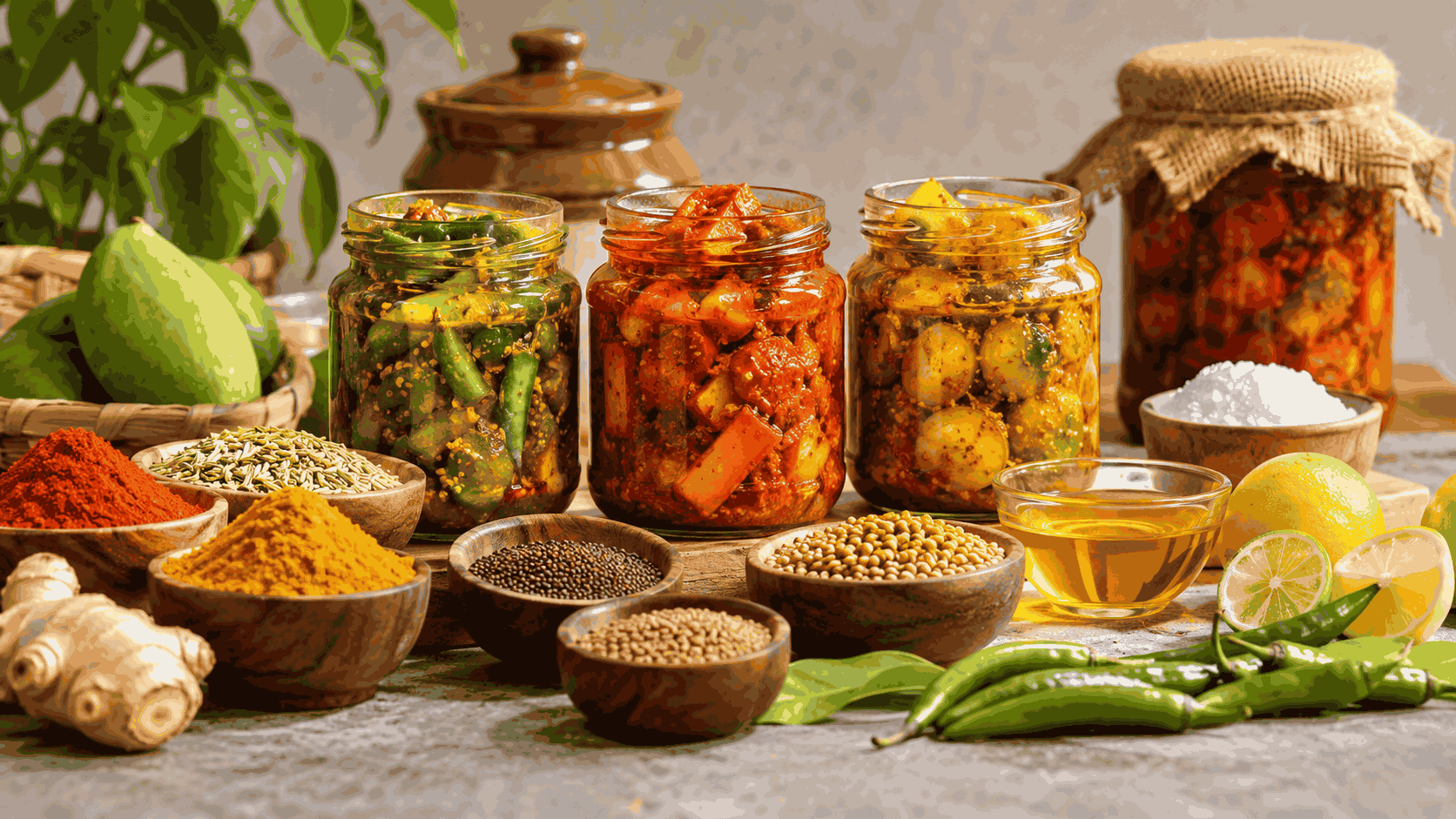
Pickles are an important part of Indian food culture, offering a combination of tangy, spicy, salty, and sweet flavours. From traditional homemade mango pickles to commercially packaged mixed vegetable varieties, their taste and quality depend on selecting the right raw materials and ingredients. Understanding the Ingredients Used in Pickle Manufacturing is essential for producing flavourful, consistent, and quality-focused products.
In modern food production, manufacturers combine traditional recipes with controlled processing methods to meet consumer expectations. Fresh fruits, vegetables, spices, edible oils, salt, and acidic ingredients all contribute to the final product. Selecting suitable ingredients and maintaining their quality throughout production helps manufacturers develop pickles with consistent flavour, texture, and preservation characteristics.
Essential Raw Materials for Pickle Production
The foundation of good pickle production is the quality of its primary raw materials. Mangoes, lemons, chillies, garlic, carrots, green chillies, and other seasonal fruits and vegetables are commonly used in different pickle varieties. Their freshness, maturity, texture, and overall condition influence the final product.
For example, raw mangoes are widely used in traditional Indian pickles because of their natural sourness and firm texture. Lemon and chilli offer distinctive flavour characteristics, while carrots and other vegetables provide variety in mixed pickle recipes.
Before processing, manufacturers inspect, sort, wash, and prepare the selected produce. Proper raw material handling helps remove damaged or unsuitable ingredients and supports better quality throughout the production process.
Businesses interested in exploring different varieties can visit the EXIITO Pickle Product Range to discover traditional pickle products.
Traditional Pickle Ingredients and Their Importance
Traditional pickle recipes rely on carefully balanced ingredients to create their characteristic flavours. Salt, spices, edible oils, and acidic components are important elements in many regional preparations.
Salt contributes to flavour and plays an important role in preservation by influencing moisture availability. Its quantity must be controlled according to the recipe and validated processing requirements.
Spices used in pickle making include mustard seeds, fenugreek, fennel, turmeric, red chilli powder, nigella seeds, and asafoetida. Each ingredient contributes a different flavour, aroma, or colour. Their proportions are adjusted according to the desired regional taste profile.
Traditional recipes may also include jaggery, tamarind, lemon juice, or vinegar. These ingredients contribute sweetness or acidity, creating different flavour combinations. Their selection depends on the type of pickle being manufactured and the desired taste profile.
Role of Edible Oil in Commercial Pickle Manufacturing
Edible oil is an important ingredient in many oil-based pickle varieties. Mustard oil and other suitable edible oils are commonly selected according to the product formulation and regional recipe.
Oil helps distribute spices throughout the mixture, contributes richness, and coats the prepared fruits and vegetables. It also influences the texture, appearance, and overall eating experience of the finished pickle.
In commercial pickle manufacturing, oil quality, storage conditions, and quantity require careful attention. Manufacturers should use suitable food-grade oils and maintain consistent ingredient specifications to support product quality and stability.
Natural Preservatives and Pickle Processing Techniques
Preservation is an important consideration in pickle production. Salt, acidity, and suitable processing methods work together to support product stability. Ingredients such as vinegar, lemon juice, and tamarind may contribute acidity, depending on the recipe.
Some traditional pickles also undergo fermentation or maturation, allowing their characteristic flavours to develop over time. However, preservation cannot depend on ingredients alone. Acidity levels, moisture, hygiene, processing conditions, packaging, and storage must be properly controlled.
Modern pickle processing techniques combine traditional preparation practices with standardised measurements, hygienic equipment, and controlled production conditions. These methods help manufacturers maintain consistency across different production batches.
Quality Control in Pickle Manufacturing
Quality control begins with the inspection of incoming raw materials and continues through every stage of production. Fruits, vegetables, spices, oils, and other ingredients should meet defined quality specifications before being accepted for processing.
During production, manufacturers need to monitor ingredient proportions, acidity, salt concentration, moisture management, mixing conditions, and hygiene practices. Proper cleaning and sanitation of processing equipment also help reduce contamination risks.
Food safety in pickle manufacturing requires attention to ingredient handling, suitable preservation conditions, packaging integrity, and storage requirements. Finished products should undergo appropriate quality checks to verify that they meet established specifications and applicable food safety standards.
Challenges and Future Opportunities in Pickle Production
Manufacturers face several challenges when sourcing and processing pickle ingredients. Seasonal availability, changing raw material prices, variations in fruit quality, and maintaining consistent spice profiles can affect production planning.
Commercial producers can address these challenges through reliable supplier relationships, standardised formulations, careful inventory management, and regular quality inspections. Improved processing methods and appropriate packaging solutions can further support product consistency.
Growing interest in traditional Indian flavours also creates opportunities for developing regional pickle varieties with distinctive ingredient combinations. Products such as mango, garlic, mixed vegetable, and sweet-and-spicy pickles demonstrate the variety possible within this category.
Manufacturers looking to expand their product portfolios can explore EXIITO's manufacturing capabilities for information about food product manufacturing and business partnerships.
Conclusion: Building Quality Pickles with the Right Ingredients
The quality of traditional and commercial pickles depends on selecting the right combination of fresh produce, spices, edible oils, salt, and suitable acidic ingredients. Each component contributes to the flavour, texture, aroma, and preservation characteristics of the finished product.
By combining traditional recipes with modern pickle processing techniques, careful sourcing, and systematic quality control, manufacturers can develop consistent products that meet changing market expectations.
Explore Pickle Manufacturing Opportunities with EXIITO
EXIITO is a food manufacturing company offering products across beverages, namkeen, makhana, and pickles. Businesses interested in developing their own pickle range can explore EXIITO's ODM manufacturing solutions, which support product development, formulation, commercial production, quality checks, and packaging coordination.
Interested in developing your own pickle products? Visit the EXIITO website or contact our team to discuss pickle manufacturing, private label, and other food manufacturing opportunities.