
Introduction
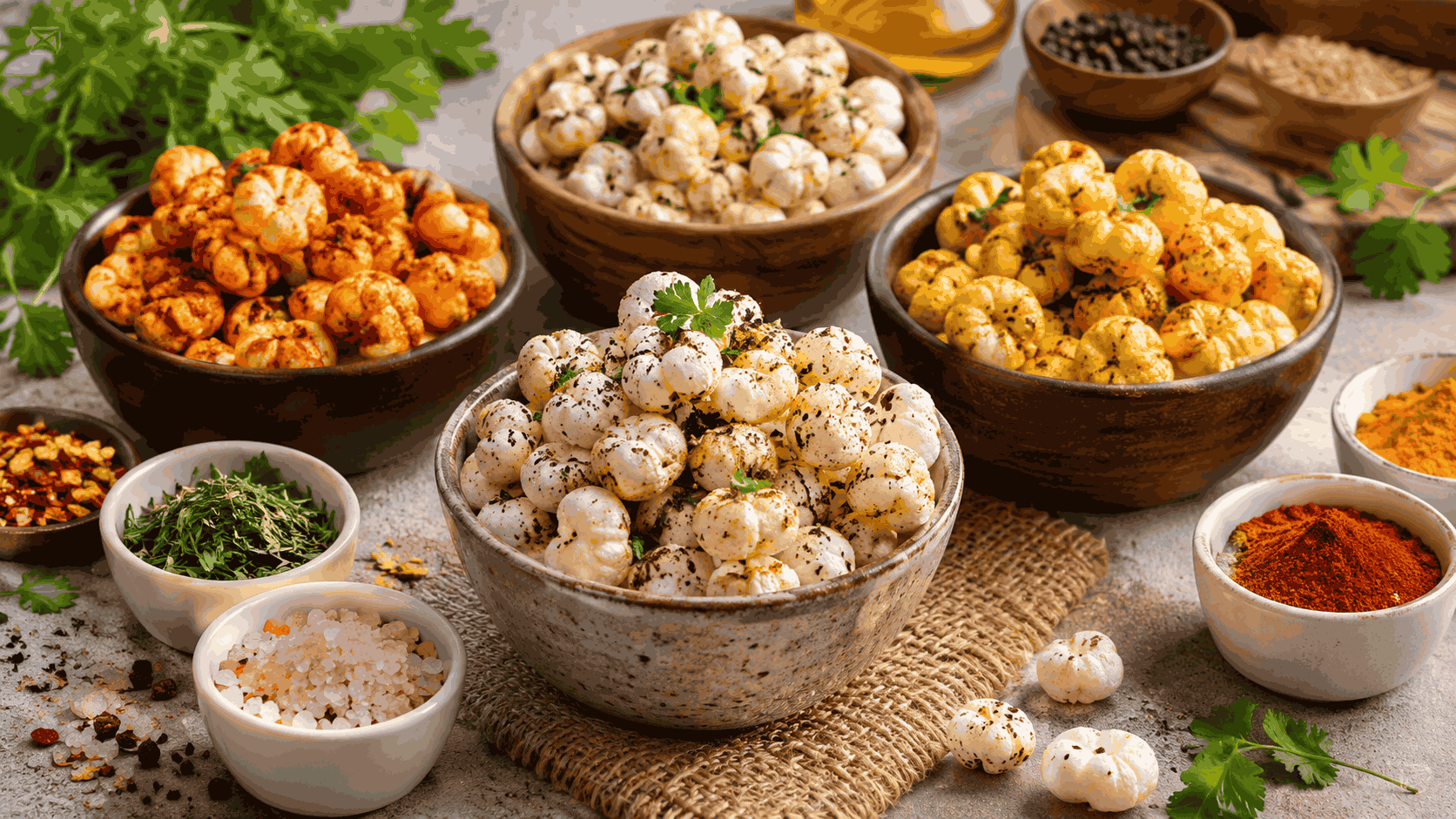
Flavoured makhana has become an interesting option in the modern packaged snack market because it combines the traditional appeal of fox nuts with convenient formats and a variety of taste profiles. From spicy and tangy flavours to mild, savoury, and cheesy seasonings, manufacturers are continuously exploring new ways to make makhana more appealing to different consumer preferences. However, producing consistently flavoured makhana requires more than simply adding spices. It involves selecting suitable raw materials, applying appropriate roasting methods, developing balanced seasoning blends, and maintaining product quality throughout manufacturing.
Understanding the ingredients and flavouring techniques in makhana production is essential for manufacturers looking to develop attractive, consistent, and commercially suitable snack products.
Understanding the Main Ingredients Used in Makhana Production
The quality of flavoured makhana begins with the selection of suitable raw materials. Each ingredient contributes to the product's taste, texture, appearance, and overall eating experience.
Makhana as the Primary Ingredient
Makhana, also known as fox nuts or lotus seeds, is the main ingredient in flavoured makhana manufacturing. The raw material should be selected based on its size, cleanliness, colour, moisture condition, and physical quality. Uniform makhana helps manufacturers achieve more consistent roasting and seasoning results.
Before processing, the makhana is inspected to identify damaged, discoloured, or unsuitable pieces. Proper sorting and cleaning help remove unwanted materials and prepare the product for further processing. Selecting quality makhana is an important step in maintaining the appearance and texture of the finished snack.
Oils and Binding Ingredients
Oils and suitable binding ingredients play an important role in the makhana seasoning process. A controlled application of edible oil can help seasoning powders adhere to the roasted surface. The type and quantity of oil should be selected according to the desired flavour profile, product formulation, and shelf-life requirements.
Manufacturers must maintain appropriate application levels because excessive oil can affect the final texture and create an undesirable greasy appearance. A balanced coating helps distribute seasonings more evenly across the product.
Spices, Seasonings, and Flavouring Ingredients
Spices and seasoning blends are responsible for creating different flavoured makhana varieties. Common ingredients include black pepper, turmeric, chilli powder, cumin, garlic powder, onion powder, dried herbs, and other suitable flavouring components.
Cheese-style, tangy, mint, and regional Indian flavour profiles may also be developed using appropriate seasoning formulations. The selection of ingredients depends on the target market, consumer preferences, and product positioning. Consistent ingredient quality is important for maintaining the expected taste across different production batches.
Flavouring Techniques Used in Makhana Manufacturing
Flavour development requires a controlled approach to ensure that the seasoning complements the natural taste of makhana without overpowering it. Different seasoning techniques can be selected depending on the product formulation and manufacturing scale.
Dry Seasoning Application
Dry seasoning is one of the commonly used approaches in roasted makhana production. In this method, powdered spices and flavouring ingredients are applied to the roasted makhana and mixed until the coating is distributed across the product.
The particle size of seasoning powders, mixing duration, and quantity of ingredients influence coating consistency. Fine and appropriately prepared seasoning blends can support better distribution, while proper mixing helps reduce uneven flavour concentration.
Oil-Assisted Seasoning
Oil-assisted seasoning involves applying a controlled quantity of edible oil before or during the addition of dry seasoning. The oil helps seasoning particles attach to the makhana surface and can improve flavour distribution.
The application method, oil quantity, and mixing conditions must be carefully controlled. If the coating is not properly balanced, some pieces may receive excessive seasoning while others remain lightly coated. Maintaining consistency during this stage is therefore important for commercial makhana manufacturing.
Flavour Blending and Formulation
Flavour blending involves combining different ingredients to create a balanced taste profile. For example, a spicy seasoning may combine chilli, black pepper, and selected aromatic spices, while a tangy profile may include suitable sour flavouring ingredients and complementary seasonings.
Manufacturers often evaluate different ingredient proportions through product trials before finalising a formulation. This helps determine the right balance of saltiness, spice intensity, aroma, and overall flavour. Proper flavour development also allows businesses to introduce multiple product varieties using a consistent manufacturing approach.
Roasting and Processing Methods for Better Product Quality
Roasting is an important stage in the flavoured makhana manufacturing process because it influences crunchiness, texture, and the product's ability to receive seasoning effectively.
Temperature, processing time, and heat distribution should be controlled according to the raw material and equipment being used. Inadequate roasting may result in an undesirable texture, whereas excessive heating can affect colour and flavour.
After roasting, the product may require suitable cooling before seasoning and packaging. Cooling helps manage heat during subsequent processing and supports more controlled seasoning application. Manufacturers should also monitor product handling to minimise breakage and maintain uniformity.
Quality Control and Challenges in Flavoured Makhana Production
Maintaining consistent product quality can be challenging when working with different raw material batches and seasoning formulations. Variations in makhana size, moisture conditions, oil application, and seasoning quality can influence the finished product.
A structured quality control approach should include raw material inspection, ingredient verification, roasting checks, seasoning consistency, and finished-product evaluation. Manufacturers should also monitor moisture levels and packaging integrity because unsuitable storage conditions can affect crispness and product shelf life.
Selecting reliable suppliers and maintaining documented processing specifications can help reduce variations between batches. Appropriate food-safety practices, hygienic handling, and suitable packaging are equally important for protecting product quality.
Future Trends in Makhana Flavour Development
The demand for convenient and interesting snack options is encouraging manufacturers to explore new flavour combinations and improved processing methods. Regional Indian flavours, international seasoning profiles, herb-based blends, and carefully developed spicy and tangy varieties offer opportunities for product innovation.
Manufacturers are also exploring formulation options that respond to changing consumer preferences, including controlled seasoning levels and ingredient transparency. Consistent flavour development, efficient production, and attractive packaging will remain important considerations as the flavoured makhana market evolves.
Conclusion and CTA
Successful flavoured makhana production depends on the right combination of quality raw materials, suitable roasting methods, balanced seasoning ingredients, and controlled flavouring techniques. From selecting makhana to developing seasoning blends and maintaining packaging quality, every stage contributes to the final product.
For businesses planning to introduce or expand their flavoured makhana range, working with an experienced food manufacturing partner can support product development and commercial production. Explore EXIITO's makhana product range and discover manufacturing opportunities for your snack brand. Contact EXIITO to discuss your product requirements and flavour development ideas.