
Introduction
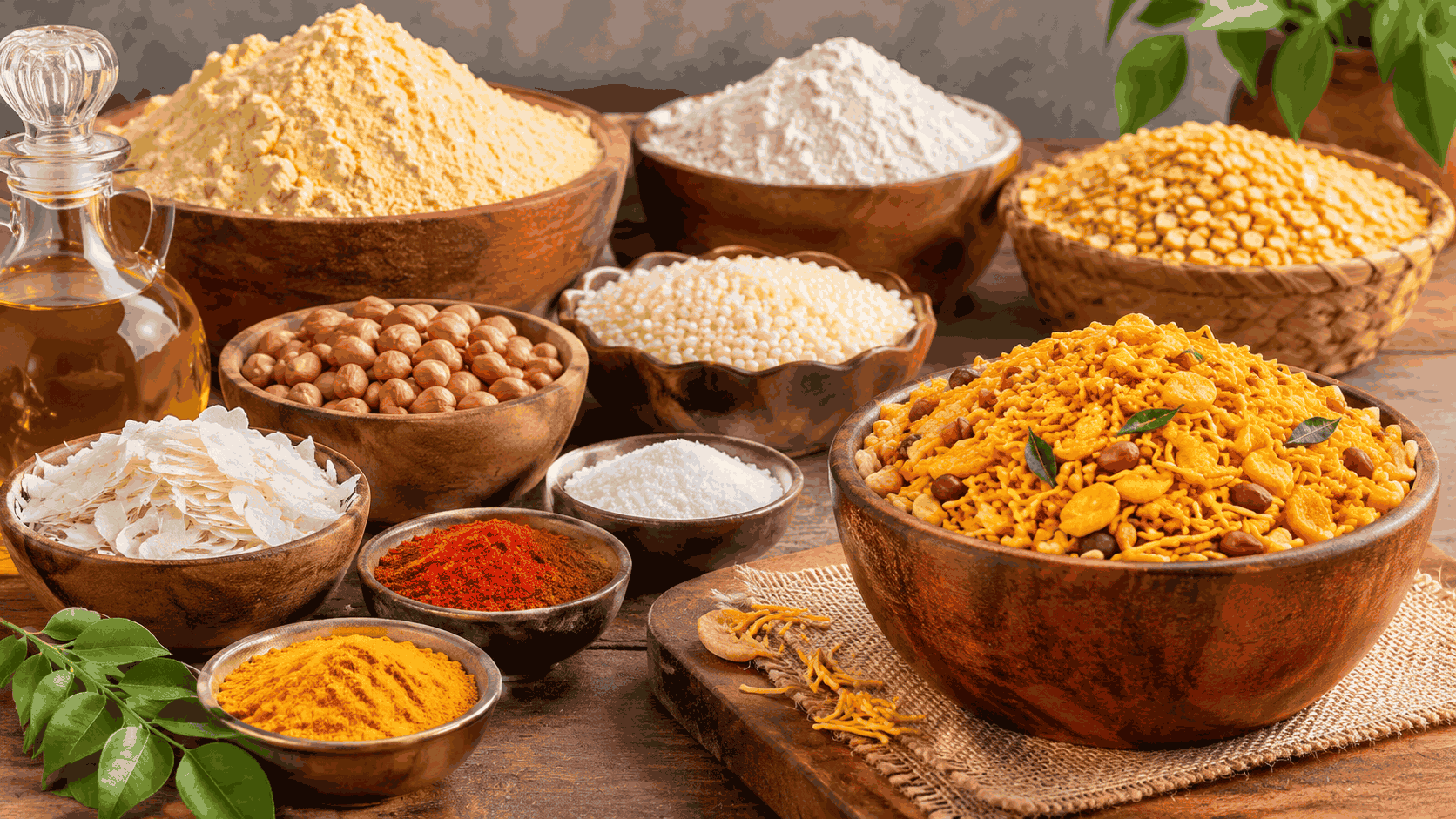
Namkeen is one of the most popular savoury snack categories in India, offering a wide variety of traditional flavours, textures, and combinations. From sev and bhujia to mixtures, gathiya, and regional snack varieties, commercial namkeen manufacturing requires carefully selected ingredients to achieve consistent taste and quality.
The selection of raw materials plays an important role in the overall Namkeen Manufacturing Process. Ingredients influence the flavour, texture, appearance, crispiness, shelf life, and quality of the finished product. For manufacturers, sourcing reliable Raw Materials for Namkeen Production is essential for maintaining production consistency and meeting consumer expectations.
Understanding the Key Raw Materials Used in Namkeen Manufacturing helps food manufacturers make informed purchasing decisions and develop products that meet commercial production requirements.
Besan and Different Types of Flour
Besan, commonly known as gram flour, is one of the primary ingredients used in commercial namkeen manufacturing. It is widely used in products such as sev, bhujia, gathiya, and other traditional Indian snacks. Its quality directly influences the texture, binding properties, colour, and overall characteristics of the finished product.
Manufacturers may also use rice flour, corn flour, wheat flour, and other suitable flour varieties depending on the product formulation. These ingredients help achieve specific textures and product characteristics.
Selecting good-quality Besan and Flour for Namkeen is important for maintaining uniform dough consistency and supporting efficient processing. Manufacturers should evaluate factors such as freshness, moisture content, colour, texture, and suitability for the intended application.
Edible Oil for Frying
Edible oil is another essential ingredient in many commercial namkeen products. It plays an important role in frying, influencing the snack's crispiness, flavour, appearance, and mouthfeel.
The choice of oil depends on the product formulation, frying requirements, processing conditions, and applicable food regulations. Manufacturers should source food-grade oil from reliable suppliers and ensure that it meets the required quality specifications.
Proper oil storage, filtration, handling, and monitoring during frying are equally important. Maintaining suitable frying conditions helps support consistent product quality and reduces undesirable changes in flavour and appearance.
Spices and Seasonings
Spices and seasonings give namkeen its distinctive taste and regional identity. Ingredients such as chilli powder, turmeric, black pepper, cumin, coriander, asafoetida, and dry mango powder are commonly used in different savoury snack formulations.
Commercial manufacturers may also use specially developed seasoning blends to create unique flavour profiles. The selection and proportion of each ingredient depend on the product type and target consumer preferences.
High-quality Spices and Seasonings for Namkeen should have appropriate aroma, colour, freshness, and flavour characteristics. Proper storage is necessary to protect them from moisture, contamination, and loss of aroma.
Salt and Other Supporting Ingredients
Salt is an important ingredient that enhances the overall flavour of savoury snacks. Its quantity and distribution must be carefully controlled to achieve a balanced taste across production batches.
Depending on the recipe, manufacturers may also use ingredients such as starches, raising agents, and other permitted food ingredients to achieve specific product characteristics.
These supporting Namkeen Ingredients should be selected according to the product formulation and applicable food safety requirements. Accurate measurement and controlled mixing help maintain consistency throughout production.
Quality Checks During Raw Material Selection
Quality evaluation should begin before ingredients enter the production process. Commercial Namkeen Manufacturing depends on reliable sourcing, appropriate storage, and systematic inspection of incoming materials.
Manufacturers should assess the physical condition, freshness, moisture levels, packaging integrity, and supplier documentation of incoming ingredients. Raw materials should also be checked for potential contamination and compliance with applicable specifications.
Maintaining suitable storage conditions helps protect ingredients from moisture, pests, oxidation, and other quality-related problems. A structured raw material management system supports better traceability and production planning.
Importance of Raw Materials in Namkeen Product Quality
The quality of raw materials directly influences the final characteristics of namkeen. Flour quality affects texture, edible oil influences frying performance, and spices determine the product's flavour profile.
Inconsistent ingredients can create differences in taste, colour, crispiness, and appearance between batches. Therefore, manufacturers should establish clear purchasing specifications and maintain consistent supplier evaluation practices.
Quality Raw Materials in Food Manufacturing also contribute to better process control, reduced production variations, and improved customer satisfaction.
Challenges and Future Trends in Namkeen Manufacturing
Commercial snack manufacturers face several challenges when sourcing raw materials, including changing ingredient prices, seasonal availability, supplier consistency, and variations in agricultural quality.
To address these challenges, manufacturers are increasingly focusing on supplier management, improved inventory planning, ingredient traceability, and systematic quality monitoring.
Modern Snack Food Processing also encourages manufacturers to explore new flour combinations, innovative seasonings, and alternative ingredient formulations. Growing consumer interest in different flavours and product varieties is creating opportunities for continued innovation in the namkeen industry.
Conclusion and CTA
Selecting the right raw materials is a fundamental part of successful commercial namkeen manufacturing. Besan, flour, edible oil, spices, salt, and supporting ingredients each contribute to the taste, texture, appearance, and consistency of finished snacks.
Manufacturers who prioritise ingredient quality, reliable sourcing, proper storage, and food safety can build more consistent production processes and develop products that meet market expectations. Following appropriate Namkeen Production Standards and maintaining effective quality checks are equally important for long-term manufacturing performance.
Explore EXIITO's Namkeen Product Range to discover its savoury snack varieties. For businesses interested in developing their own snack products, explore EXIITO's manufacturing solutions or contact our team to discuss your requirements.