
Introduction
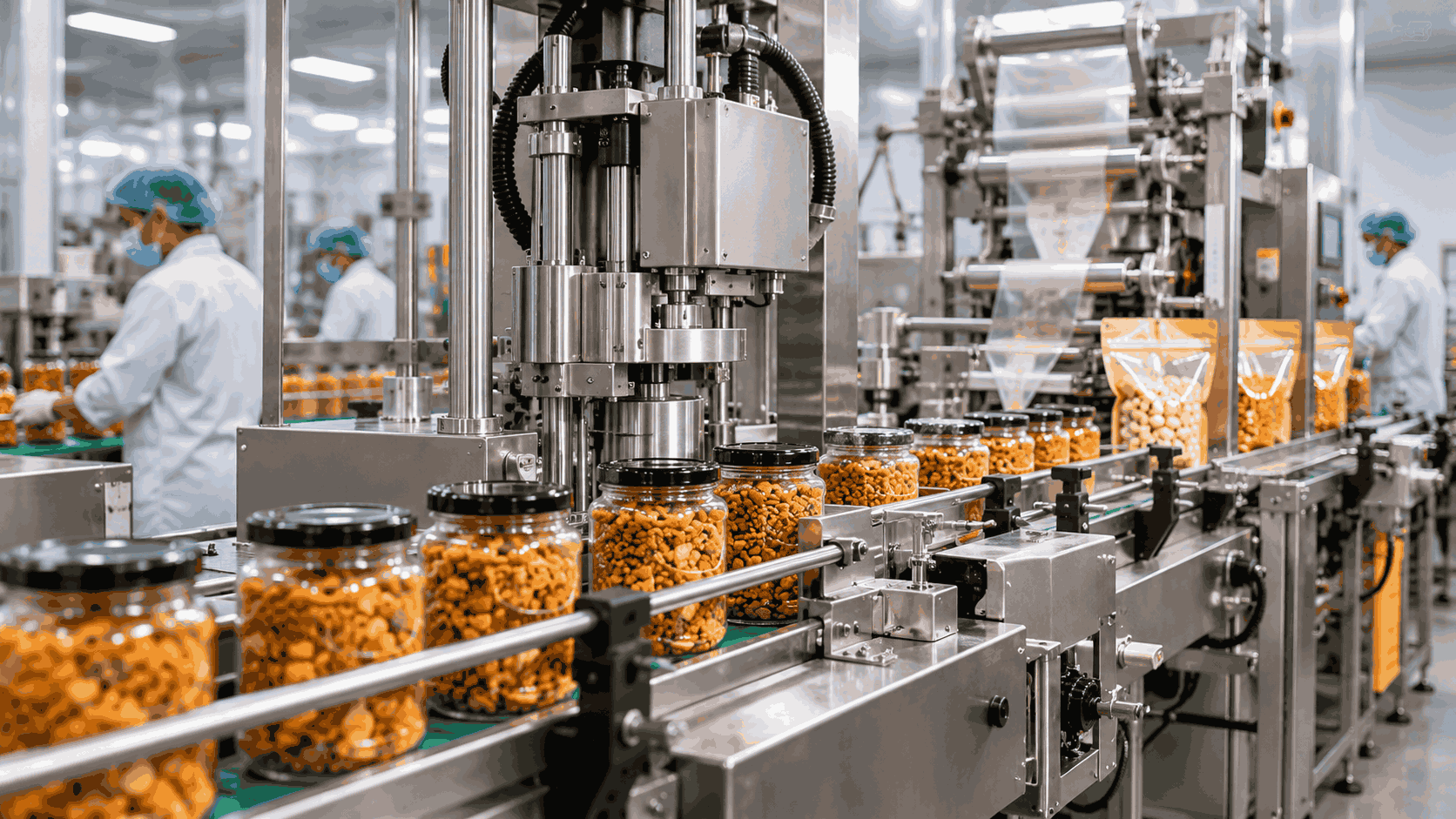
The food manufacturing industry is continuously evolving with advancements in technology, automation, and modern production methods. As consumer demand for packaged food products increases, manufacturers must improve production speed, maintain consistent product quality, and minimise operational inefficiencies. This is where Automated Packaging Machines in Food Industry play an important role.
Automated packaging systems help food manufacturers streamline operations, reduce manual handling, and improve packaging accuracy. From filling and sealing to labelling and final packing, modern machinery supports different stages of the packaging process. By adopting suitable automation solutions, manufacturers can improve productivity, maintain packaging consistency, and manage growing production requirements more effectively.
What Are Automated Packaging Machines in the Food Industry?
Automated packaging machines are specialised systems designed to perform packaging operations with minimal manual intervention. These machines handle processes such as product filling, weighing, wrapping, sealing, labelling, and carton packing.
Modern automated food packaging machines are used across several food categories, including beverages, snacks, dairy products, sauces, pickles, and ready-to-eat foods. Depending on the product and packaging format, manufacturers can select individual machines or integrated automatic packaging systems.
These technologies help businesses create more organised production workflows while maintaining consistent packaging standards.
How Food Packaging Automation Improves Production Efficiency
Faster Packaging Operations
One of the major advantages of food packaging automation is improved production speed. Automated machines can perform repetitive packaging tasks continuously with consistent operating parameters. This reduces the time required for manual filling, sealing, and packing.
For manufacturers handling large production volumes, industrial food packaging machines can help maintain a smoother workflow and support higher output requirements. Faster packaging operations also help businesses manage production schedules more effectively.
Improved Packaging Accuracy and Consistency
Packaging accuracy is essential for maintaining product quality and customer satisfaction. Manual packaging may result in variations in filling quantities, sealing quality, or label placement.
Automatic filling and sealing machines help maintain more consistent packaging operations through controlled settings and repeatable processes. Accurate filling and reliable sealing also help reduce product leakage, packaging defects, and unnecessary material wastage.
Reduced Manual Labour and Operational Errors
Traditional packaging operations often require employees to perform repetitive tasks throughout the production process. Automation reduces the need for continuous manual involvement in suitable operations.
Modern packaging technology allows employees to focus more on machine monitoring, quality inspection, material handling, and production supervision. This can improve workforce utilisation while reducing errors associated with repetitive manual activities.
Better Hygiene and Food Safety Management
Maintaining hygiene is essential in food manufacturing. Automated packaging solutions can reduce unnecessary product handling and limit direct contact between employees and finished products.
When combined with appropriate cleaning procedures, hygienic machine design, and quality control systems, automated packaging equipment can support better food safety practices. Manufacturers must also ensure that machinery and packaging materials are suitable for their specific food products.
Efficient Material and Resource Utilisation
Packaging materials represent an important part of food manufacturing costs. Incorrect filling, damaged packaging, and inconsistent sealing can increase material wastage.
Advanced food packaging systems help improve control over packaging operations, supporting more efficient use of bottles, pouches, containers, films, and cartons. Proper machine calibration and preventive maintenance further contribute to operational efficiency.
Types of Industrial Food Packaging Machines
Different food products require different packaging formats and equipment. Manufacturers commonly use automatic filling machines for liquids, weighing and filling systems for snacks, sealing machines for pouches and containers, labelling machines for product identification, and automated wrapping and carton-packing systems for finished goods.
The selection of food processing and packaging equipment depends on product characteristics, packaging materials, production capacity, hygiene requirements, and business objectives.
Challenges and Future Trends in Packaging Automation
Although automation offers several advantages, manufacturers must consider initial equipment investment, installation requirements, operator training, maintenance, and production-line compatibility. Selecting machinery without understanding actual production requirements can increase operational costs.
The future of food manufacturing automation is expected to involve smarter machinery, digital monitoring, improved sensors, robotics, and data-driven production management. Smart packaging technology and connected equipment can help manufacturers monitor performance, identify operational issues, and improve production planning.
As technology develops, packaging efficiency in food production will increasingly depend on combining suitable machinery with skilled employees, preventive maintenance, and effective quality management.
Conclusion
Automated packaging machines are becoming an important part of modern food manufacturing. By improving packaging speed, accuracy, hygiene management, and resource utilisation, these systems help manufacturers build more efficient production operations.
Investing in suitable automated packaging solutions can support consistent product presentation, organised workflows, and long-term business growth. Manufacturers should evaluate their product requirements, packaging formats, and production targets before selecting the right equipment.
Partner with EXIITO for Food Manufacturing Solutions
EXIITO Beverages Private Limited is a premium food manufacturing company based in Surat, Gujarat, offering manufacturing solutions across beverages, namkeen, makhana, flour, and pickles. The company supports businesses through Private Label, White Label, Contract, Third-Party, OEM, and ODM manufacturing services.
Explore EXIITO's manufacturing services and manufacturing capabilities to learn more about its food production and packaging support.
Looking to develop or manufacture your own food product range? Visit EXIITO Beverages and connect with our team to discuss your requirements.