
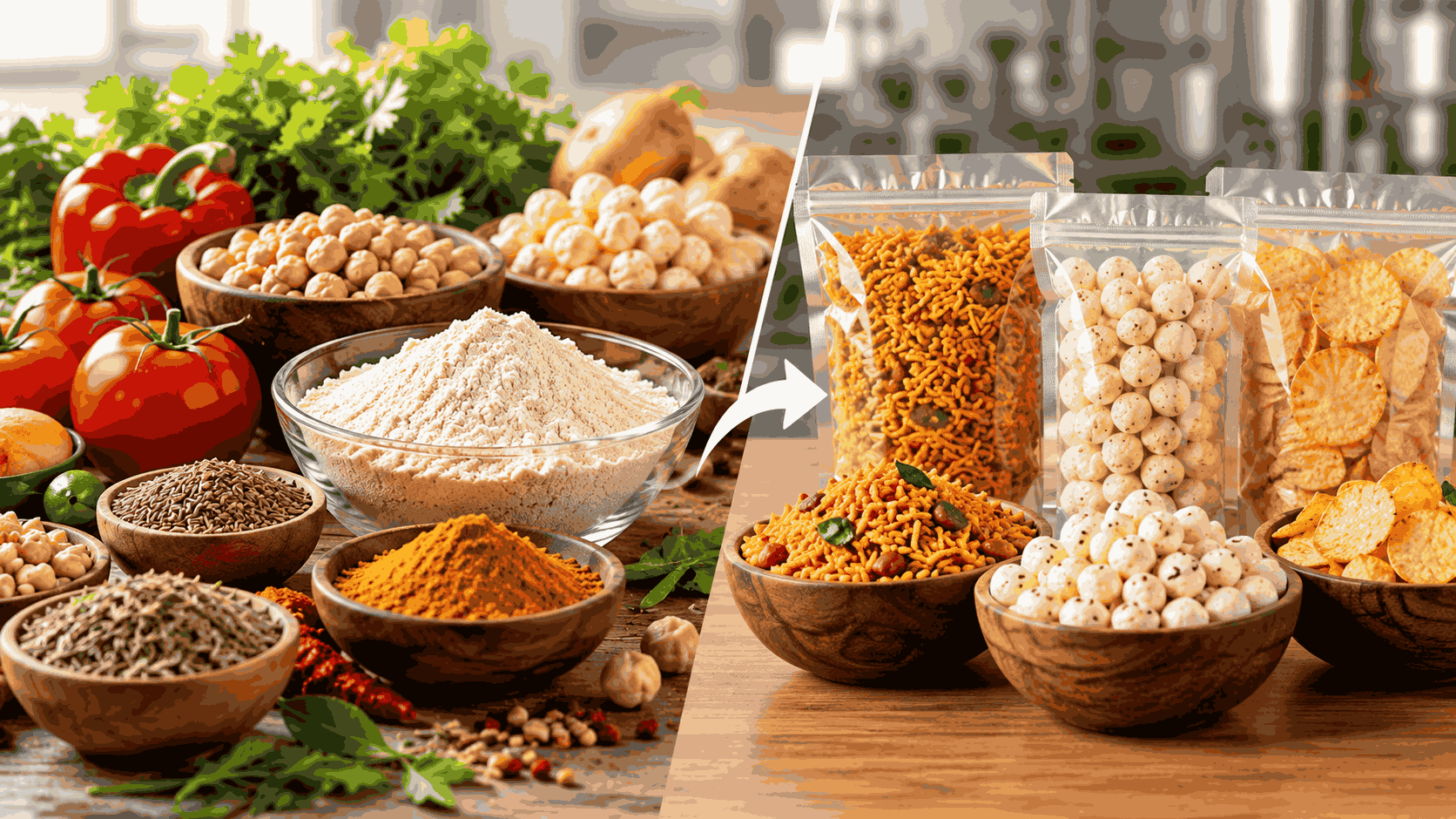
Introduction
The quality of packaged food depends on more than its appearance and packaging. The ingredients used during production play an essential role in determining its taste, texture, freshness, nutritional value, and overall consistency. Whether it is a beverage, snack, pickle, or other processed food product, selecting the right raw materials is an important step in delivering a satisfying consumer experience.
Ingredient Quality in Packaged Food is a major factor influencing product performance and customer satisfaction. Food manufacturers must carefully evaluate their ingredients, maintain appropriate quality standards, and follow controlled manufacturing processes to produce reliable products. As consumer expectations continue to grow, maintaining high-quality ingredients has become an important part of building a successful food brand.
Why Ingredient Quality Matters in Packaged Food Manufacturing
Ingredient quality directly influences the characteristics of a finished food product. The freshness, purity, composition, and suitability of raw materials can affect how a product tastes, feels, and performs throughout its intended shelf life.
For example, high-quality spices can contribute to a balanced flavour profile in namkeen and pickles, while suitable dairy ingredients can improve the creaminess of milkshakes. Similarly, selecting appropriate tea extracts, fruit ingredients, and sweeteners can influence the flavour and overall drinking experience of beverages.
Food manufacturers must establish clear Food Ingredient Quality Standards to evaluate incoming materials. Proper Ingredient Selection in Food Processing helps reduce variations between production batches and supports the development of products that meet customer expectations.
How Ingredient Quality Influences Taste and Texture
Maintaining Consistent Food Taste
Taste is one of the first qualities consumers notice when purchasing packaged food. The quality and composition of ingredients influence flavour intensity, aroma, sweetness, saltiness, and overall balance.
Inconsistent raw materials can create noticeable differences between batches. For instance, variations in spice quality may affect the flavour of savoury snacks, while differences in fruit ingredients can influence the taste of packaged beverages.
Manufacturers can maintain Food Taste and Texture by selecting suitable ingredients, following approved formulations, and evaluating product samples before large-scale production.
Improving Texture and Product Appearance
Texture is another important part of Packaged Food Quality. Consumers expect snacks to have their intended crispness, beverages to maintain their expected consistency, and pickles to have a suitable texture.
The quality of ingredients, including oils, starches, dairy components, and other processing ingredients, can influence these characteristics. Selecting suitable Food Processing Ingredients helps manufacturers achieve the desired product structure and appearance.
Proper formulation and controlled processing also help maintain these characteristics throughout production.
The Role of Raw Material Quality in Food Manufacturing
The Importance of Raw Material Quality begins before the manufacturing process. Ingredients should be evaluated according to their intended application, freshness, specifications, and suitability for food production.
Food manufacturers should establish supplier evaluation procedures and inspect incoming materials before accepting them for production. These checks help identify unsuitable ingredients and reduce the possibility of quality variations.
Effective Food Manufacturing Quality Control also involves monitoring ingredients during storage and handling. Appropriate storage conditions help protect raw materials from moisture, contamination, and other factors that may affect their quality.
At EXIITO, incoming materials and packaging inputs are checked against defined quality parameters before entering production. This supports a systematic approach to manufacturing quality and food safety.
Learn more about EXIITO's Quality Assurance Process.
Maintaining Food Product Consistency Through Quality Control
Food Product Consistency is essential for building consumer trust. Customers expect the same product experience whenever they purchase a particular packaged food item.
Achieving this consistency requires more than selecting good ingredients. Manufacturers must maintain standardised formulations, monitor production parameters, and evaluate finished products against established specifications.
Consistency in Food Manufacturing can be supported through documented procedures, regular quality checks, controlled ingredient measurements, and proper batch records.
EXIITO connects research and development with quality control to support product development, sampling, process monitoring, and finished-product evaluation. Its R&D and Quality Control facilities help align product formulations with manufacturing requirements.
Ingredient Selection and Product Development
Developing the Right Food Formulation
Food Formulation and Development involve selecting ingredients that work effectively together. Manufacturers must consider flavour, texture, stability, processing requirements, and the intended product characteristics.
An ingredient that performs well in one product may not be suitable for another. Therefore, manufacturers need to evaluate ingredient compatibility and conduct product trials before finalising a formulation.
Meeting Food Quality and Safety Requirements
Food Quality and Safety should remain priorities throughout the manufacturing process. Suitable ingredients, hygienic handling, supplier verification, and appropriate quality checks contribute to a controlled production environment.
Following relevant Food Product Quality Standards and applicable food safety requirements helps manufacturers establish reliable processes and protect consumers.
Challenges and Future Trends in Ingredient Quality
Food manufacturers face several challenges when maintaining consistent ingredient quality. Seasonal availability, variations in agricultural produce, supplier reliability, transportation conditions, and changing ingredient costs can affect sourcing decisions.
To address these challenges, manufacturers are increasingly focusing on supplier relationships, documented specifications, improved traceability, and systematic quality monitoring.
Growing interest in cleaner labels, transparent ingredient information, and better product formulations is also influencing the food industry. Manufacturers are paying greater attention to ingredient selection and developing products that meet evolving consumer expectations without compromising their intended taste and quality.
Conclusion
Ingredient quality is one of the foundations of successful packaged food manufacturing. From flavour and texture to product consistency and food safety, every ingredient contributes to the final product experience. Careful sourcing, appropriate formulation, and effective quality control help manufacturers deliver products that meet established specifications and consumer expectations.
For food brands, investing in quality ingredients and reliable manufacturing practices is an important step towards long-term customer satisfaction and business growth.
Build Better Food Products with EXIITO
Looking for a reliable manufacturing partner for your food or beverage brand? EXIITO offers own-brand and partner manufacturing solutions across beverages, namkeen, makhana, and pickles. Explore our food manufacturing capabilities and discover how our Private Label, White Label, Contract, OEM, and ODM manufacturing services can support your product development journey.
Visit EXIITO Beverages to discuss your next food manufacturing project.