
Introduction
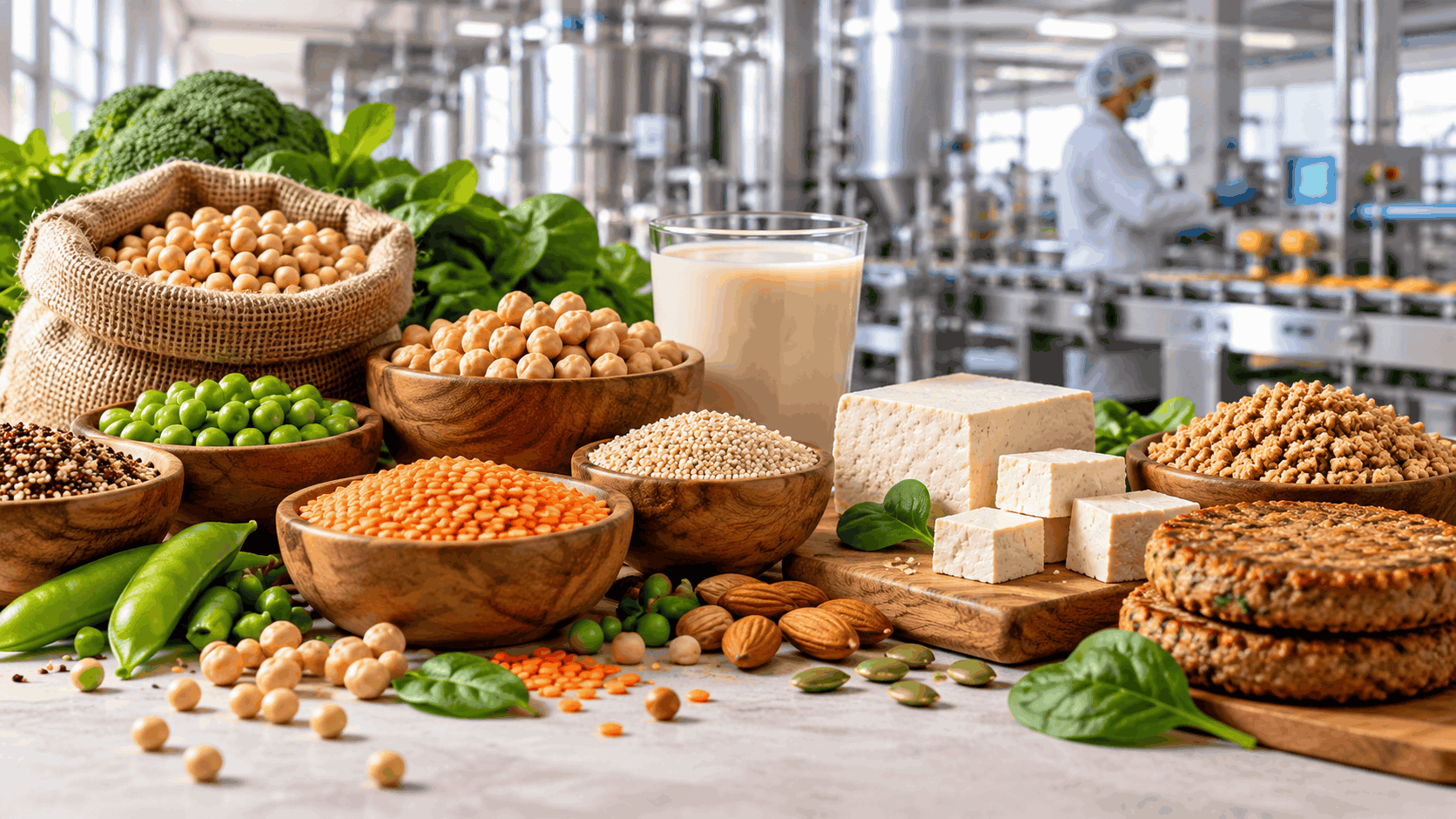
Plant-based proteins are creating new opportunities for food manufacturers as consumer preferences shift towards diverse protein sources, sustainable food choices, and innovative product formulations. Ingredients derived from peas, soybeans, lentils, chickpeas, beans, and other plants are becoming increasingly important in modern food product development. These ingredients can help manufacturers create products that meet changing dietary preferences while offering different textures, flavours, and nutritional profiles.
The growing interest in plant-based diets is encouraging food companies to explore new formulations across snacks, meat alternatives, dairy alternatives, protein beverages, bakery products, and convenience foods. For manufacturers, understanding plant-based proteins is not simply about following a market trend. It is about identifying suitable ingredients, improving product performance, maintaining consistent quality, and developing products that meet consumer expectations.
As food manufacturing innovation continues to advance, plant-based proteins offer opportunities for businesses seeking to diversify their product portfolios and explore emerging food product development trends.
Understanding Plant-Based Proteins in Food Manufacturing
Plant-based proteins are protein-rich ingredients obtained from plant sources. Common examples include peas, soybeans, lentils, chickpeas, fava beans, rice, and other legumes or grains. Depending on the source and processing method, these ingredients can be used as protein concentrates, protein isolates, flours, or textured protein products.
In food manufacturing, plant-based protein ingredients serve different purposes depending on the intended application. Some provide nutritional value, while others contribute to texture, binding, moisture retention, or the overall structure of a finished product. Their performance depends on factors such as protein concentration, solubility, water absorption, processing conditions, and interactions with other ingredients.
Manufacturers must evaluate these characteristics before selecting an ingredient for a specific formulation. A protein suitable for a baked product may not deliver the same results in a beverage or meat alternative. Understanding these differences helps product development teams select ingredients that support the desired taste, texture, appearance, and nutritional profile.
Growing Demand for Plant-Based Protein Ingredients
Consumer interest in plant-based protein ingredients is being influenced by several factors, including dietary diversity, fitness and nutrition awareness, environmental considerations, and the availability of new food products. Some consumers are reducing their reliance on animal-based foods, while others are simply looking for additional protein sources to include in their everyday diets.
This shift creates opportunities for manufacturers to develop products for different consumer groups without necessarily targeting exclusively vegan customers. Plant-based protein can be incorporated into familiar food formats, making it easier for consumers to explore alternative ingredients while maintaining convenient eating habits.
The plant-based protein market also offers opportunities for product differentiation. Manufacturers can experiment with different protein sources, flavour combinations, textures, and product formats to develop distinctive offerings. However, commercial success depends on more than the presence of protein. Consumers also expect products to taste appealing, offer good value, provide consistent quality, and meet their dietary requirements.
Businesses that combine consumer research with practical formulation and manufacturing capabilities can identify opportunities that align with genuine market needs.
Alternative Protein Sources for Food Manufacturers
Selecting the right protein source is an important decision during product development. Different plant proteins have different nutritional compositions, functional properties, flavour characteristics, and processing requirements. Manufacturers should assess these differences according to their intended application.
Pea protein is widely considered for plant-based food products because of its versatility and suitability for various formulations. It can be used in selected protein beverages, nutrition products, meat alternatives, and other foods where its functional properties meet the formulation requirements. However, manufacturers may need to manage its natural flavour, texture, and solubility to achieve the desired finished product.
Soy protein ingredients have established applications in foods such as textured protein products, meat alternatives, and selected bakery and nutritional formulations. Their functional properties can support product structure and water retention. Manufacturers should also consider allergen management, ingredient declarations, and the preferences of their target consumers when working with soy.
Rice protein offers another option for product developers, particularly when exploring alternative ingredient combinations. Its performance can vary depending on the intended application and processing method. Combining different protein sources may help improve the overall nutritional composition or functional performance of a formulation, although the results must be validated through testing.
Lentils, chickpeas, fava beans, and other legumes can also contribute to plant-based protein development. Depending on the ingredient format, they may be suitable for snacks, prepared foods, flour blends, and other products. Choosing among these sustainable protein sources requires a balanced assessment of nutritional value, ingredient availability, processing performance, cost, and consumer acceptance.
Opportunities Across Plant-Based Food Products
Plant-based proteins can be incorporated into a wide range of food categories, creating opportunities for manufacturers to expand their product portfolios. Meat alternatives are one prominent application, where protein ingredients are used to develop products that aim to replicate the texture and eating experience of conventional meat. Achieving the right structure, moisture retention, colour, and flavour requires careful ingredient selection and processing.
Protein-enriched snacks are another area of interest. Manufacturers can explore formulations for savoury snacks, baked products, snack bars, and other convenient food formats. The challenge is to increase protein content without negatively affecting taste, crispness, texture, or shelf stability.
Bakery products may also benefit from selected plant-based protein ingredients. Depending on the formulation, protein-rich ingredients can be incorporated into breads, crackers, and other baked foods. However, protein addition may affect dough handling, moisture requirements, product volume, and final texture. Trial formulations are therefore important before commercial production.
Plant-based dairy alternatives and protein beverages provide additional development opportunities. Manufacturers may explore plant protein sources to achieve the intended nutritional profile and product consistency. Such applications require particular attention to dispersion, sedimentation, mouthfeel, flavour, and stability throughout the product's intended shelf life.
These opportunities demonstrate how plant protein in food manufacturing can support innovation across multiple categories. The most suitable application depends on the target consumer, formulation requirements, production capabilities, and expected product performance.
The Role of Food Manufacturing Innovation
Food manufacturing innovation is essential for turning promising plant protein ingredients into commercially viable products. Although an ingredient may offer nutritional benefits, it must also perform reliably during mixing, heating, forming, baking, extrusion, or other relevant processing operations.
Manufacturers should begin by defining the product's requirements, including protein content, flavour profile, texture, appearance, nutritional targets, and storage conditions. Ingredient suppliers can then help identify suitable options based on technical specifications and application requirements.
Small-scale trials allow product development teams to evaluate ingredient performance before committing to larger production volumes. These trials can reveal challenges such as excessive thickness, poor solubility, unwanted aftertastes, inconsistent texture, or processing difficulties. Adjustments to ingredient ratios, moisture levels, processing parameters, and complementary ingredients may help address these issues.
Pilot-scale testing is another important stage. A formulation that performs well in a laboratory may behave differently when processed using commercial equipment. Testing under conditions that resemble actual production helps manufacturers assess scalability, repeatability, and quality consistency.
Businesses exploring new food concepts can also review EXIITO's product development and ODM manufacturing solutions to understand how concept development, formulation, sampling, and production planning fit into a structured manufacturing process. The suitability of any particular plant-protein project would need to be confirmed directly with the company.
Nutritional Quality and Product Formulation
Nutritional quality is an important consideration when developing high-protein food products. Plant protein sources differ in their amino acid profiles, digestibility, and protein concentration. Manufacturers should evaluate these factors according to the intended nutritional positioning of the product.
In some formulations, combining complementary protein sources may help improve the overall amino acid profile. For example, a carefully designed blend of legumes and grains can offer a different nutritional balance from using a single ingredient. The appropriate combination depends on the individual ingredients and the product's intended nutritional specifications.
Manufacturers should avoid assuming that every plant-based ingredient provides the same nutritional benefits. Protein content, serving size, amino acid composition, and the effects of processing all influence the final product. Where nutritional claims are planned, the finished formulation should be assessed against applicable requirements and supported by appropriate analytical evidence.
Product developers must also consider the other ingredients used in a formulation. Flavouring agents, fats, carbohydrates, stabilisers, and processing aids may influence the nutritional profile and overall consumer experience. A successful product balances protein content with taste, texture, convenience, and affordability.
Sustainability and Responsible Ingredient Selection
Sustainable protein sources are attracting attention as food manufacturers examine ingredient sourcing, resource use, and the environmental impact of their products. Plant-based proteins can offer sustainability opportunities, but the environmental performance of an ingredient depends on several factors, including agricultural practices, processing methods, energy use, transport, and water requirements.
Manufacturers should therefore avoid treating all plant proteins as equally sustainable. Supplier information and, where available, credible lifecycle assessments can help businesses compare ingredients using consistent criteria. Responsible sourcing practices and transparent documentation can also support informed procurement decisions.
Supply reliability is equally important. A promising ingredient may not be suitable for a large-scale product if its availability, quality, or price varies significantly. Manufacturers should assess supplier capacity, technical documentation, traceability, and quality assurance before finalising ingredient specifications.
Sustainability should be considered alongside food safety, product performance, and commercial feasibility. This balanced approach helps companies identify ingredients that support both business objectives and responsible manufacturing practices.
Managing Flavour, Texture, and Processing Challenges
One of the most common challenges in plant-based food development is achieving a desirable flavour and texture. Some plant protein ingredients have naturally earthy, bitter, or beany notes that may influence the finished product. These characteristics can be particularly noticeable in beverages, nutrition products, and foods with relatively simple flavour profiles.
Manufacturers can address these challenges by evaluating alternative ingredient grades, selecting appropriate flavour combinations, refining processing methods, and making necessary formulation changes. The most effective solution depends on the protein source and the product category. Sensory testing with the intended consumer group can help determine whether the final product meets expectations.
Texture presents another challenge. Certain proteins may increase viscosity, produce a dry mouthfeel, or affect the structural properties of a formulation. In beverage applications, inadequate dispersion may lead to sedimentation or an inconsistent appearance. In solid foods, protein ingredients can influence firmness, elasticity, moisture retention, and overall structure.
These issues should be evaluated during formulation rather than after commercial production begins. Shelf-life studies, stability testing, sensory evaluation, and production tri
Food Safety, Quality Control, and Regulatory Compliance
Food safety and regulatory compliance remain essential when working with plant-based protein ingredients. Manufacturers should verify supplier documentation, ingredient specifications, allergen information, microbiological quality, and relevant contaminant controls before approving ingredients for use. Soy is a recognised food allergen in many markets, and other ingredient sources may also require specific allergen or cross-contact controls. Production facilities should implement suitable procedures for ingredient handling, equipment cleaning, storage, and traceability according to their operations and applicable regulations. Product labels must accurately communicate ingredients, nutritional information, and any permitted claims. Terms such as high-protein, plant-based, or vegan should be used only when the product meets the applicable criteria and the claims are appropriately supported. Requirements can differ between markets, so manufacturers planning domestic or international distribution should review the relevant regulations. Quality control should continue throughout production. Monitoring ingredient measurements, mixing conditions, processing parameters, packaging integrity, and finished-product specifications helps maintain consistency between batches. A documented quality system also supports investigations and corrective action when results fall outside established .
Cost Considerations and Commercial Scalability
The commercial viability of plant-based protein products depends on ingredient costs, formulation efficiency, processing requirements, packaging, production volumes, and the price consumers are willing to pay. A higher protein concentration does not automatically make an ingredient the most economical choice.
Manufacturers should assess the total formulation cost rather than comparing ingredient prices alone. An ingredient that requires additional processing or corrective formulation work may increase the overall cost of production. Conversely, an ingredient that performs reliably and integrates easily into an existing process may offer operational advantages.
Trial production enables manufacturers to assess production expenses, identify process inefficiencies, and verify whether the chosen formulation can maintain consistent quality during large-scale manufacturing. Businesses should also examine the availability of raw materials and the possibility of supply disruptions before making long-term commitments.
A structured commercial assessment enables manufacturers to balance product quality, nutritional objectives, consumer expectations, and profitability.
Future Trends in Plant-Based Protein Development
Future food product development trends are likely to involve greater attention to ingredient functionality, nutritional quality, processing efficiency, and consumer acceptance. Manufacturers may continue exploring blends of plant proteins to improve product performance and create differentiated formulations.
Advances in ingredient processing may help improve solubility, reduce unwanted flavours, and enhance texture in selected applications. Better formulation tools and more systematic testing can also support product developers in evaluating ingredients before moving to commercial production.
Another emerging trend is creating food products that offer nutritional value while retaining familiar tastes and providing convenient options for everyday consumption. Consumers may be interested in protein-enriched everyday foods rather than products designed exclusively for specialist dietary markets. This creates opportunities for manufacturers to explore formats that align with established eating habits.
However, businesses should evaluate new market opportunities through reliable data, practical testing, and research-based insights instead of relying solely on assumptions.
Conclusion
Plant-based proteins offer food manufacturers opportunities to develop innovative products, diversify ingredient sourcing, and respond to changing consumer preferences. From pea and soy protein ingredients to pulses, grains, and blended protein formulations, the available options can support applications across snacks, bakery products, meat alternatives, beverages, and other food categories.
Success depends on selecting the right ingredient, validating its nutritional and functional properties, managing flavour and texture, maintaining food safety, and ensuring commercial scalability. Careful formulation, pilot testing, supplier evaluation, and quality control help turn new ingredient concepts into reliable products.
For businesses exploring new food product concepts or manufacturing partnerships, understanding available development and production capabilities is an important starting point. Visit EXIITO's company profile to learn more about its food manufacturing operations and partnership models. For enquiries about a potential project, contact the team through the official EXIITO contact page to discuss your requirements and confirm whether the required product category can be supported.