Introduction
The food industry is increasingly focusing on sustainable manufacturing and responsible packaging practices. As consumers become more aware of environmental concerns, food manufacturers are exploring packaging alternatives that reduce material waste while maintaining product quality. Namkeen and makhana products, which are popular snack choices in India, require packaging that protects freshness, texture, flavour, and overall product quality.
Traditional snack packaging often relies on multiple layers of plastic and other materials to provide protection during storage and transportation. However, growing environmental concerns are encouraging manufacturers to explore more responsible alternatives. Eco-Friendly Packaging for Namkeen and Makhana Products is becoming an important consideration for businesses looking to balance product protection, consumer convenience, and environmental responsibility.
Why Sustainable Packaging Matters for Namkeen and Makhana
Packaging plays an essential role in maintaining the quality of packaged snacks. Namkeen products can lose their crispness when exposed to moisture, air, and unsuitable storage conditions. Similarly, makhana requires appropriate protection to maintain its light, crunchy texture and prevent damage during handling.
Sustainable packaging focuses on reducing unnecessary material consumption, improving recyclability, and selecting materials with a lower environmental impact. For manufacturers, adopting responsible packaging practices can also support brand positioning and respond to changing consumer expectations.
The growing interest in Sustainable Snack Packaging Solutions encourages food businesses to evaluate packaging materials throughout their product lifecycle, from manufacturing and filling to distribution and disposal.
Innovative Eco-Friendly Packaging Solutions
Recyclable Packaging Materials
Recyclable packaging is an important innovation in the food industry. Manufacturers can explore packaging materials designed for recycling through suitable collection and processing systems. Depending on product requirements, recyclable paper-based materials, selected plastic structures, and other compatible packaging formats may be considered.
For namkeen and makhana, the packaging must provide adequate protection against moisture, oxygen, and physical damage. Therefore, manufacturers should evaluate the barrier performance of recyclable materials before adopting them for commercial production.
Paper-Based and Kraft Packaging
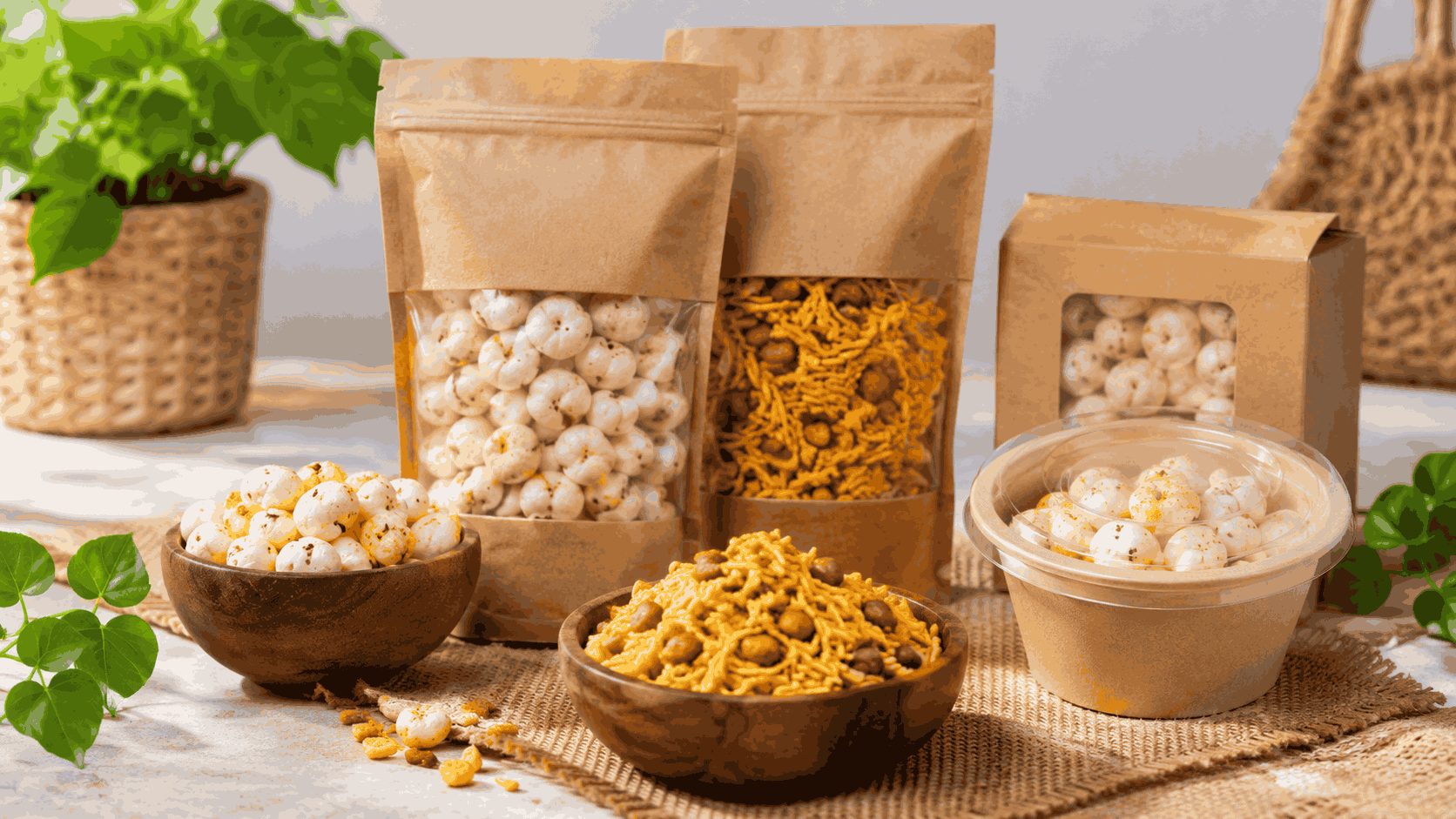
Kraft paper packaging is gaining attention because of its natural appearance and potential suitability for certain sustainable packaging applications. It can provide an attractive presentation for premium snack products while supporting a brand's sustainability-focused identity.
However, paper alone may not provide sufficient protection against moisture and oxygen. For products such as namkeen and roasted makhana, suitable barrier coatings or compatible inner layers may be necessary. Manufacturers should also assess whether these additional layers affect recyclability.
Lightweight Packaging Designs
Reducing unnecessary packaging material is another practical approach to improving sustainability. Lightweight packaging uses less material while maintaining the strength and protective performance required for the product.
Manufacturers can review pack dimensions, material thickness, sealing requirements, and packaging design to identify opportunities for reducing material consumption. Optimised packaging can also improve storage and transportation efficiency by reducing unnecessary bulk.
Compostable and Biodegradable Materials
Compostable and biodegradable packaging materials are receiving attention as alternatives to conventional packaging. Some materials are designed to break down under specific environmental conditions, depending on their composition and certification.
However, biodegradable and compostable packaging are not automatically suitable for every food product or disposal system. Their moisture resistance, shelf-life performance, food-contact suitability, and disposal requirements must be evaluated before commercial adoption.
Reusable and Refillable Packaging Concepts
Reusable packaging is another developing area of sustainable packaging innovation. Certain premium snack brands may explore durable containers or refill-based packaging models where suitable collection, cleaning, and redistribution systems are available.
Although these concepts may not be practical for every snack category, they offer opportunities for businesses interested in reducing single-use packaging and exploring alternative distribution models.
Benefits of Eco-Friendly Packaging for Snack Manufacturers
Adopting environmentally responsible packaging can offer several business advantages. Reduced material usage can help manufacturers improve packaging efficiency and manage resource consumption. Recyclable materials may support better waste management when appropriate collection and recycling facilities are available.
Sustainable packaging can also strengthen brand communication by demonstrating a commitment to responsible business practices. Consumers increasingly consider packaging when evaluating food products, making clear and accurate sustainability information valuable for building trust.
For manufacturers producing namkeen and makhana, the most effective approach is to combine environmental considerations with product safety, freshness, and practical packaging performance.
Challenges in Adopting Sustainable Snack Packaging Solutions
Despite its potential benefits, sustainable packaging comes with certain challenges. Alternative materials may have different barrier properties, sealing characteristics, availability, and costs compared with conventional packaging. These differences can affect production efficiency and product shelf life.
Another important consideration is food safety. Packaging materials must be suitable for their intended food-contact application and comply with applicable regulatory requirements. Manufacturers should conduct appropriate packaging trials, quality checks, and shelf-life evaluations before introducing new materials.
Recycling infrastructure is also an important factor. Packaging labelled as recyclable may not be effectively recycled in locations where suitable collection and processing facilities are unavailable. Clear disposal instructions can help consumers understand the correct handling of packaging waste.
Future Trends in Sustainable Snack Packaging
The future of snack packaging is expected to involve continued development in recyclable material structures, improved barrier technologies, lightweight designs, and alternative packaging formats. Research into material innovation may help manufacturers achieve better product protection while reducing unnecessary packaging resources.
Digital printing, improved packaging design, and more transparent sustainability communication may also influence how snack brands present their products. Businesses that evaluate these developments early can make informed packaging decisions as consumer expectations and industry requirements evolve.
For food manufacturers, the priority should remain finding packaging solutions that combine product protection, regulatory compliance, commercial practicality, and measurable environmental improvements.
Conclusion
Eco-Friendly Packaging for Namkeen and Makhana Products represents an important opportunity for the food manufacturing industry to move towards more responsible packaging practices. From recyclable materials and kraft paper formats to lightweight designs and compostable alternatives, different innovations offer possibilities for reducing packaging waste.
However, sustainability should never come at the expense of food safety, freshness, or product quality. Careful material selection, packaging trials, and performance evaluations are essential for choosing the right solution.
At EXIITO Beverages, we manufacture premium food products across namkeen, makhana, beverages, and pickles, with a focus on quality and food-safety practices. Businesses interested in developing their own snack brands can explore our food manufacturing and private label solutions.
Looking to develop a snack product with suitable packaging options for your brand? Contact EXIITO to discuss your manufacturing requirements and explore potential packaging solutions.