
Introduction
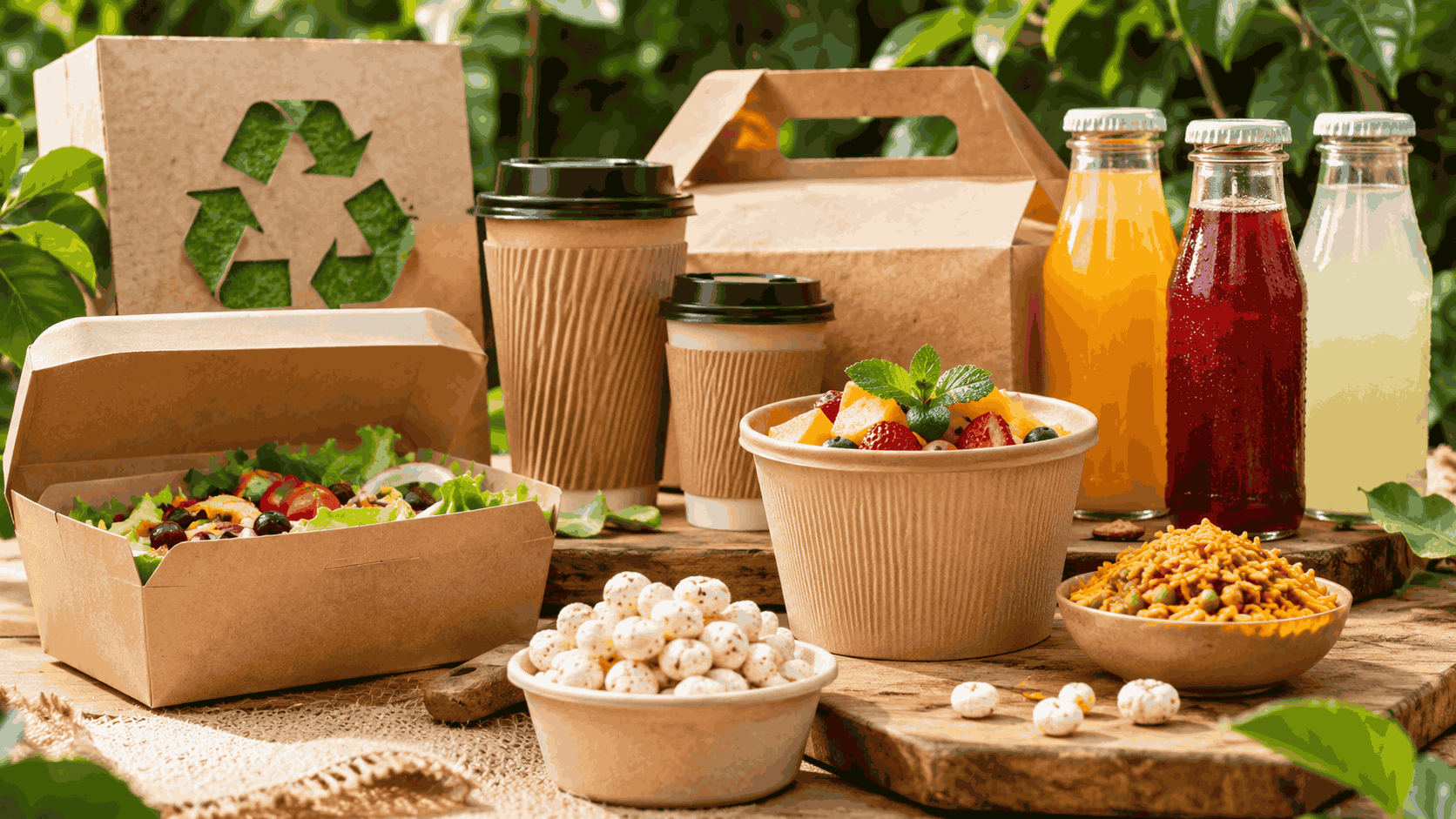
The food and beverage industry is increasingly focusing on responsible manufacturing practices and reducing environmental impact. Packaging plays an important role in this transition because it protects products, maintains freshness, supports transportation, and influences purchasing decisions. However, excessive packaging, plastic waste, and challenges associated with recycling have encouraged manufacturers to explore more sustainable alternatives.
Sustainable Packaging Solutions for Food and Beverage Industry are becoming an important consideration for businesses seeking to balance product protection, environmental responsibility, and customer expectations. By selecting appropriate materials, improving packaging designs, and reducing unnecessary waste, manufacturers can adopt more responsible packaging practices without compromising product quality.
Understanding Sustainable Food Packaging
Sustainable food packaging refers to packaging materials and designs that aim to minimise environmental impact throughout their lifecycle, including raw material sourcing, manufacturing, transportation, use, and disposal.
Common packaging options include recyclable glass, paper-based materials, cardboard, aluminium, and selected recyclable or compostable plastics. Each material has different properties, advantages, and limitations depending on the product and its storage requirements.
For example, glass containers can be reused and recycled, while cardboard provides lightweight protection for secondary packaging and transportation. Recyclable plastics can also offer practical benefits when appropriate collection and recycling facilities are available.
The most suitable option depends on product characteristics, packaging requirements, local recycling infrastructure, and overall environmental considerations.
Importance of Sustainable Packaging in Food and Beverage Manufacturing
Reducing Packaging Waste
One of the main objectives of sustainable packaging is to minimise unnecessary material consumption. Manufacturers can review packaging dimensions, remove excessive layers, and select suitable materials that provide adequate protection with less waste.
Reducing unnecessary packaging can also improve storage efficiency and simplify waste management throughout the supply chain. These improvements can support more efficient manufacturing and distribution processes.
Protecting Product Quality and Safety
Food packaging must do more than support environmental goals. It must protect products against contamination, moisture, oxygen, light, and physical damage where necessary.
For beverages, packaging selection is particularly important because different formulations require specific barrier properties and storage conditions. Similarly, snacks and packaged food products need suitable protection to maintain their texture, freshness, and quality.
Manufacturers should evaluate packaging materials for food-contact safety, product compatibility, durability, and shelf-life requirements before selecting an alternative.
Building Brand Identity and Consumer Confidence
Packaging is often the first physical interaction customers have with a food or beverage brand. Clear labelling, attractive designs, and responsible material choices can help businesses communicate their product values.
Consumers are increasingly interested in how products are manufactured and packaged. Providing accurate information about packaging materials, recycling instructions, and disposal methods can help brands improve transparency and build customer confidence.
Innovative Sustainable Packaging Solutions
Developments in packaging materials and technologies are creating new opportunities for food and beverage manufacturers.
Recyclable materials are among the practical options for improving packaging sustainability. Glass, aluminium, paper, and selected plastics can be considered according to their suitability for different products and the recycling facilities available in the target market.
Lightweight packaging is another important approach. Using lighter packaging materials can reduce resource consumption and potentially enhance transportation efficiency. However, manufacturers must ensure that lighter packaging continues to provide sufficient protection during handling, storage, and distribution.
Reusable packaging systems also offer opportunities to reduce single-use packaging waste. Refillable containers and returnable glass bottles can support repeated use when suitable collection, cleaning, inspection, and distribution systems are established.
Additionally, packaging made from renewable or recycled materials is receiving attention. Material selection should consider food-contact safety, durability, recycling compatibility, and the availability of appropriate disposal facilities.
Businesses exploring different food categories can also review EXIITO's food and beverage products to understand its own-brand product range.
Challenges in Adopting Sustainable Packaging
Although sustainable packaging offers several opportunities, manufacturers may face practical challenges during implementation.
One important consideration is cost. Some alternative materials, packaging equipment modifications, and recycling systems may require additional investment. Businesses must evaluate the overall packaging cost rather than comparing material prices alone.
Another challenge is maintaining product protection. Certain alternative materials may not provide the same moisture, oxygen, or light barriers as conventional packaging. This can affect product freshness and shelf life if the packaging is not properly tested.
Recycling infrastructure also differs across regions. A material described as recyclable may not be collected or processed effectively in every market. Manufacturers should understand local waste-management systems before making environmental claims.
Careful testing, supplier evaluation, and packaging trials can help businesses identify suitable solutions while maintaining consistent product quality. Companies can also explore EXIITO's manufacturing approach to learn more about its food manufacturing and packaging coordination processes.
Future Trends in Sustainable Food Packaging
The future of sustainable packaging is likely to involve improvements in material innovation, packaging design, recycling systems, and supply-chain efficiency.
Research into bio-based materials, recyclable barrier packaging, and improved material recovery methods is creating new possibilities. Digital labelling may also help consumers access information about ingredients, packaging materials, and disposal instructions.
Manufacturers are also paying greater attention to packaging lifecycle assessments. These evaluations help businesses understand the environmental impact of materials across different stages of their lifecycle rather than focusing on a single feature, such as recyclability.
As technology develops, collaboration between packaging suppliers, manufacturers, distributors, and recycling organisations will remain important for improving packaging practices.
Conclusion and CTA
Sustainable packaging is becoming an important part of responsible food and beverage manufacturing. By choosing suitable materials, reducing unnecessary packaging, improving recyclability, and maintaining product safety, businesses can make more informed packaging decisions.
The right approach is not simply to replace one material with another. It requires evaluating product requirements, packaging performance, environmental considerations, and supply-chain practicality together.
EXIITO is a food manufacturing company offering its own-brand products across beverages, namkeen, makhana, and pickles, along with manufacturing services for business partners.
To learn more about EXIITO, explore the official website. For manufacturing, product development, and packaging-related enquiries, visit the EXIITO Contact Us page. You can also visit the FAQs page for information about its manufacturing services and business partnerships.
Need reliable food manufacturing solutions for your brand? Connect with EXIITO to discuss your business and product requirements.