
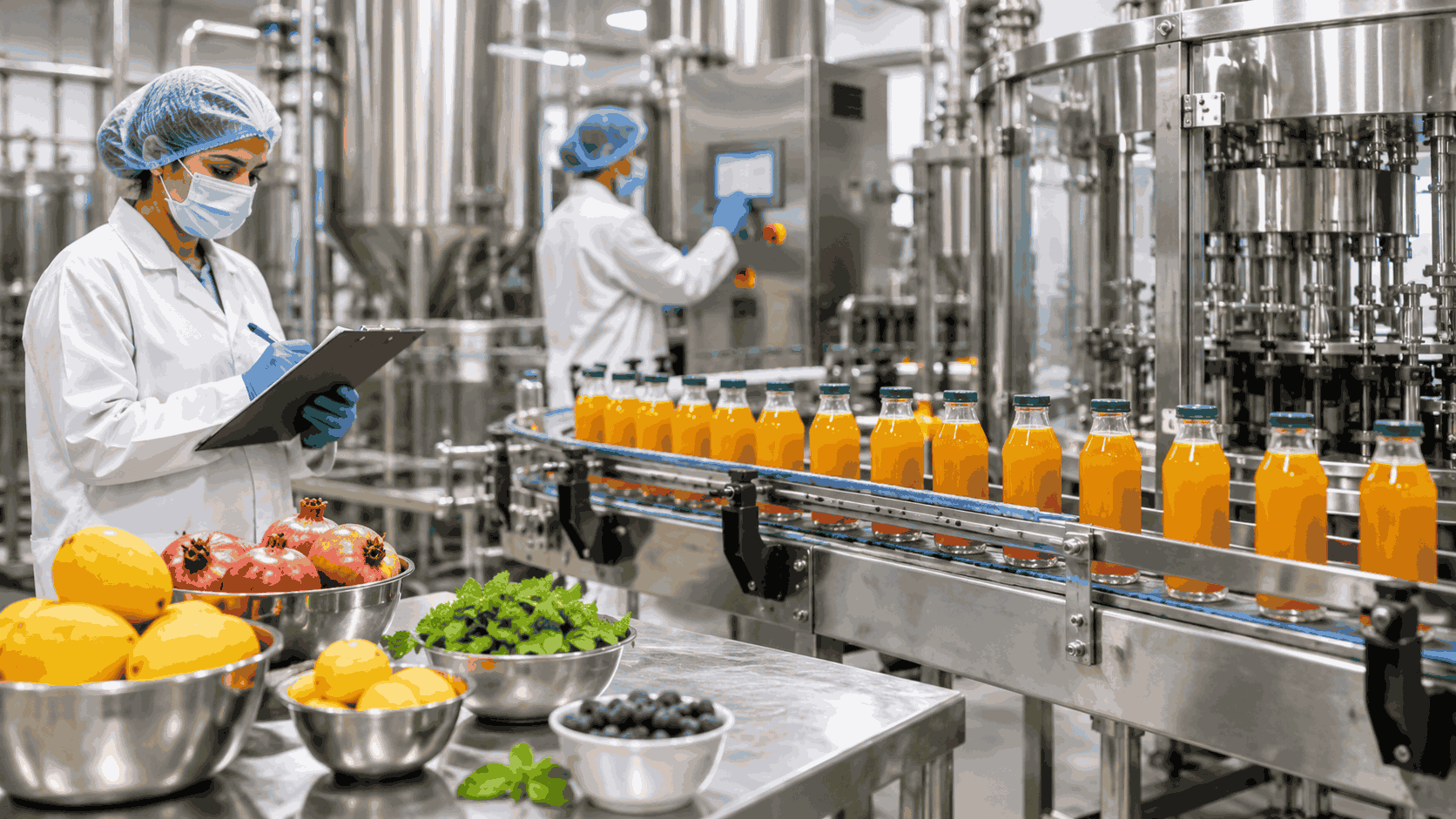
Introduction
The food processing industry operates in a competitive environment where manufacturers must maintain product quality, control operating costs and meet changing market demands. Whether producing beverages, namkeen, makhana, pickles or other packaged foods, businesses need organised production systems to achieve consistent results.
Food Processing Plant Efficiency plays an important role in improving manufacturing performance. It involves using resources effectively, managing production workflows, maintaining equipment and reducing avoidable delays. By adopting suitable technologies and efficient operating practices, manufacturers can improve productivity while maintaining food safety and product standards.
Understanding Food Processing Plant Efficiency
Food Processing Plant Efficiency refers to how effectively a manufacturing facility uses its ingredients, machinery, workforce, time and energy to produce finished products. An efficient plant does not simply produce more products in less time; it also maintains consistent quality and minimises unnecessary resource consumption.
Food Production Efficiency depends on proper coordination between raw material handling, ingredient preparation, processing, filling, packaging and storage. When these activities are planned systematically, manufacturers can identify bottlenecks and improve overall production performance.
Implementing Food Processing Best Practices
Standardising Production Procedures
Food Processing Best Practices begin with clearly documented operating procedures. Standardised instructions help employees follow consistent methods for ingredient measurement, mixing, processing, cleaning and packaging.
For beverage manufacturing, accurate ingredient proportions and controlled processing conditions are essential for maintaining the intended flavour and appearance. In snack manufacturing, consistent roasting, frying, seasoning and cooling procedures help achieve the required texture and product characteristics.
Standardisation also makes employee training easier and helps manufacturers identify deviations between production batches. Regular reviews of operating procedures ensure that they remain suitable as products, equipment and production requirements change.
Improving Manufacturing Process Optimization
Manufacturing Process Optimization focuses on identifying activities that consume unnecessary time, materials or resources. Manufacturers can review production records, monitor processing times and examine equipment utilisation to identify areas that need improvement.
For example, poorly coordinated ingredient preparation and packaging activities may create waiting periods between production stages. Better scheduling and workflow planning can reduce these interruptions and improve the movement of materials throughout the facility.
Effective Food Processing Plant Management also involves setting realistic production targets, allocating responsibilities and monitoring performance. These practices support better coordination between departments and improve manufacturing productivity.
Adopting Food Processing Technology and Automation
Modern Food Processing Technology offers opportunities to improve production consistency and operational control. Depending on the product and production volume, manufacturers may use automated weighing systems, mixing equipment, temperature controls, filling machines and packaging lines.
Automated Food Processing Systems can reduce repetitive manual activities and help maintain accurate operating parameters. Sensors and monitoring systems may also help operators identify temperature variations, equipment abnormalities or process deviations.
However, automation should be introduced according to actual production requirements. Equipment selection, installation, employee training and maintenance must be considered to ensure that the technology delivers practical benefits.
Strengthening Food Quality Control and Safety
Food Quality Control and Safety should remain central to every production improvement initiative. Increasing production speed without maintaining appropriate quality checks can create risks for both consumers and manufacturers.
Incoming raw materials should be inspected against approved specifications, while important processing parameters must be monitored throughout production. Finished products may require appropriate checks for appearance, taste, texture, weight, packaging integrity and microbiological safety, depending on their category.
Proper hygiene, sanitation, employee training and traceability procedures also support reliable manufacturing operations. Maintaining these practices helps businesses protect product quality while meeting applicable food safety requirements.
Reducing Food Production Waste and Operating Costs
Reducing Food Production Waste is another important aspect of improving plant efficiency. Material losses can occur during ingredient handling, inaccurate weighing, processing, filling and packaging.
Manufacturers can reduce avoidable waste through accurate dosing, proper storage, careful production planning and regular equipment inspections. Reviewing rejected batches and recurring defects can also help identify the underlying causes of material losses.
Food Manufacturing Cost Optimization should consider ingredient utilisation, energy consumption, labour requirements, maintenance expenses and packaging costs. A balanced approach helps businesses control operating expenses without compromising product safety or quality.
Equipment Maintenance and Supply Chain Management
Equipment Maintenance in Food Processing is essential for preventing unexpected breakdowns and production interruptions. Regular inspections, cleaning, calibration and preventive maintenance help machinery operate reliably.
Manufacturers should also maintain suitable spare parts and equipment service records to support timely repairs. Proper maintenance planning can improve equipment availability and reduce the risk of production delays.
Supply Chain Management in Food Industry operations is equally important. Reliable suppliers, accurate inventory records and timely raw material deliveries help prevent shortages and unnecessary production stoppages. Maintaining suitable stock levels also reduces the risks associated with excess inventory and ingredient deterioration.
Future Trends in Food Manufacturing Productivity
Food manufacturing facilities are increasingly exploring digital monitoring, connected equipment, predictive maintenance and data-based production planning. These developments can improve operational visibility and help managers make informed decisions.
Production Efficiency in Food Industry operations will increasingly depend on combining technology with employee skills, process standardisation and continuous improvement. Manufacturers that regularly review performance and adapt their processes can respond more effectively to changing market requirements.
For businesses exploring manufacturing partnerships, EXIITO's manufacturing capabilities provide information about its food and beverage manufacturing offerings.
Conclusion
Improving production efficiency in food processing plants requires a combination of standardised procedures, effective equipment maintenance, reliable raw material sourcing, automation and continuous quality monitoring. By implementing these Food Processing Best Practices, manufacturers can improve productivity, reduce avoidable waste and maintain consistent product quality.
EXIITO supports food and beverage businesses with manufacturing opportunities across beverages, namkeen, makhana and pickles. If you are planning to develop a new product or expand your existing portfolio, contact EXIITO Beverages to discuss your product development and manufacturing requirements.