
Introduction
Food safety and product quality are essential responsibilities in the food manufacturing industry. Consumers expect food products to be safe, hygienic, consistent and suitable for consumption. For manufacturers, maintaining these standards requires more than inspecting finished products. It involves monitoring every stage of production, from raw material sourcing to packaging and distribution.
This highlights the importance of HACCP and quality management in food processing. HACCP (Hazard Analysis and Critical Control Points) is a preventive food safety system that enables manufacturers to identify, assess and manage potential hazards throughout the production process. When supported by an effective quality management system, it helps food processing plants maintain hygiene, reduce contamination risks and improve operational consistency.
Understanding HACCP in Food Processing Plants
HACCP provides a structured method for identifying, assessing and managing biological, chemical and physical hazards that could compromise food safety. Instead of relying only on final product inspections, the system focuses on preventing problems before they occur.
Implementing HACCP in Food Processing Plants involves examining manufacturing operations, identifying possible contamination points and establishing appropriate control measures. For example, manufacturers may monitor processing temperatures, sanitation procedures, equipment cleanliness, storage conditions and packaging operations.
A properly developed HACCP plan also includes monitoring procedures, corrective actions, verification activities and recordkeeping. These measures help manufacturers maintain control over critical stages and respond appropriately when established limits are not achieved.
Why Quality Management Is Important in Food Processing
Quality management ensures that food products consistently meet defined safety, quality and production requirements. It connects different manufacturing activities through documented procedures, regular inspections and continuous monitoring.
An effective quality management system helps manufacturers maintain control over incoming raw materials, production processes, finished products and storage conditions. It also encourages employees to follow standard operating procedures and maintain appropriate hygiene practices.
For food manufacturers handling different categories, including beverages, namkeen, makhana and pickles, quality management is particularly important because each product has different processing, storage and packaging requirements. Businesses can also learn more about EXIITO's quality assurance approach, which covers incoming inspections, in-process controls, finished-goods checks and traceability.
Key Components of HACCP and Quality Management
Hazard Identification and Risk Assessment
HACCP implementation begins with identifying potential risks linked to raw materials, equipment, processing methods and the production environment. Biological hazards may include harmful microorganisms, while chemical hazards can involve cleaning residues or unintended chemical contamination. Physical hazards may include glass, metal fragments or other foreign materials.
Manufacturers must assess these risks and determine suitable preventive and control measures based on the product and manufacturing process.
Critical Control Points and Monitoring
Critical Control Points (CCPs) are specific production stages where effective monitoring and control are necessary to prevent or minimize food safety hazards. Depending on the product and process, these may involve heating, cooling or other validated processing operations.
Manufacturers establish critical limits and monitor relevant parameters at defined intervals. When monitoring identifies a deviation, corrective actions should be implemented, documented and followed by appropriate product assessment.
Hygiene, Sanitation and Employee Training
Maintaining hygienic production conditions is a fundamental part of food safety. Equipment, processing surfaces, storage areas and packaging zones require suitable cleaning and sanitation procedures.
Employees must also understand personal hygiene, safe food handling, protective clothing and contamination prevention. Regular training helps ensure that food safety procedures are understood and followed throughout daily operations.
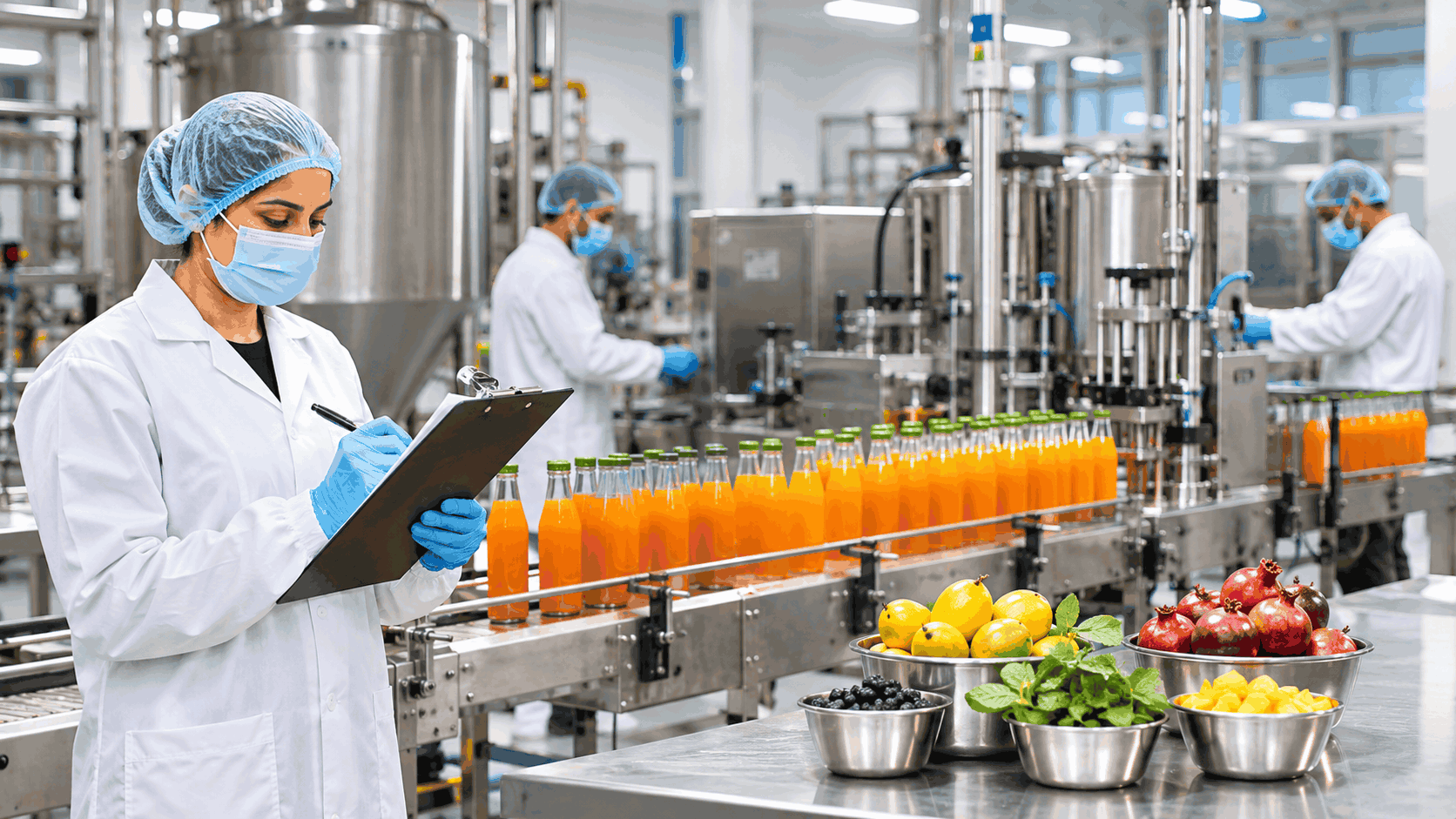
A well-organised food manufacturing facility with appropriate production zones, storage arrangements and hygiene controls can support these practices.
Documentation and Traceability
Accurate documentation supports effective quality management. Records of raw material inspections, production parameters, sanitation activities, monitoring results and finished product checks help manufacturers evaluate process performance.
Batch traceability also makes it easier to identify affected products and investigate quality concerns. A structured documentation system supports internal reviews, audits and informed decision-making.
To understand how research, inspections and production checks work together, explore EXIITO's R&D and Quality Control processes.
Benefits of Implementing HACCP and Quality Management
A well-maintained food safety and quality system offers several operational advantages. It helps manufacturers identify risks early, reduce the possibility of contamination and improve consistency between production batches.
It can also strengthen consumer confidence because businesses can demonstrate their commitment to responsible manufacturing practices. Documented procedures and traceability improve accountability, while systematic inspections help identify areas that require corrective action.
For food brands working with manufacturing partners, strong quality management practices provide greater visibility into production controls and product specifications. These systems also support better coordination between production, quality assurance, packaging and distribution teams.
Challenges and Future Trends in Food Safety Management
Implementing HACCP requires proper planning, employee awareness, suitable monitoring equipment and consistent documentation. Some manufacturers may face challenges related to training, process changes, maintenance costs and maintaining records across multiple production activities.
Technology is creating new opportunities to improve food safety management. Digital monitoring systems, automated process controls and electronic batch records can help manufacturers maintain accurate information and identify deviations more efficiently.
However, technology alone cannot guarantee food safety. Effective implementation still depends on trained employees, validated procedures, suitable infrastructure and regular verification of control measures.
Conclusion and CTA
HACCP and Quality Management in Food Processing are essential for building safe, consistent and reliable food manufacturing operations. By identifying hazards, monitoring critical processes, maintaining hygiene and ensuring traceability, manufacturers can establish stronger control over their production activities.
Food safety should be treated as a continuous responsibility rather than a final inspection step. Businesses that invest in structured quality systems are better positioned to maintain product standards, strengthen customer confidence and support long-term growth.
At EXIITO, quality assurance, process monitoring and food safety practices are important considerations across our beverages, namkeen, makhana and pickle manufacturing categories. Learn more about our certifications and food safety practices.
Are you looking for a food manufacturing partner for your brand? Contact EXIITO to discuss your product requirements, manufacturing opportunities and business partnership needs.