
Introduction
Food safety is essential in the commercial production of namkeen because even small lapses in hygiene, ingredient handling or processing can affect product quality and consumer confidence. Namkeen products are prepared using ingredients such as flour, pulses, edible oils, spices and seasonings, which require proper handling throughout manufacturing. Maintaining consistent quality involves more than achieving the right taste and texture; it also requires effective sanitation, controlled processing and appropriate packaging.
Food Safety Practices in Namkeen Production help manufacturers minimise contamination risks, maintain product consistency and meet applicable regulatory requirements. A well-managed production system also supports better shelf-life management and strengthens consumer trust in packaged snack products. Companies such as EXIITO Beverages, which manufacture food products across multiple categories, recognise the importance of quality-focused manufacturing practices.
Understanding Food Safety in Namkeen Manufacturing
Food safety in namkeen manufacturing begins with controlling potential hazards at every stage of production. These hazards may include physical contaminants, harmful microorganisms and chemical contamination caused by unsuitable ingredients, cleaning residues or improper handling.
An effective food safety management system enables manufacturers to recognize potential hazards and implement appropriate preventive measures. Following relevant food safety standards for namkeen also ensures that production activities are carried out under hygienic and controlled conditions.
Raw Material Quality Inspection
The quality of finished namkeen depends significantly on the ingredients used during manufacturing. Manufacturers should source raw materials from reliable suppliers and establish suitable specifications for flour, pulses, spices, edible oils and other ingredients.
Raw material quality inspection should consider appearance, odour, packaging condition, storage history and relevant quality parameters. Ingredients should be checked for visible contamination, moisture-related damage, pest activity and signs of deterioration.
Proper storage is equally important. Raw materials should be kept in clean, dry and suitable storage conditions, protected from pests, moisture and direct contamination. Appropriate stock rotation helps manufacturers manage inventory and reduce the risk of using expired or deteriorated ingredients.
Hygiene Practices in Food Manufacturing
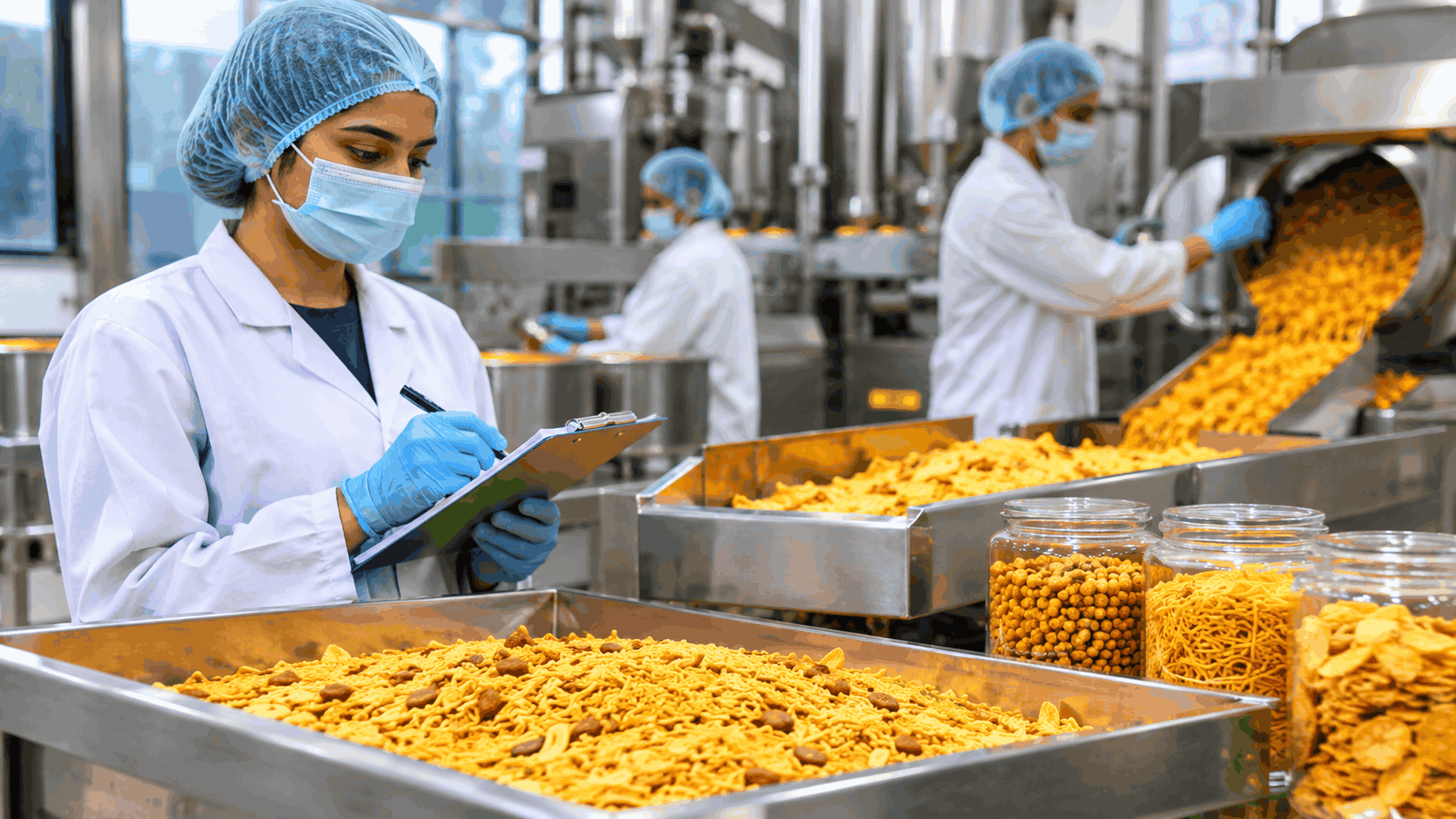
Maintaining workplace hygiene is one of the most important quality control measures for snacks. Production areas, processing equipment, utensils and food-contact surfaces should be cleaned and sanitised according to documented procedures.
Employees involved in food handling should follow appropriate personal hygiene practices, including wearing clean protective clothing, maintaining hand hygiene and covering their hair. Workers should also receive training on safe food handling practices and understand how poor hygiene can introduce contamination into food products.
Manufacturing facilities should have suitable arrangements for waste disposal, pest control, ventilation and drainage. These measures help create a cleaner production environment and reduce opportunities for cross-contamination.
Namkeen Manufacturing Process and Quality Control
The namkeen manufacturing process generally involves ingredient preparation, mixing, shaping, frying or other suitable cooking methods, seasoning, cooling and packaging. Each operation requires appropriate process controls to maintain product quality.
During frying, manufacturers should monitor relevant parameters such as oil temperature, frying time and oil condition according to the product specification. Poorly controlled frying conditions may affect colour, texture, flavour and oil quality.
After processing, namkeen should be cooled under hygienic conditions before packaging. Handling exposed products without adequate protection can introduce contamination. Equipment and food-contact surfaces should be inspected regularly as part of namkeen production quality control.
Consistent monitoring of product appearance, texture, flavour, moisture and other relevant quality parameters helps identify variations between batches and supports reliable production. Businesses interested in understanding EXIITO's manufacturing capabilities can explore its food manufacturing and quality-focused processes.
HACCP in Namkeen Manufacturing
HACCP is a preventive food safety system that helps identify potential hazards and implement effective control measures during food production. Its application in namkeen manufacturing involves evaluating potential risks associated with ingredients, processing operations, equipment and packaging.
Manufacturers should identify relevant hazards, establish appropriate control measures, monitor defined critical control points where applicable and maintain accurate records. Corrective actions should be documented whenever monitoring identifies deviations from established limits.
Food businesses should implement food safety management systems based on applicable HACCP principles and prerequisite programmes, including Good Manufacturing Practices (GMP) and Good Hygiene Practices (GHP). These systems should be designed according to regulatory requirements and the nature of individual manufacturing operations.
Namkeen Processing and Packaging
Packaging plays an important role in protecting namkeen from moisture, dust, physical contamination and other environmental factors. Selecting suitable food-grade packaging materials helps maintain product quality during storage, transportation and distribution.
Packaging operations should take place in clean areas using properly maintained equipment. Sealing integrity, packaging condition, batch identification, manufacturing details and applicable labelling information should be checked before products are released.
Manufacturers should also evaluate packaging suitability and shelf-life requirements for individual products rather than assuming that one packaging solution works for every namkeen variety. You can explore the EXIITO Namkeen product range to understand its range of packaged savoury snacks.
Quality Assurance, Testing and Regulatory Compliance
Quality assurance in namkeen production requires systematic inspection and testing throughout manufacturing. Depending on the product and risk assessment, relevant checks may include microbiological testing, moisture analysis, oil quality evaluation and other applicable laboratory assessments.
Microbiological testing in food production helps assess whether products meet relevant microbiological requirements. Testing frequency and parameters should be determined according to applicable regulations, product characteristics and established food safety plans.
In India, manufacturers must comply with applicable Food Safety and Standards Authority of India (FSSAI) requirements, including relevant licensing, hygiene and food labelling provisions. Maintaining production records, inspection reports and testing documentation supports traceability and regulatory compliance.
Challenges and Future Trends
Namkeen manufacturers may face challenges involving changing raw material quality, inconsistent processing conditions, contamination risks and packaging performance. Increasing production volumes can make these challenges more difficult to manage without standardised procedures.
Digital monitoring, improved testing methods, automated processing equipment and better traceability systems offer opportunities to strengthen food safety management. Manufacturers are also paying greater attention to efficient production practices and packaging solutions that help preserve product freshness.
Investing in employee training, preventive maintenance and continuous quality monitoring can help businesses build more reliable manufacturing operations.
Conclusion and CTA
Maintaining food safety in namkeen production requires consistent attention to raw material inspection, employee hygiene, controlled processing, suitable packaging and quality testing. By implementing effective food safety management systems and following applicable FSSAI requirements, manufacturers can protect product quality and build lasting consumer confidence.
Looking for quality-focused food manufacturing solutions? Explore the EXIITO Namkeen range or learn more about its OEM and food manufacturing services. For product development, bulk manufacturing or business enquiries, contact the EXIITO team.