
Introduction
Pickles are an important part of Indian food culture, offering a combination of traditional flavours, spices, and ingredients. From mango and lemon pickles to mixed vegetable varieties, these products require careful preparation, processing, and preservation to maintain their quality. In commercial production, maintaining proper hygiene and food safety is essential to protect consumers and ensure consistent product quality.
Food Safety Standards in Pickle Manufacturing play an important role in controlling contamination risks, maintaining product freshness, and building consumer confidence. As demand for packaged pickles continues to grow, manufacturers must follow appropriate hygiene practices, quality checks, and food safety procedures throughout production. A well-managed manufacturing process helps businesses maintain product consistency while meeting applicable food safety requirements.
Understanding Food Safety in Pickle Production
Food safety in pickle production involves controlling potential hazards during ingredient sourcing, preparation, processing, packaging, and storage. Fruits, vegetables, spices, oils, salt, and other ingredients must meet appropriate quality requirements before entering the production process.
Manufacturers should establish a documented Food Safety Management System (FSMS) based on applicable regulatory requirements. In India, the Food Safety and Standards Authority of India (FSSAI) requires licensed food businesses to follow relevant hygiene and sanitation requirements under Schedule 4 of the Food Safety and Standards (Licensing and Registration of Food Businesses) Regulations, 2011.
These standards include Good Manufacturing Practices (GMP), Good Hygiene Practices (GHP) and essential food safety measures to maintain product quality and safety. Following these practices helps manufacturers maintain a hygienic production environment and minimise potential food safety risks.
Essential Hygiene Standards in Commercial Pickle Manufacturing
Maintaining Clean Manufacturing Facilities
A clean and properly maintained manufacturing environment is fundamental to food safety. Production floors, preparation tables, processing equipment, storage areas, and packaging sections should be cleaned and sanitised according to established procedures.
Manufacturers should maintain suitable drainage, ventilation, lighting, and waste disposal systems. Cleaning schedules and sanitation records help ensure that hygiene activities are performed consistently. Regular inspections also help identify potential contamination risks before they affect production.
Businesses can learn more about EXIITO's manufacturing approach through its About Us page, which highlights its focus on quality standards and food safety discipline.
Personal Hygiene and Employee Training
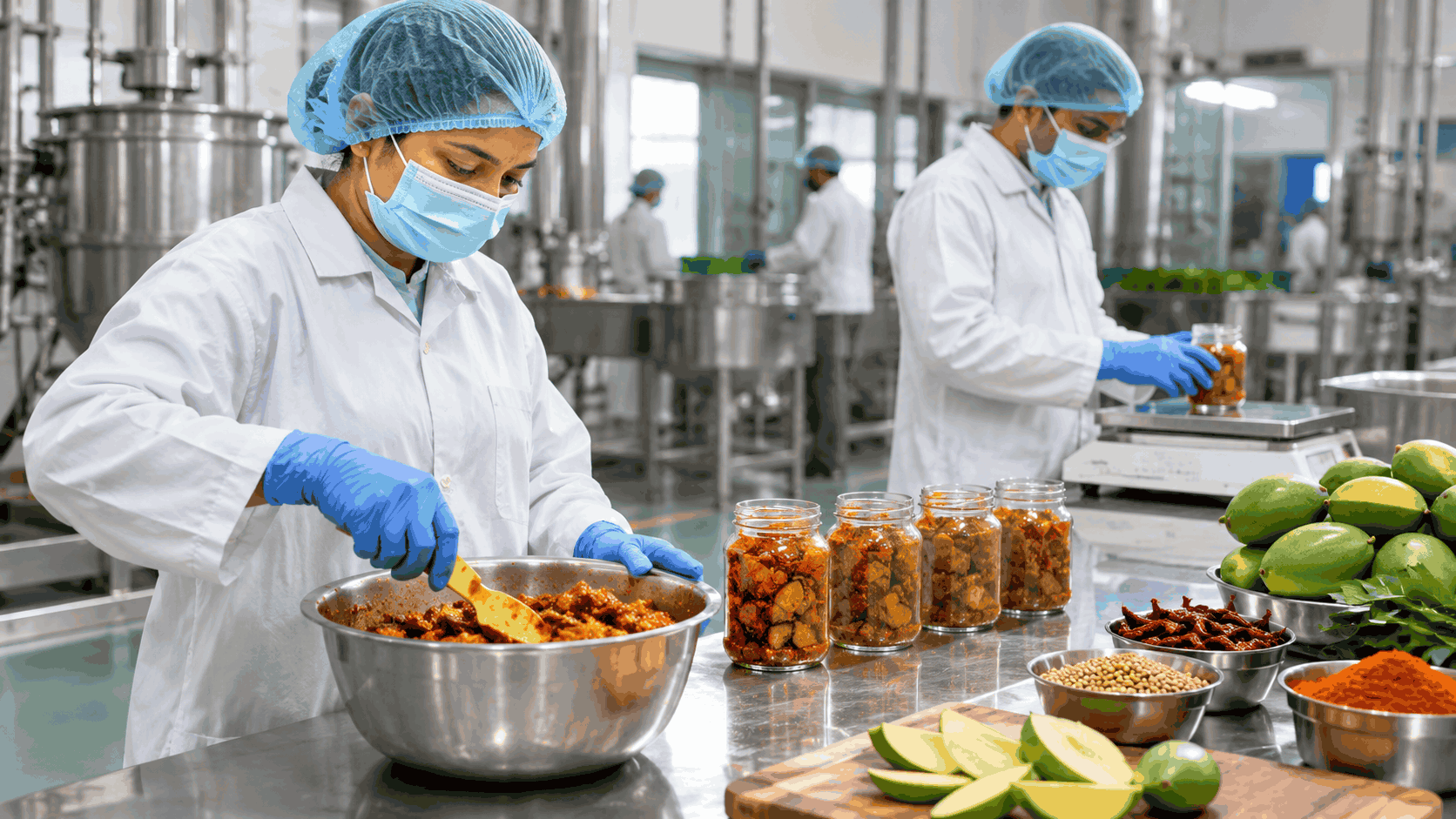
Employees play an important role in maintaining food safety during commercial pickle manufacturing. Workers handling ingredients and finished products should follow proper personal hygiene practices, including regular handwashing and wearing clean protective clothing.
Appropriate protective equipment, such as gloves, hair covers, masks, and clean uniforms, should be used according to the nature of the work. Employees should also receive training on food handling, sanitation procedures, cross-contamination prevention, and workplace hygiene.
Safe Handling of Raw Materials
The quality of raw materials directly influences the safety and quality of finished pickles. Fruits and vegetables should be inspected for visible damage, spoilage, mould, and other defects before processing. Spices, edible oils, salt, and permitted preservatives should be sourced from reliable suppliers.
Incoming ingredients should be checked for quality, cleanliness, packaging condition, and suitability for food production. Proper storage conditions help protect ingredients from moisture, pests, and contamination.
Quality Control During Pickle Processing
Monitoring Ingredients and Preservation Conditions
Pickle manufacturing involves preservation through ingredients such as salt, edible oil, vinegar, and acidic components, depending on the product formulation. Their correct selection and controlled use are important for maintaining product quality and safety.
Manufacturers should monitor relevant processing parameters, including acidity, pH, salt concentration, and other formulation requirements where applicable. These parameters should be established and validated according to the specific pickle type and applicable food standards. Inconsistent processing conditions can affect product stability and increase spoilage risks.
Regular quality inspections and documented production checks help manufacturers maintain consistency between batches. For more information about EXIITO's approach to manufacturing quality, explore its Quality Assurance practices.
Preventing Cross-Contamination
Cross-contamination can occur when harmful microorganisms, allergens, or unwanted substances transfer between raw ingredients, equipment, employees, and finished products.
Commercial facilities should establish suitable separation between raw material handling and finished product packaging areas. Equipment should be cleaned between production batches where necessary, and food-contact surfaces should be maintained in hygienic conditions. Proper pest control and waste management also contribute to a safer production environment.
Packaging, Labelling and Storage Requirements
Packaging is an important part of maintaining pickle quality after manufacturing. Clean, food-grade containers that are suitable for the product should be selected to protect against contamination, leakage, and external environmental factors.
Glass jars and other appropriate food-grade packaging materials can help preserve product quality when properly selected and sealed. Before filling, containers should undergo suitable inspection and cleaning procedures. Packaging integrity should also be checked to identify damaged seals, leakage, or defective closures.
Accurate labelling is equally important. Product labels should provide applicable information, including ingredient declarations, allergen information, nutritional details, batch identification, manufacturing and expiry or best-before dates, storage instructions, and FSSAI-related declarations as required by applicable regulations.
Finished products should be stored in clean, suitable conditions according to their formulation and validated shelf-life requirements. Proper stock rotation and batch identification help manufacturers manage inventory and maintain traceability.
Explore the EXIITO Pickle Product Range to discover different pickle varieties available under the brand.
The Importance of Documentation and Regular Inspections
Documentation supports effective food safety management by creating records of production activities, ingredient sourcing, cleaning schedules, quality inspections, and corrective actions.
Regular internal inspections help identify gaps in hygiene practices and processing controls. A Hazard Analysis and Critical Control Point (HACCP)-based approach can help manufacturers identify, assess, and control significant food safety hazards throughout the production process.
Batch-wise records and traceability systems also make it easier to investigate quality concerns and identify affected products when corrective action is required. These practices support transparency and responsible manufacturing.
Manufacturers can also review applicable registration and compliance information through the EXIITO Certifications & Food Safety section.
Challenges and Future Trends in Pickle Manufacturing
Commercial pickle manufacturers may face challenges related to raw material variations, seasonal availability, microbial contamination, packaging defects, and maintaining consistent product quality across batches. Addressing these challenges requires reliable suppliers, trained employees, effective sanitation procedures, and regular quality assessments.
Food manufacturing is also moving towards improved traceability, automated quality monitoring, and more efficient packaging solutions. Digital batch records and systematic inspection procedures can help manufacturers improve operational control and respond more effectively to quality concerns. These developments can strengthen food safety management across the pickle manufacturing industry.
Conclusion: Building Consumer Trust Through Food Safety
Maintaining high hygiene and quality standards is essential for successful commercial pickle manufacturing. From selecting quality ingredients to processing, packaging, and storage, every production stage requires appropriate food safety controls.
Following applicable FSSAI requirements, implementing GMP and GHP practices, and maintaining proper documentation can help manufacturers reduce contamination risks and deliver consistent products. Food safety is not just a regulatory responsibility; it is also an important step towards building consumer trust and achieving long-term business growth.
For businesses exploring food manufacturing opportunities, EXIITO's food manufacturing solutions offer an opportunity to learn more about its own-brand products and partner manufacturing services.
Call to Action
Looking for a reliable food manufacturing partner? Explore EXIITO Beverages and discover its range of pickles and other food products. For product and manufacturing enquiries, contact the EXIITO team to discuss your requirements.