
Introduction
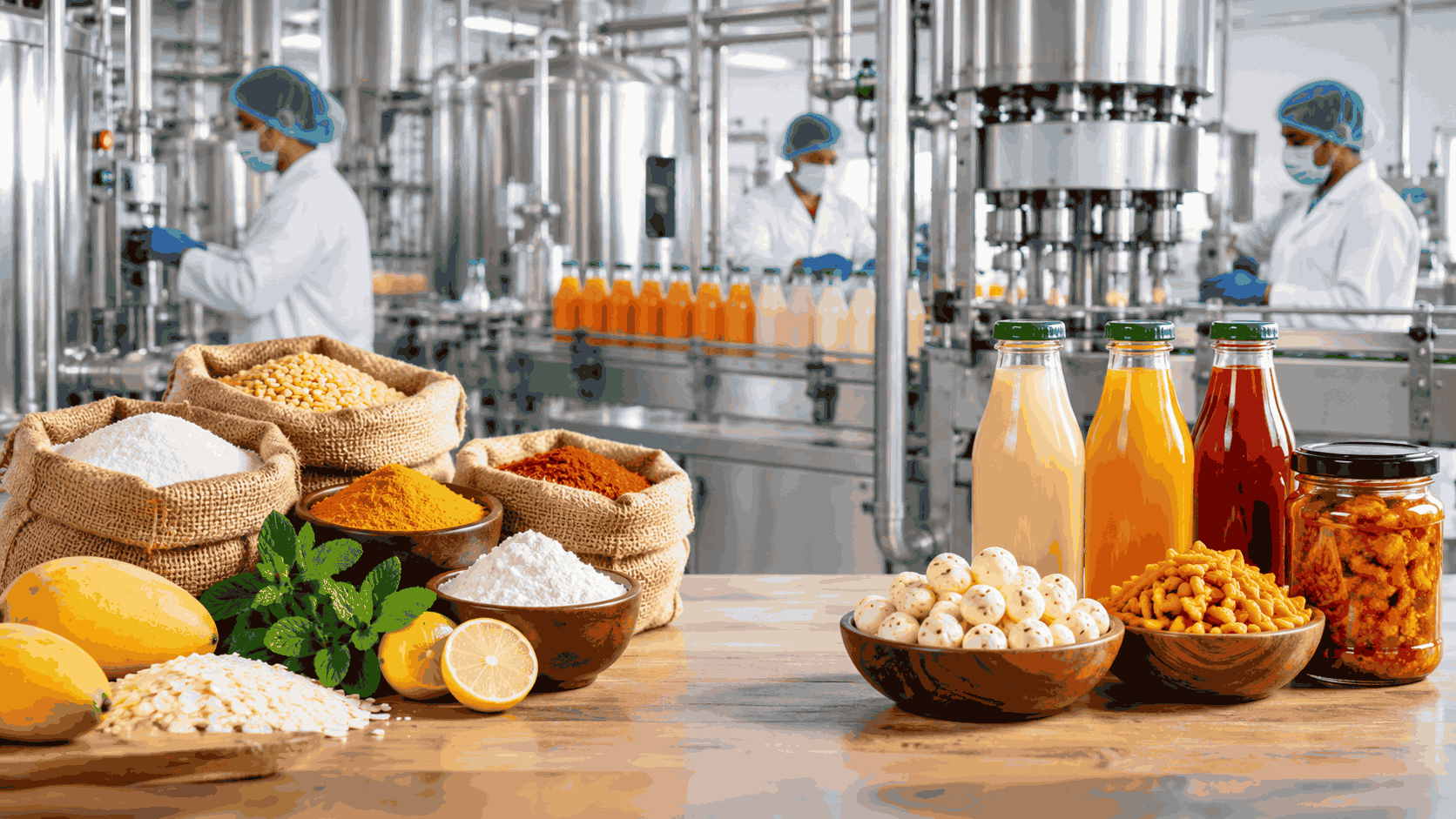
Every packaged food product begins with carefully selected ingredients and passes through several stages before reaching consumers. From refreshing beverages and fruit-based drinks to namkeen, makhana and pickles, each product requires suitable processing methods, quality checks and packaging solutions. Understanding the Food Manufacturing Process helps businesses appreciate how raw ingredients are transformed into finished products that meet customer expectations.
Modern food manufacturing combines ingredient sourcing, controlled production, food safety practices and efficient packaging. For manufacturers and growing food brands, managing every stage effectively is essential for maintaining product quality, improving operational efficiency and building consumer confidence.
Understanding Raw Materials in Food Manufacturing
Food Ingredient Sourcing and Selection
Raw Materials in Food Manufacturing directly influence the taste, texture, appearance and quality of the final product. Depending on the product category, ingredients may include fruits, vegetables, grains, spices, tea extracts, milk-based ingredients, edible oils and other food-grade components.
Food Ingredient Sourcing involves identifying suitable suppliers, evaluating ingredient specifications and ensuring that materials meet the requirements of the intended product. Manufacturers may assess freshness, moisture content, purity, flavour characteristics and relevant safety documentation before approving incoming materials.
Effective Raw Material Quality Management helps reduce ingredient variations that could affect production. Proper storage, stock rotation and traceability also help preserve ingredient quality before processing begins.
Key Food Manufacturing Steps
Ingredient Preparation and Processing
The Food Production Process starts with receiving and inspecting raw materials. Ingredients are then prepared according to the product formulation. This may involve washing, sorting, weighing, grinding, blending or other suitable preparation methods.
The next stage is processing, where ingredients are transformed into the intended product. Beverage manufacturing may involve mixing, filtration, homogenisation or heat treatment, depending on the formulation. Packaged snack production may include roasting, frying, seasoning or shaping, while pickle production can involve preparing ingredients, mixing spices and applying controlled preservation methods.
These Food Manufacturing Steps must be selected according to the product's characteristics and safety requirements. Standardised procedures help maintain consistency between batches and reduce avoidable production errors.
Food Processing Technology and Production Efficiency
Modern Food Processing Technology helps manufacturers manage production more effectively. Depending on operational requirements, equipment may be used for ingredient dosing, mixing, temperature control, filling, sealing and labelling.
Automation can improve the consistency of repetitive operations and reduce unnecessary manual handling. Monitoring equipment performance and maintaining machinery also helps prevent avoidable interruptions.
Food Production Efficiency depends on more than processing speed. Manufacturers must balance output with ingredient utilisation, product quality, energy consumption, equipment maintenance and workforce training. Well-planned production schedules and clear operating procedures can help minimise delays and material wastage.
For businesses exploring beverage manufacturing, EXIITO provides information about its manufacturing capabilities, including services for food and beverage brands.
Food Quality Control, Safety and Hygiene
Maintaining Finished Food Product Quality
Food Quality Control is essential throughout manufacturing, not just at the final inspection stage. Incoming ingredients, processing conditions, intermediate products and finished goods should be checked against appropriate specifications.
For beverages, relevant checks may include formulation accuracy, appearance, taste, processing parameters and filling volume. For packaged snacks, manufacturers may assess texture, seasoning distribution, moisture levels and packaging integrity. The exact requirements depend on the product.
Food Safety and Hygiene practices are equally important. Appropriate cleaning procedures, personal hygiene, pest control and preventive food safety measures help reduce contamination risks. Manufacturers should also maintain batch records and traceability information to support investigations if quality issues arise.
Following applicable Food Manufacturing Standards and conducting suitable product testing help businesses verify that their products meet regulatory and quality requirements. Shelf life should be established through appropriate testing and validation rather than assumptions.
Food Processing and Packaging
Once processing and quality checks are complete, products move to the packaging stage. Food Processing and Packaging work together to protect the product, preserve its intended characteristics and prepare it for storage and distribution.
The Food Packaging Process may involve filling containers, sealing packs, applying labels and printing batch details. Packaging materials must be suitable for the product's composition, processing conditions and expected storage environment.
For example, beverages require suitable bottles or other containers with compatible closures, while moisture-sensitive snacks need packaging that helps preserve crispness. Pickles require packaging appropriate for their acidity, formulation and storage conditions.
Proper sealing, accurate labelling and appropriate storage instructions support product protection and traceability. Packaging selection should also consider transportation, retail handling and the product's validated shelf life.
Challenges and Future Trends in the Food Manufacturing Industry
The Food Manufacturing Industry faces challenges such as fluctuating ingredient availability, changing consumer preferences, rising production costs and the need for consistent quality across larger volumes. New formulations can introduce additional processing, testing and packaging requirements.
Businesses can address these challenges through reliable supplier relationships, careful production planning, preventive maintenance and continuous quality improvement. Digital monitoring, automation and improved traceability systems can also support better production visibility.
As manufacturing technology develops, companies will increasingly need to balance efficiency with food safety, responsible resource use and practical packaging choices. Investing in suitable processes and employee training can help manufacturers adapt while maintaining dependable product standards.
Conclusion
From Raw Materials to Finished Products, every stage of food manufacturing contributes to the safety, quality and consistency of the final product. Careful ingredient sourcing, controlled processing, effective quality checks and suitable packaging help transform raw ingredients into products ready for consumers.
EXIITO supports food and beverage brands with manufacturing opportunities across beverages, namkeen, makhana and pickles. If you are planning to launch a new product or expand your existing portfolio, contact EXIITO Beverages to discuss your product concept, packaging needs and manufacturing requirements.