
Introduction
The packaged food industry must meet consumer expectations for consistent taste, texture, freshness, safety and appearance. Whether manufacturers produce beverages, namkeen, makhana, pickles or other packaged products, maintaining the same quality across every batch is essential for building customer trust and protecting brand reputation.
However, achieving consistent results can be challenging because ingredients, processing conditions, equipment performance and packaging materials may vary. Packaged Food Manufacturing Challenges often arise when manufacturers struggle to control these variables throughout production. A structured approach to quality management, process monitoring and food safety can help businesses minimise variations and deliver dependable products.
Understanding Packaged Food Manufacturing Challenges
Food manufacturing involves several interconnected stages, from sourcing raw materials to processing, packaging and distribution. A problem at any stage can affect the final product. For example, variations in ingredient quality may influence flavour, while incorrect processing conditions can change texture or reduce product stability.
Food Production Challenges become more complex when manufacturers increase production volumes or introduce new product varieties. Processes that work well during small-scale trials may require further adjustment before commercial production. Establishing clear specifications, standard operating procedures and quality checkpoints helps manufacturers manage these changes more effectively.
Raw Material Quality Management
Maintaining Consistent Ingredients
Raw Material Quality Management is one of the foundations of consistent food production. Differences in ingredient maturity, moisture content, flavour strength, composition and storage conditions can affect the finished product.
For beverages, variations in fruit pulp, concentrates, tea extracts or flavouring ingredients may influence colour, taste and overall formulation. In packaged snacks, differences in grains, spices, edible oils and other ingredients can affect texture, aroma and processing performance.
Manufacturers can manage these risks by approving reliable suppliers, inspecting incoming materials and checking relevant specifications before production. Proper storage conditions and batch identification also help maintain ingredient quality. These Food Manufacturing Best Practices support predictable production outcomes and reduce the likelihood of avoidable defects.
Food Manufacturing Quality Control and Process Consistency
Controlling Production Variables
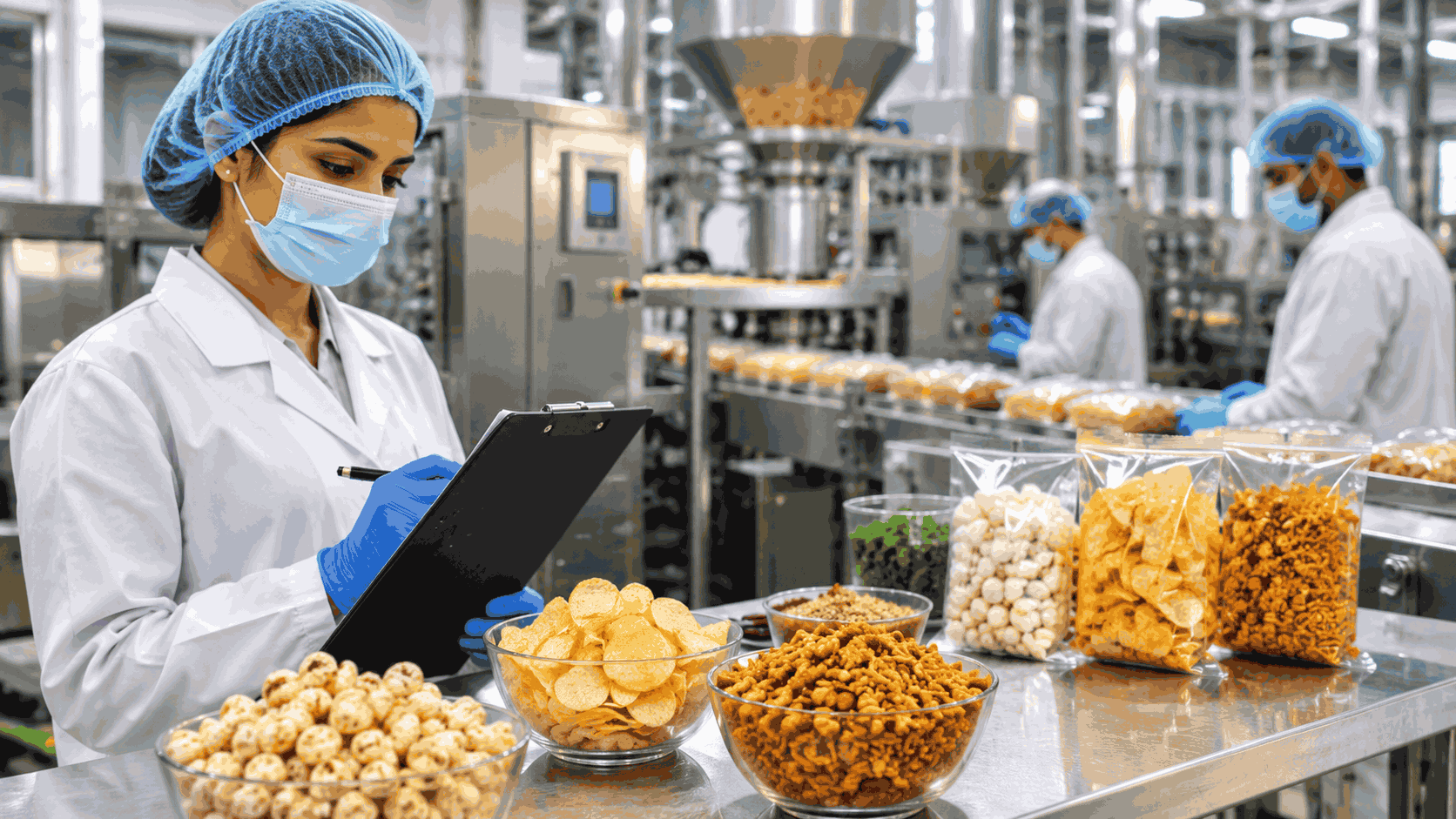
Food Manufacturing Quality Control involves monitoring important parameters throughout production rather than checking only the finished product. Depending on the product, these parameters may include ingredient proportions, mixing time, temperature, processing duration, moisture levels and filling quantities.
For example, beverage manufacturers must ensure that formulations and processing conditions remain within approved limits. Snack manufacturers may need to monitor frying or roasting temperatures, seasoning distribution and final moisture levels to achieve the desired product characteristics.
Maintaining Consistent Product Quality requires documented procedures, trained operators, calibrated equipment and regular inspections. When deviations occur, identifying their root causes helps manufacturers correct problems and prevent them from recurring.
Food Safety in Manufacturing
Food Safety in Manufacturing is essential for protecting consumers and ensuring that products meet applicable requirements. Contamination risks can arise from raw materials, equipment, personnel, water, processing environments or improper handling.
Manufacturers should implement appropriate hygiene practices, cleaning schedules, pest control measures and preventive food safety procedures. Risk-based monitoring and suitable testing can help identify potential hazards before products are released.
Food Quality Assurance also involves maintaining production records, ingredient traceability and corrective-action documentation. These practices make it easier to investigate complaints, identify affected batches and verify whether established procedures are being followed.
Food Packaging Quality Control and Shelf-Life Management
Protecting Product Quality After Manufacturing
Food Packaging Quality Control plays a significant role in preserving packaged food quality. Incorrect sealing, damaged containers, unsuitable packaging materials or inconsistent filling can compromise product protection and presentation.
Packaging must be compatible with the product's composition, processing conditions, storage requirements and distribution environment. For example, moisture-sensitive snacks require packaging that provides suitable moisture protection, while beverages need containers and closures appropriate for their formulations and processing methods.
Shelf Life and Food Preservation also require careful evaluation. Manufacturers should establish shelf life through appropriate testing and validation under defined storage conditions. Factors such as temperature, moisture, oxygen exposure, acidity and packaging integrity may influence product stability.
Food Manufacturing Process Optimization
Food Manufacturing Process Optimization focuses on improving production performance without compromising safety or quality. Manufacturers can review production records, monitor recurring defects, assess equipment performance and identify bottlenecks to understand where improvements are needed.
Modern monitoring systems, automated weighing equipment and controlled processing systems may help reduce variation and improve operational efficiency. However, technology alone cannot guarantee quality. Equipment must be properly maintained, employees must be trained and every change must be evaluated against approved product specifications.
These improvements can reduce avoidable waste, improve batch consistency and support more reliable production planning.
Future Challenges and Industry Opportunities
As consumer expectations evolve, manufacturers must balance product innovation, affordability, packaging requirements and consistent quality. New ingredients, formulations and packaging formats may introduce additional testing and validation requirements.
Food Manufacturing Best Practices increasingly emphasise traceability, preventive quality management, efficient resource use and data-supported decision-making. Businesses that invest in employee training, supplier evaluation and continuous improvement can become better prepared to manage production challenges as their operations expand.
For brands seeking external manufacturing support, EXIITO offers manufacturing models for beverages, namkeen, makhana, flour and pickles. Its manufacturing capabilities page explains its production and partner-manufacturing offerings.
Conclusion
Producing consistent packaged foods requires careful control of raw materials, processing conditions, food safety procedures, packaging quality and shelf-life requirements. By establishing clear specifications, monitoring critical production parameters and continuously improving their processes, manufacturers can reduce variations and build consumer confidence.
EXIITO supports own-brand and partner manufacturing across multiple food categories, with an emphasis on defined specifications, production checks and batch documentation. If you are planning to launch a new food product or expand your existing range, contact EXIITO Beverages to discuss your product requirements and suitable manufacturing options.