
Introduction
The food and beverage industry is experiencing significant changes as manufacturers adopt advanced technologies to improve production, maintain product quality and meet growing market demands. From ready-to-drink beverages and flavoured drinks to packaged namkeen and makhana, efficient manufacturing has become essential for businesses looking to expand their product ranges and serve larger markets.
Automated Food Processing plays an important role in modern manufacturing by reducing repetitive manual tasks, improving production consistency and supporting better process control. By integrating suitable machinery, sensors and automated production systems, manufacturers can streamline operations while maintaining hygiene and product standards. Understanding how automation works can help food businesses make informed decisions about production improvements and long-term growth.
What Is Automated Food Processing?
Automated Food Processing refers to the use of machinery, control systems and technology to perform different manufacturing activities with limited manual intervention. These activities may include ingredient measurement, mixing, heating, filling, sealing, labelling and packaging.
Unlike processes that depend heavily on manual operations, automated systems follow defined production parameters. Operators can monitor important factors such as temperature, processing time, filling volume and equipment performance. This helps manufacturers maintain more consistent results across production batches.
Automation does not eliminate the need for skilled employees. Instead, it allows production teams to focus more on monitoring, maintenance, quality checks and process improvement.
How Automation Improves Beverage Production
Automated Beverage Production
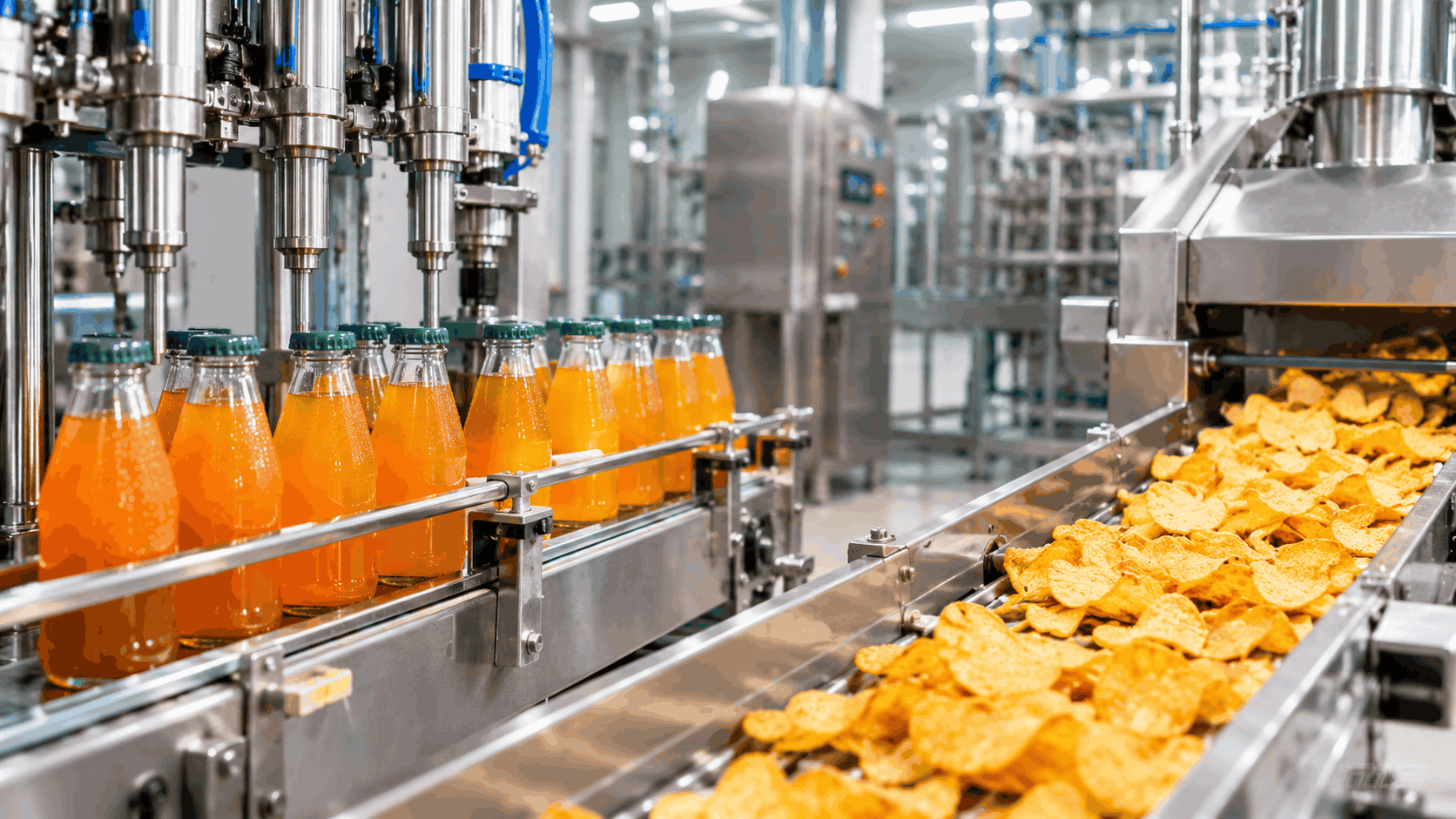
The beverage manufacturing process involves several stages, including ingredient preparation, blending, filtration, processing and filling. Automated Beverage Production can make these operations more organised by using controlled equipment for repetitive tasks.
Automated mixing systems help maintain consistent ingredient proportions, while temperature-controlled equipment supports the required processing conditions. Depending on the beverage type, automated filling machines can deliver more uniform filling volumes and reduce unnecessary product handling.
For products such as iced tea, fruit-based drinks, coffee and flavoured beverages, consistent formulation and processing are important for maintaining the intended taste and appearance. Beverage Manufacturing Automation can also support production monitoring, helping operators identify variations and take corrective action when required.
Better Filling and Packaging Operations
Filling and packaging are important stages in beverage manufacturing. Automated systems can coordinate bottle filling, cap placement, sealing, labelling and batch coding. Properly configured equipment helps improve packaging consistency and supports faster production workflows.
However, machinery must be selected according to the beverage formulation, packaging material, processing temperature and hygiene requirements. Suitable equipment integration helps protect product quality throughout the production process.
How Automation Improves Snack Manufacturing
Automated Snack Manufacturing
Automated Snack Manufacturing supports different stages of packaged snack production, including ingredient preparation, mixing, shaping, frying, roasting, seasoning and packaging.
For namkeen, controlled frying systems can help regulate temperature and processing time, while automated mixing equipment can improve ingredient distribution. In makhana production, suitable roasting and seasoning equipment can help maintain consistent texture and flavour distribution.
Automation also supports better coordination between processing and packaging operations. This is particularly useful when manufacturers handle multiple snack varieties or larger production volumes.
Improving Snack Production Efficiency
Snack Production Efficiency depends on maintaining the right balance between production speed, ingredient usage, product quality and equipment performance. Automated systems can help reduce repetitive manual work, improve batch consistency and minimise avoidable production delays.
For example, automated weighing and dosing equipment can help maintain accurate ingredient quantities, while packaging machines can support consistent sealing and portion control. These improvements can contribute to better material utilisation and more organised production schedules.
Key Benefits of Food Production Automation
Food Production Automation offers several operational advantages when implemented according to manufacturing requirements. It can improve production consistency by following standardised process settings and reduce variations caused by repetitive manual activities.
Automated systems can also support better production planning by coordinating different manufacturing stages. This helps manufacturers identify bottlenecks, manage equipment usage and allocate resources more effectively.
Another important benefit is improved process monitoring. Sensors and control systems can help operators track operating conditions and identify deviations before they affect larger quantities of products. These Food Processing Automation Benefits can contribute to improved efficiency, reduced avoidable wastage and more reliable manufacturing operations.
Smart Food Manufacturing and Quality Control
Smart Food Manufacturing combines automation, digital monitoring and data-based decision-making to improve production management. Modern Food Processing Technology can help manufacturers monitor equipment performance, record production information and maintain better process visibility.
Quality Control in Food Manufacturing remains essential even when automated equipment is used. Incoming ingredients, processing conditions, packaging integrity and finished products must undergo appropriate checks.
Automation can support quality management through accurate measurement, monitoring and batch documentation. However, microbiological testing, food safety verification and shelf-life validation still require suitable procedures and qualified oversight.
Challenges and Future Trends in Automated Manufacturing
Despite its benefits, automation requires careful planning and investment. Industrial Food Processing Equipment can involve significant installation, maintenance and training costs. Manufacturers must evaluate production capacity, product requirements and expected returns before selecting machinery.
Equipment breakdowns, calibration issues and inadequate employee training can also affect production efficiency. Therefore, regular maintenance, operator training and proper process documentation are important for successful implementation.
Looking ahead, Automated Food Manufacturing Systems are likely to incorporate more advanced sensors, digital production records, predictive maintenance and connected monitoring technologies. These developments may help manufacturers improve operational visibility and respond more effectively to changing production requirements.
Conclusion
Automation is transforming beverage and snack manufacturing by improving process consistency, production coordination and operational efficiency. From automated beverage filling to controlled snack processing and packaging, the right technology can help manufacturers manage growing demands while maintaining product quality.
For businesses planning to launch or expand their product ranges, choosing an experienced manufacturing partner is equally important. EXIITO supports own-brand and partner manufacturing across beverages, namkeen, makhana and pickles.
If you are exploring new product development, private labelling or third-party manufacturing, contact EXIITO Beverages to discuss your product requirements and manufacturing opportunities.