
Introduction
Plastic packaging is widely used in the food industry because it is lightweight, affordable, and effective at protecting products. However, managing plastic waste has become a growing environmental concern. Food manufacturers and consumers are increasingly exploring alternatives that can reduce waste without compromising food safety or convenience.
Edible Packaging is an emerging approach that could help address this challenge. It involves creating packaging from food-grade materials that can be safely consumed along with the product or, in some cases, designed to break down under suitable conditions. Although this technology is still developing for many applications, it offers exciting possibilities for the future of food packaging.
For businesses exploring modern food production methods, understanding packaging innovation is an important step. Learn more about EXIITO Beverages and its approach to food manufacturing, product development, and packaging coordination.
What Is Edible Packaging?
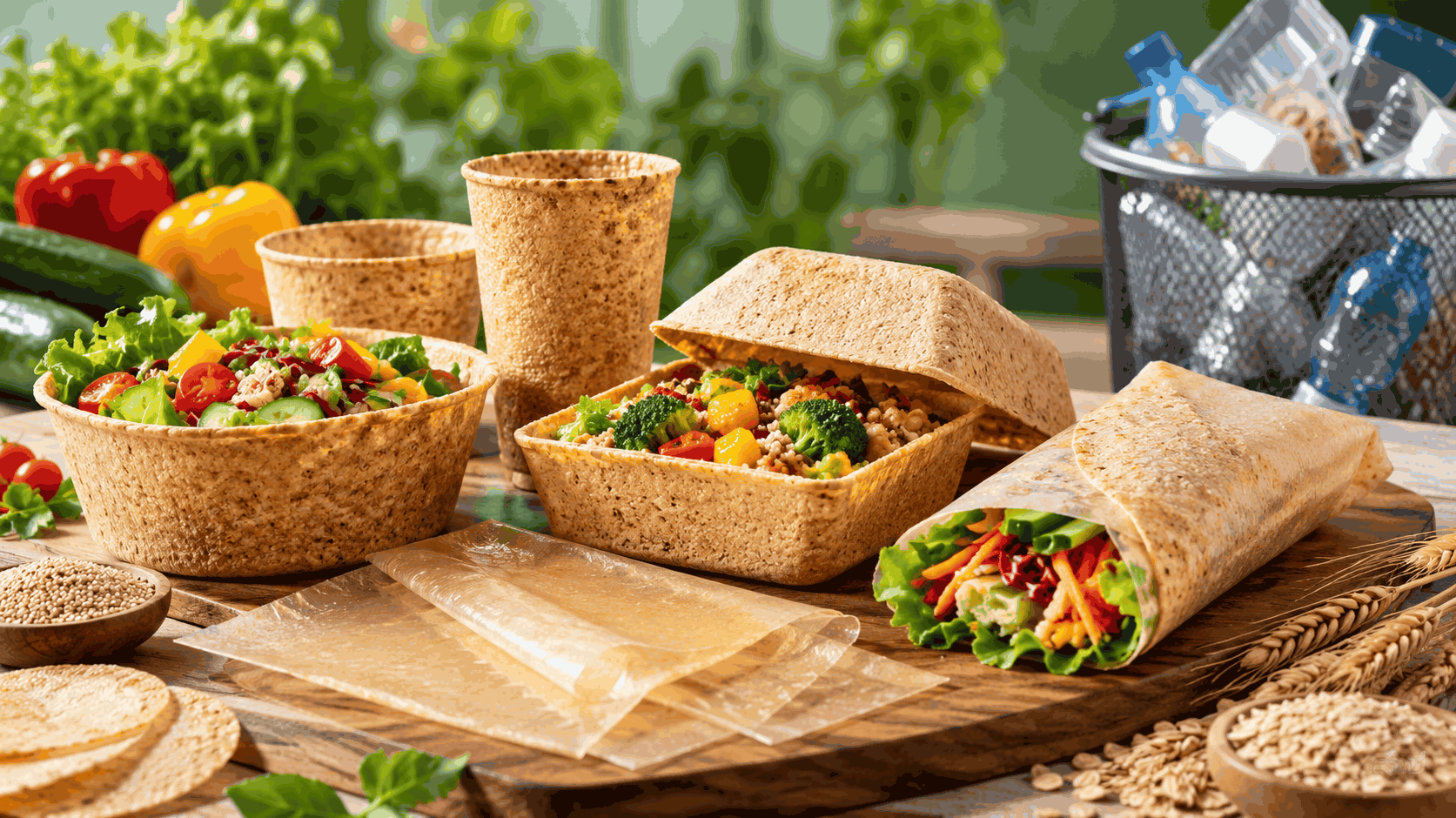
Edible packaging is made from ingredients suitable for human consumption, including certain proteins, starches, and plant-derived compounds. These materials can be processed into thin films, coatings, wraps, or small containers designed for specific food products.
Commonly researched materials include seaweed extracts, starch, gelatin, and proteins found in milk. Each material has different properties that influence its strength, flexibility, moisture resistance, and suitability for particular foods.
For example, edible coatings can help protect fruits from moisture loss, while dissolvable films may be useful for individually portioned ingredients. These applications demonstrate how Edible Food Packaging could provide alternatives to selected conventional packaging formats.
How Edible Packaging Could Reduce Plastic Waste
Reducing Dependence on Single-Use Plastics
One of the main goals of edible packaging is to reduce the need for certain single-use plastic wrappers and sachets. When packaging can be consumed with food or managed through an appropriate waste system, it may help reduce the amount of conventional packaging waste generated.
Edible films could potentially be used for individual food portions, confectionery, or selected dry ingredients. However, their suitability depends on product requirements, manufacturing costs, and food safety considerations. Edible packaging is not appropriate for every product and is unlikely to replace all conventional plastic packaging.
Supporting Sustainable Food Packaging
Sustainable Food Packaging involves more than simply replacing plastic with another material. Manufacturers must consider how packaging is produced, whether its ingredients are responsibly sourced, how much energy and water are required, and what happens after use.
Edible materials made from renewable resources may offer environmental benefits in certain applications. However, their overall impact depends on raw materials, production methods, transportation, and disposal conditions. A complete environmental assessment is necessary to determine whether a particular solution offers a genuine improvement.
Businesses interested in developing food products should also consider how packaging fits into their overall manufacturing process. Explore EXIITO's manufacturing services to learn about its product development, sampling, packaging coordination, and manufacturing support for food brands.
Exploring Biodegradable Materials
Biodegradable Packaging Materials are designed to break down through biological processes under suitable conditions. However, biodegradable packaging is not necessarily edible, and edible packaging must meet appropriate food safety requirements.
Researchers are investigating plant-based ingredients and seaweed-derived materials to develop packaging with useful protective properties. These innovations could provide additional options for businesses seeking to reduce packaging waste while maintaining product quality.
Emerging Edible Packaging Innovations
Seaweed-Based Packaging
Seaweed is attracting interest as a potential packaging resource because it contains compounds that can form films and gels. Depending on their formulation, these materials may be used for coatings, dissolvable films, or selected food packaging applications.
Seaweed-based solutions could help reduce dependence on conventional plastics in specific uses. However, moisture sensitivity, mechanical strength, processing requirements, and storage stability remain important considerations for commercial production.
Edible Films and Protective Coatings
Edible films create thin layers around or between food products. Protective coatings may be applied to fruits and vegetables to help manage moisture loss and maintain quality during storage. Other films are being explored for confectionery, snacks, and portion-controlled ingredients.
These Edible Packaging Innovations could provide additional protection while reducing the need for separate wrappers in selected applications. Their effectiveness depends on the food being packaged, storage conditions, and material properties.
Dissolvable Packaging
Dissolvable films are another area of development. Certain films made from suitable food-grade ingredients can dissolve in water or during food preparation, making them potentially useful for measured portions of powdered ingredients and seasonings.
For food manufacturers, this approach may simplify handling and reduce packaging waste in suitable applications. Nevertheless, dissolvable packaging must remain stable during storage, resist unintended moisture exposure, and meet the requirements of its intended use.
Challenges in Adopting Edible Packaging
Despite its potential, edible packaging faces several challenges before it can become widely used. Some materials are sensitive to humidity and may not provide the strong moisture, oxygen, or light barriers required for products with longer shelf-life needs.
Production costs and manufacturing capacity can also limit adoption. Businesses may need specialised equipment, revised production processes, and additional quality testing before introducing a new packaging format.
Food safety is equally important. Materials must be suitable for consumption, manufactured under appropriate hygiene conditions, and assessed for potential allergens, contamination, and interactions with the packaged food. Packaging must also comply with applicable food safety regulations.
These considerations highlight the importance of quality management throughout food production. Read about EXIITO's quality assurance processes to understand how raw material checks, in-process controls, finished-product inspections, and traceability contribute to food manufacturing quality.
Consumer acceptance is another consideration. People may have questions about taste, texture, hygiene, and whether packaging should be eaten or removed before consumption. Clear labelling and practical product design can help address these concerns.
The Future of Edible Packaging
The future of edible packaging will depend on continued research, improved material performance, affordable manufacturing, and reliable food safety standards. Collaboration between food manufacturers, material developers, and packaging suppliers may help move promising ideas from research into commercial applications.
Rather than replacing every conventional package, edible packaging is more likely to complement other sustainable solutions. Recyclable materials, reusable packaging, lightweight designs, and waste prevention can all contribute to reducing the environmental impact of food packaging.
Food manufacturers should assess alternative packaging solutions based on product suitability, shelf-life requirements, production needs, and environmental impact before selecting the most appropriate option.
Conclusion
Edible packaging offers an innovative way to rethink how food products are protected and presented. By exploring food-grade films, plant-based materials, and dissolvable formats, manufacturers may be able to reduce plastic waste in selected applications. However, successful adoption requires careful evaluation of food safety, product protection, cost, and environmental performance.
Is your business exploring food and beverage manufacturing opportunities? Visit EXIITO Beverages to explore its food and beverage product range or contact the EXIITO team to discuss your manufacturing requirements.