
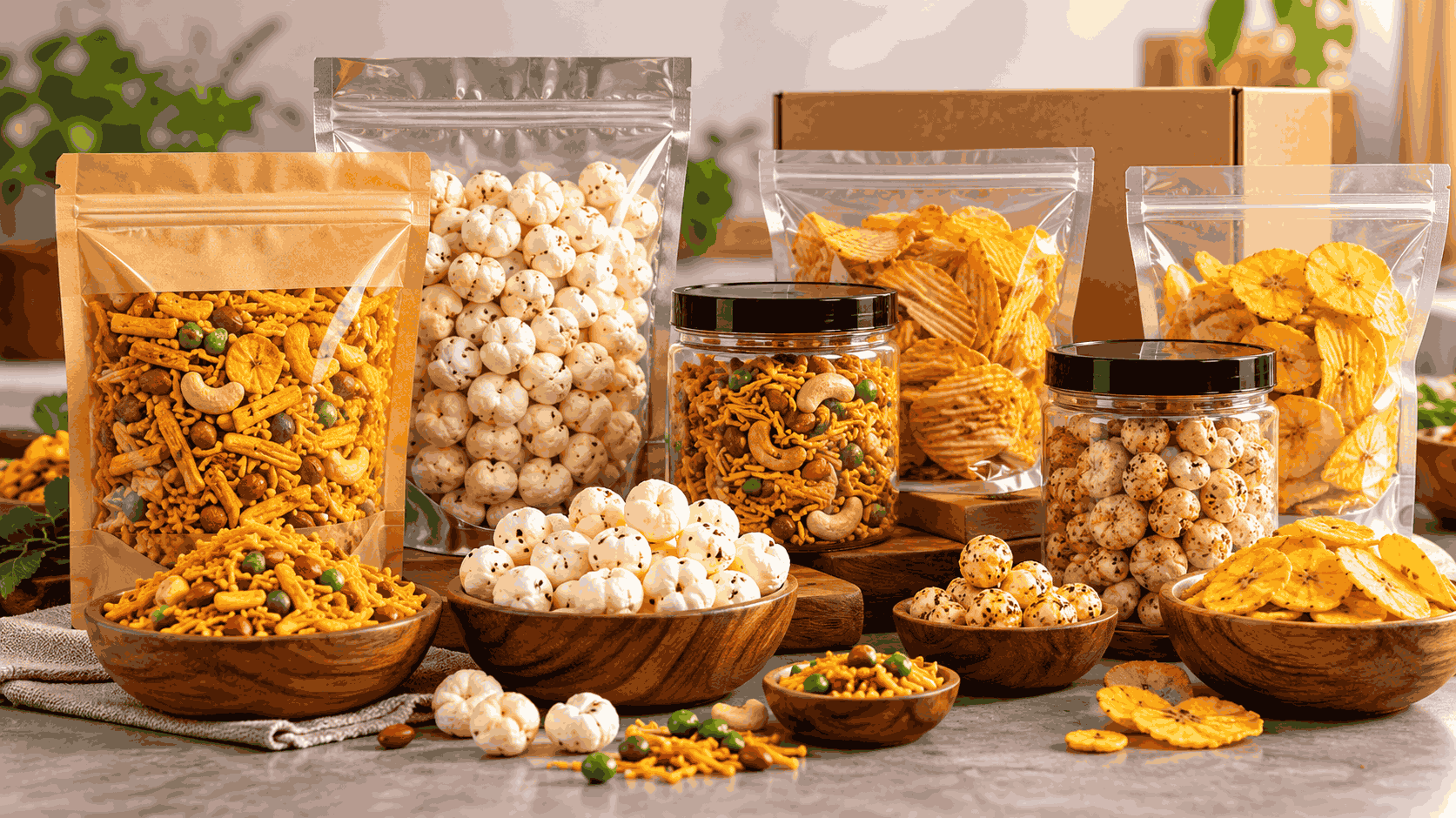
Introduction
The growing demand for convenient, ready-to-eat snacks has increased the importance of modern packaging in the food industry. Consumers today look for products that offer freshness, quality, convenience and attractive presentation. For food manufacturers, packaging is no longer just a way to contain products; it plays an important role in protecting food quality, maintaining freshness, extending shelf life and building brand recognition.
From traditional namkeen and crunchy makhana to a wide variety of packaged snacks, manufacturers are adopting advanced packaging technologies to meet changing market expectations. Modern Packaging Solutions for Packaged Snacks help businesses improve product protection, packaging efficiency and overall customer experience.
Importance of Modern Packaging in the Snack Industry
Packaging directly influences the quality and market appeal of packaged food products. Namkeen and makhana are particularly sensitive to moisture and exposure to air, which can affect their texture, taste and freshness. Poor packaging may result in loss of crispness, product damage and reduced consumer satisfaction.
Modern Food Packaging Solutions are designed to protect snacks from external environmental factors while maintaining their original characteristics. Proper sealing, suitable packaging materials and controlled storage conditions help manufacturers maintain product quality throughout distribution and retail storage.
Attractive packaging also helps brands communicate product information, display their identity and create a positive impression among customers. Therefore, selecting appropriate packaging is an important part of developing a successful snack brand.
Modern Packaging Technologies for Namkeen and Makhana
Flexible Packaging for Snacks
Flexible Packaging for Snacks is widely used because it offers convenience, versatility and efficient storage. Laminated pouches, stand-up pouches and resealable packaging formats are commonly considered for different snack products.
These formats can be designed with suitable barrier properties to protect products against moisture, oxygen and other external influences. Resealable options also allow consumers to store partially consumed snacks more conveniently. For manufacturers, flexible packaging can support efficient filling, sealing and transportation when matched with the right production requirements.
Advanced Makhana Packaging Technology
Makhana is known for its light structure and crunchy texture, making proper packaging essential. Exposure to moisture can reduce its crispness and affect the overall eating experience.
Modern Makhana Packaging Technology focuses on selecting appropriate food-grade materials, effective sealing methods and suitable protective barriers. Depending on the product and its intended shelf life, manufacturers may consider laminated pouches, protective packaging formats or rigid containers.
The right packaging solution helps protect roasted and flavoured makhana during handling, transportation and retail storage while maintaining its product appeal.
Innovative Packaging Solutions for Namkeen
Namkeen products come in different shapes, textures and seasoning combinations. Their packaging requirements may vary depending on oil content, product size and moisture sensitivity.
Packaging Solutions for Namkeen should provide adequate protection against moisture, air exposure and physical damage. High-quality laminated pouches and suitable sealing systems can help maintain the desired texture and flavour. Clear product information, attractive graphics and convenient pack sizes can further improve the retail presentation of namkeen products.
Role of Packaging Materials in Product Protection
Choosing suitable Snack Food Packaging Materials is essential for maintaining food quality. Food-grade packaging materials must be selected according to product characteristics, storage requirements and applicable food safety regulations.
Multi-layer packaging structures can provide different barrier properties depending on their material composition. Moisture-Proof Packaging for Snacks is especially important for products that require a crisp texture, such as roasted makhana, mixtures and other savoury snacks.
Packaging manufacturers and food businesses should also evaluate material strength, sealing compatibility, food-contact safety and transportation conditions before finalising a packaging format. These considerations help reduce packaging-related quality problems and support consistent product presentation.
Modern Snack Packaging Machines and Automation
Automation is transforming packaging operations across the food manufacturing industry. Modern Snack Packaging Machines can perform operations such as product filling, pouch forming, weighing, sealing and batch coding, depending on the equipment configuration.
Automated packaging systems help manufacturers improve operational consistency, reduce manual handling and support higher production requirements. Accurate weighing and reliable sealing also contribute to better packaging control and reduced product wastage.
For growing snack businesses, investing in suitable packaging equipment can support production planning and improve overall efficiency. However, machinery selection should depend on product type, pack size, production capacity and available investment.
Benefits of Sustainable Food Packaging
Sustainability is becoming an important consideration in packaging decisions. Food manufacturers are exploring recyclable materials, material-efficient packaging structures and packaging designs that reduce unnecessary waste.
Sustainable Food Packaging should balance environmental considerations with product protection, food safety and practical performance. Manufacturers must evaluate whether alternative materials provide the required barrier properties and maintain packaging integrity throughout the supply chain.
The future of Food Packaging Trends will increasingly focus on balancing sustainability, convenience, attractive design and product preservation.
Challenges and Future Trends in Food Packaging
Although packaging technology offers several advantages, manufacturers still face challenges related to material costs, machinery investment, packaging compatibility and regulatory requirements. Selecting a packaging material that protects the product without unnecessarily increasing costs requires proper evaluation.
Future developments in Innovative Food Packaging Technology may include improved barrier materials, smart packaging features, recyclable structures and more efficient automated systems. Digital printing and customised packaging designs may also help brands create stronger shelf recognition.
Manufacturers will need to evaluate new technologies based on product requirements, commercial feasibility and applicable food packaging standards.
Conclusion and CTA
Modern packaging plays a vital role in maintaining snack quality, improving product presentation and supporting business growth. From Flexible Packaging for Snacks to advanced sealing systems and sustainable materials, the right approach can help manufacturers protect namkeen, makhana and other packaged food products.
At EXIITO, we understand the importance of quality-focused food manufacturing, suitable packaging coordination and consistent product presentation. Explore our namkeen range and makhana products to discover our snack categories.
If you are planning to develop or expand your snack brand, explore our food manufacturing services and connect with EXIITO to discuss your product and packaging requirements.