
Introduction
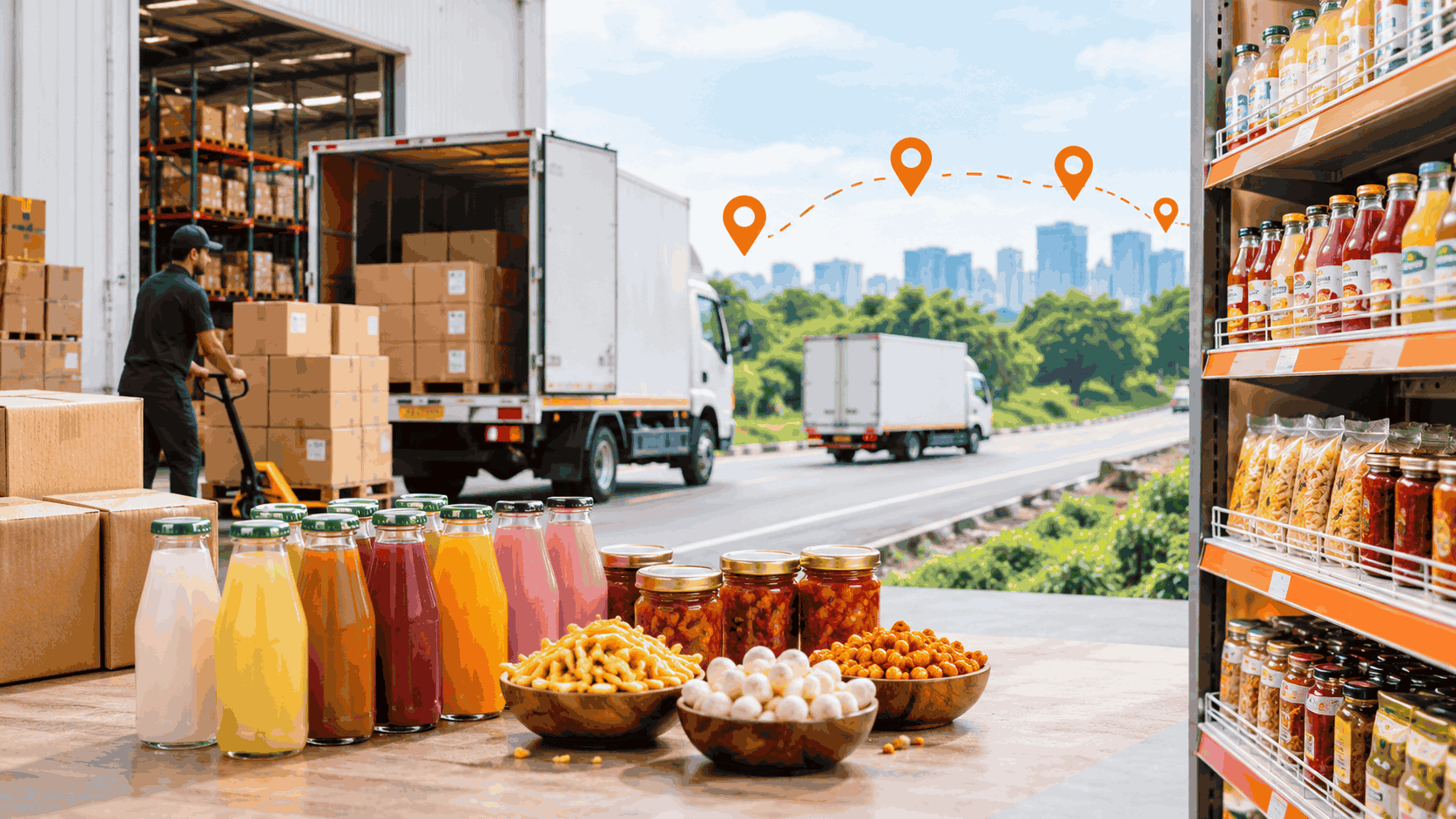
In the fast-moving consumer goods (FMCG) industry, producing high-quality food products is only one part of building a successful brand. Making those products available to customers at the right place and time is equally important. This is where Food Distribution Networks for FMCG Brands play a crucial role. A well-organised distribution system connects manufacturers with wholesalers, distributors, retailers, and ultimately consumers.
As competition increases in India's food and beverage market, brands need reliable distribution channels to improve product availability and expand their customer base. From packaged snacks and beverages to pickles and other food products, an effective distribution network helps businesses enter new markets, strengthen retail relationships, and build long-term customer trust.
Understanding Food Distribution Networks in the FMCG Industry
A food distribution network is a structured system through which products move from manufacturing facilities to their final selling destinations. It generally involves manufacturers, carrying and forwarding (C&F) agents, super stockists, distributors, wholesalers, retailers, and online marketplaces.
An efficient FMCG distribution network ensures that products reach different geographical markets without unnecessary delays or supply interruptions. Each participant has a defined responsibility, helping maintain inventory availability and smooth product movement.
For food manufacturers, establishing reliable Food Distribution Channels is essential for reaching supermarkets, grocery stores, convenience outlets, restaurants, and other business customers.
How Distribution Networks Help FMCG Brands Expand Their Reach
Improving Market Coverage
One of the biggest advantages of an organised distribution network is wider geographical coverage. Manufacturers can work with regional distributors and wholesale partners to introduce products in different cities, towns, and local markets.
Instead of managing every retail outlet directly, brands can rely on experienced distribution partners who understand local market requirements. This approach supports FMCG Market Expansion and helps businesses reach customers across different regions.
Strengthening Retail and Wholesale Connections
Strong relationships with distributors, wholesalers, and retailers are important for maintaining consistent product availability. Retailers prefer suppliers who can provide regular stock, clear communication, and dependable delivery schedules.
Through organised Food Wholesale and Retail Distribution, FMCG brands can develop long-term trade relationships and improve their presence in local markets. Distributors also help manufacturers understand retailer preferences, product demand, and changing customer buying behaviour.
Improving Product Availability and Customer Convenience
Customers are more likely to purchase products that are easily available in their preferred stores. An effective distribution system helps prevent frequent stock shortages and ensures that popular products remain accessible.
For food and beverage brands, availability is particularly important because customers often expect their preferred products to be consistently available. Efficient Retail Distribution for Food Products helps brands improve customer convenience and create more opportunities for repeat purchases.
Supporting Efficient Inventory and Supply Chain Management
Inventory management is an essential part of successful FMCG operations. Manufacturers and distributors must coordinate stock levels, order quantities, warehouse capacity, and delivery schedules.
Effective FMCG Supply Chain Management helps businesses monitor product movement and plan replenishment according to market demand. Proper forecasting can reduce excess inventory, minimise stock shortages, and support better resource utilisation.
Important Distribution Strategies for Food Brands
Successful Food Product Distribution Strategies require proper planning and coordination between manufacturing and sales teams. Businesses should identify their target markets, understand customer demand, and select distribution partners according to their operational capabilities.
A combination of traditional retail, wholesale supply, modern trade, and online selling channels can help brands reach different customer segments. Regional distribution partners can also provide valuable insights into local preferences and purchasing patterns.
Additionally, manufacturers should establish clear commercial agreements, delivery expectations, product handling procedures, and communication systems. These practices strengthen Food Distribution Network Management and help maintain consistency throughout the supply chain.
Challenges in FMCG Logistics and Distribution
Despite its advantages, managing food distribution networks involves several challenges. Transportation costs, fuel price fluctuations, warehouse limitations, changing demand, and delivery delays can affect operational efficiency.
Food products may also require specific storage and handling conditions to maintain their quality and safety. Poor inventory management or inadequate stock rotation can increase the risk of damaged, expired, or unsellable products.
To address these challenges, businesses should improve demand forecasting, maintain accurate inventory records, monitor distribution performance, and coordinate closely with supply chain partners. Technology-based tracking and digital order management systems can further improve visibility across distribution operations.
Future Trends in FMCG Distribution Networks in India
The future of FMCG Distribution Channels in India is likely to involve greater use of digital technologies, organised retail networks, and data-driven supply chain planning.
Online marketplaces and e-commerce platforms are creating additional opportunities for food brands to reach customers beyond traditional retail stores. Meanwhile, digital inventory systems and route planning tools can help distributors improve order processing and delivery coordination.
Businesses that combine strong regional partnerships with efficient logistics and digital distribution management will be better positioned to respond to changing market requirements.
Conclusion
An efficient food distribution network is a key growth driver for FMCG brands. It helps manufacturers expand geographical coverage, improve product availability, strengthen retail relationships, and manage supply chain operations more effectively. With the right distribution partners and well-planned strategies, food businesses can increase their market presence and reach more customers.
At EXIITO Beverages Private Limited, we understand the importance of reliable manufacturing and organised market distribution. Our product range includes beverages, namkeen, makhana, and pickles, supported by manufacturing and business partnership opportunities.
Explore our food distribution network and partnership opportunities to discover how you can become part of our growing network. Connect with EXIITO to discuss distribution opportunities and take the next step towards business growth.