
Introduction
Traditional Indian pickles are known for their rich flavours, distinctive aromas, and diverse regional recipes. From spicy mango and tangy lime pickles to mixed vegetable varieties, each preparation reflects India's diverse culinary traditions. Behind these familiar flavours is a careful combination of fresh produce, spices, edible oils, salt, and natural preservation ingredients. Understanding the ingredients used in pickle manufacturing is essential for maintaining taste, texture, quality, and consistency in commercial food production.
As consumer interest in authentic flavours and familiar food ingredients continues to grow, manufacturers are paying greater attention to raw material selection and traditional preparation methods. The use of natural ingredients in food product development also plays an important role in creating pickle varieties that meet changing consumer preferences.
Essential Raw Materials for Pickle Production
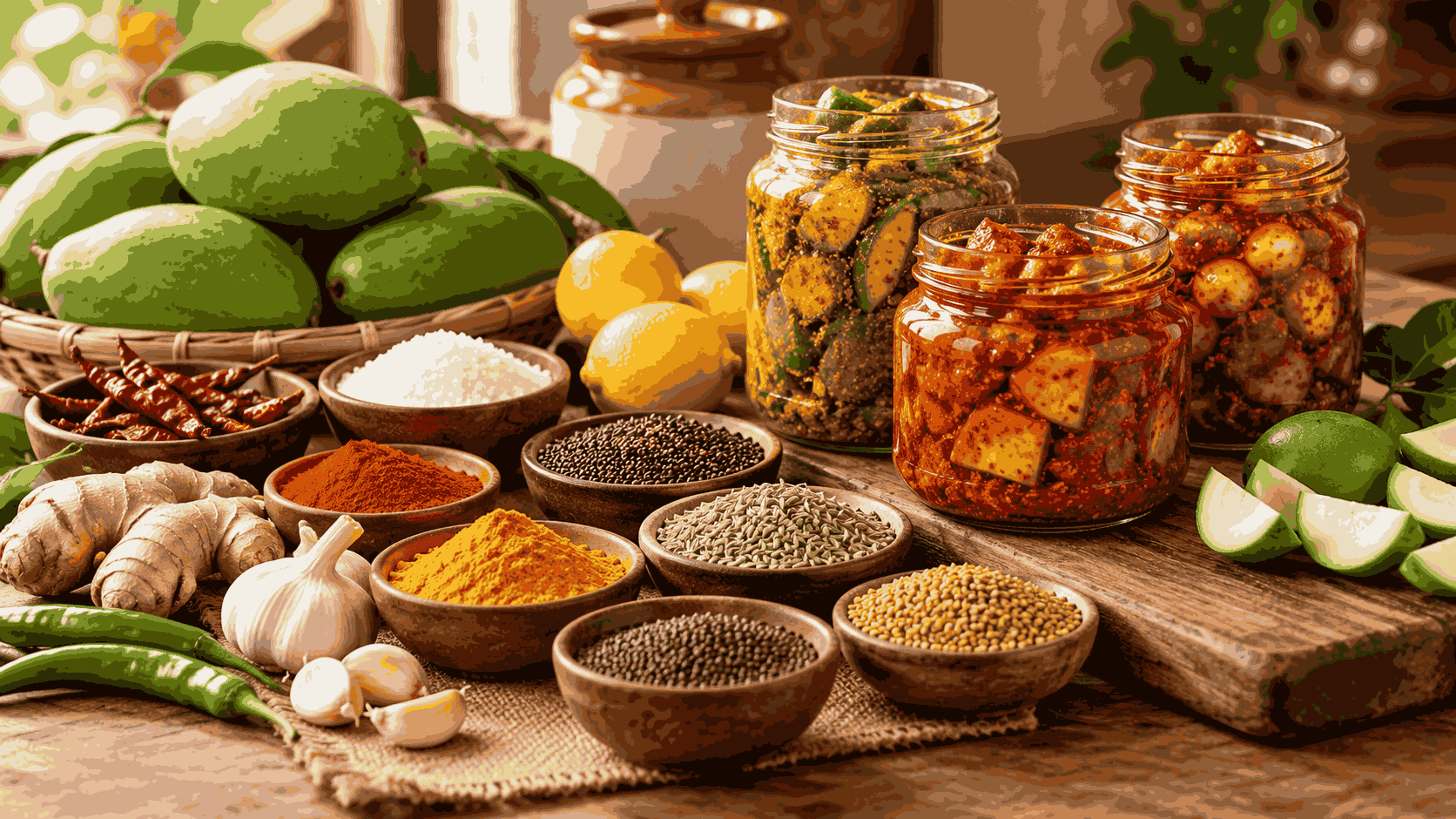
The quality of a pickle begins with the selection of suitable raw materials. Fresh fruits and vegetables form the foundation of most traditional Indian pickle recipes. Mango, lemon, lime, chilli, carrot, green chilli, and mixed vegetables are commonly used, depending on regional preferences and product requirements.
For mango pickle, raw green mangoes are particularly important because their firm texture and natural acidity contribute to the characteristic taste of the finished product. Manufacturers must select produce with suitable maturity, freshness, and minimal physical damage. Consistent raw material quality helps maintain the expected flavour and texture across production batches.
Spices Used in Traditional Indian Pickle Making
Spices are responsible for the distinctive aroma, colour, and flavour of Indian pickles. Mustard seeds, fenugreek seeds, fennel seeds, turmeric, red chilli powder, nigella seeds, and asafoetida are commonly used in different regional recipes.
Mustard seeds provide a sharp, pungent flavour, while fenugreek adds an earthy and slightly bitter taste. Fennel contributes a mild sweetness, and turmeric provides colour along with its characteristic earthy aroma. Red chilli powder creates the desired level of heat, while nigella seeds add a distinctive flavour.
The selection and proportion of spices depend on the recipe and desired taste profile. Proper cleaning, storage, and handling are equally important to protect their freshness and quality during commercial pickle manufacturing.
Role of Oil, Salt, and Acidity in Pickle Preparation
Oil and salt are essential ingredients in many traditional pickle recipes. Mustard oil and other suitable edible oils are commonly used in oil-based pickle preparation. Oil contributes richness, carries spice flavours, and helps coat the ingredients. Its suitability and quality should be assessed before use.
Salt plays an important role in flavour development and preservation. It helps draw moisture from fruits and vegetables and supports the preservation process when used at appropriate concentrations. The quantity must be carefully controlled according to the recipe and processing requirements.
Acidic ingredients such as lemon juice, tamarind, and vinegar are also used in certain pickle varieties. They contribute sourness and influence the product's acidity. The choice depends on the traditional recipe, desired flavour, and preservation requirements.
Understanding the Indian Pickle Manufacturing Process
Traditional Indian pickle making involves several stages, beginning with the inspection and cleaning of fresh produce. Fruits and vegetables are washed, sorted, cut, and prepared according to the product specification. Proper drying may also be necessary to manage excess surface moisture.
The prepared ingredients are combined with salt and selected spices. Depending on the recipe, edible oil or acidic ingredients are added to develop the desired flavour. Some traditional pickles undergo fermentation or maturation, allowing their characteristic taste and aroma to develop over time.
In commercial pickle manufacturing, these traditional techniques must be adapted to controlled production conditions. Standardised recipes, accurate ingredient measurements, hygienic handling, and suitable packaging help maintain consistency. You can also explore how pickle manufacturing processes maintain product quality and consistency for more information about production practices.
Importance of Quality Control in Pickle Production
Quality control is essential throughout pickle production. Manufacturers need to inspect incoming raw materials, verify ingredient specifications, monitor processing conditions, and evaluate finished products. Important considerations include ingredient freshness, salt concentration, acidity, oil quality, moisture management, hygiene, and packaging integrity.
Food preservation in pickle manufacturing depends on several factors working together. Salt, acidity, processing methods, and storage conditions must be appropriately controlled. Manufacturers should validate preservation conditions and follow applicable food safety requirements rather than relying on traditional ingredients alone.
A structured quality management system helps reduce variations between batches and supports product safety. Learn more about EXIITO's Quality Assurance practices and its approach to monitoring materials, production, and finished products.
Future Opportunities in the Pickle Processing Industry in India
The pickle processing industry in India continues to offer opportunities for food manufacturers interested in traditional flavours and packaged food products. Consumers are increasingly exploring regional recipes, convenient packaging, and familiar ingredients.
At the same time, manufacturers face challenges involving raw material availability, seasonal price fluctuations, ingredient consistency, shelf-life management, and changing consumer expectations. Improved sourcing practices, controlled processing, recipe standardisation, and product development can help address these challenges.
The growing interest in natural ingredients in food product development also creates opportunities to explore traditional recipes with carefully selected ingredients and clearly defined product specifications.
Conclusion
The success of traditional Indian pickle manufacturing depends on the right combination of fresh produce, spices, oil, salt, and suitable acidic ingredients. Each component contributes to the flavour, texture, aroma, and preservation characteristics of the finished product. By combining traditional recipes with systematic processing and quality control, manufacturers can develop consistent pickle products that meet modern market expectations.
Develop Quality Pickle Products with EXIITO
EXIITO focuses on food manufacturing across multiple product categories, including traditional pickles, beverages, namkeen, and makhana. For businesses interested in developing their own packaged pickle range, explore EXIITO's Pickle Products and discover its R&D and Quality Control capabilities.
Contact EXIITO to discuss product development, private label manufacturing, and food manufacturing opportunities.
Website: https://www.exiitobeverages.com/