
Introduction
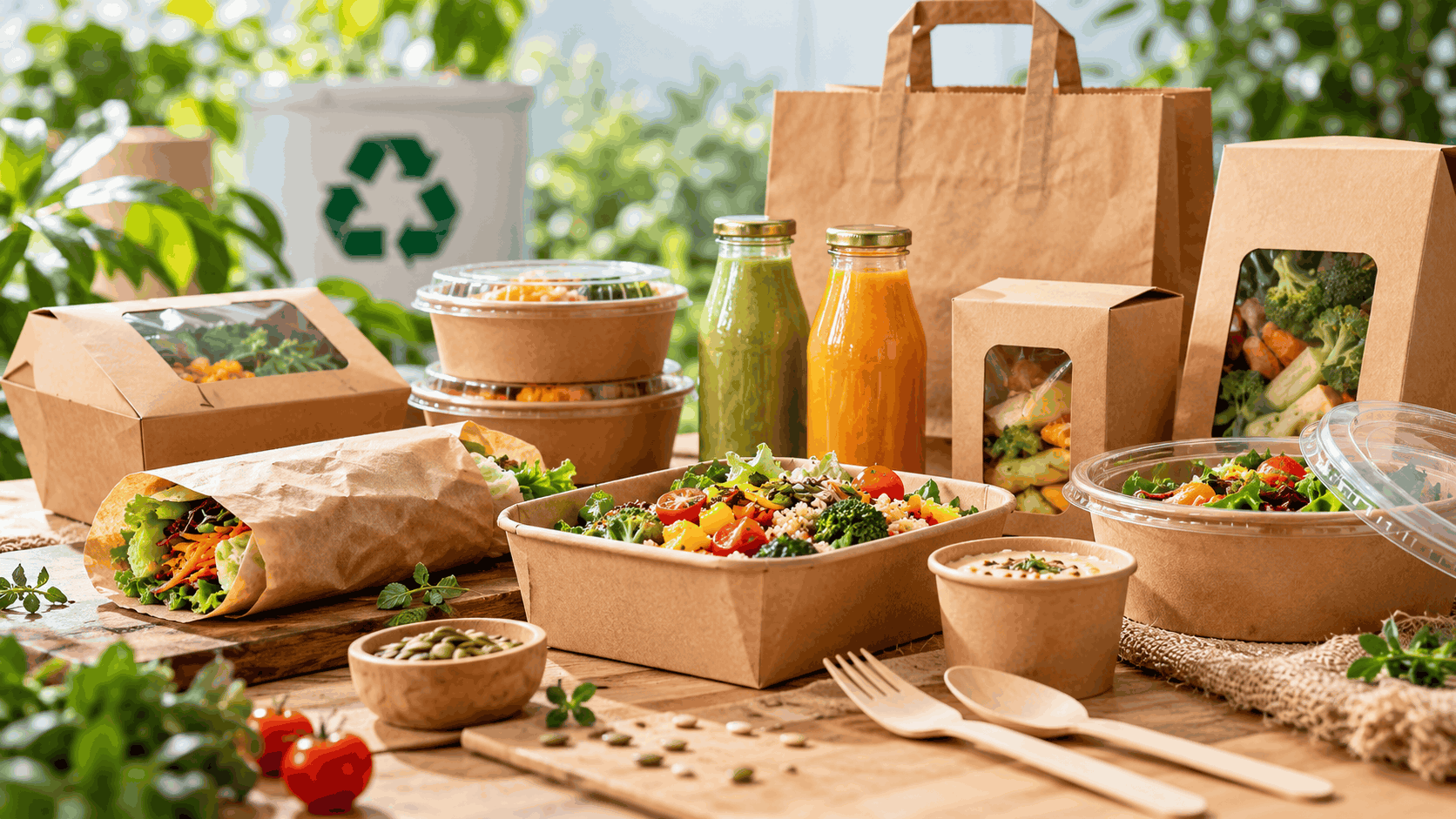
Sustainable food packaging solutions are gaining significant attention as food manufacturers, retailers, and consumers become more conscious of packaging waste and environmental responsibility. Traditional packaging materials, particularly single-use plastics, have raised concerns about waste management, pollution, and the long-term impact of discarded materials. As a result, businesses are exploring eco-friendly alternatives that protect food products while reducing their environmental footprint.
The growing demand for responsible packaging has encouraged manufacturers to consider recyclable materials, biodegradable options, lightweight packaging designs, and improved waste management practices. These developments are influencing food packaging industry trends and creating opportunities for businesses to rethink how their products are packaged, transported, and presented to consumers. For food manufacturers such as EXIITO Beverages, packaging is an important part of delivering products that meet market expectations while maintaining product quality and presentation.
Why Sustainable Food Packaging Solutions Matter
Packaging plays an essential role in the food industry because it protects products from contamination, moisture, physical damage, and external environmental conditions. However, packaging that is difficult to recycle or dispose of responsibly can contribute to growing waste management challenges. Sustainable food packaging solutions aim to balance product protection, practical performance, material efficiency, and environmental considerations.
Businesses are increasingly evaluating the entire packaging lifecycle, from raw material sourcing and manufacturing to transportation, consumer use, and final disposal. This approach helps manufacturers identify opportunities to reduce unnecessary material consumption and improve packaging efficiency. It also encourages businesses to consider whether their packaging can be reused, recycled, or processed through appropriate waste management systems.
Consumer awareness is another important factor behind this shift. Many customers now pay attention to packaging materials when comparing products, particularly when brands communicate their environmental commitments clearly and honestly. Companies that select appropriate packaging and provide accurate disposal instructions can help customers make more informed purchasing decisions.
Understanding Eco-Friendly Food Packaging
Eco-friendly food packaging refers to packaging designed to reduce environmental impact while maintaining the safety, freshness, and usability of food products. Depending on the application, this may include recyclable paperboard, glass containers, certain recyclable plastics, reusable packaging systems, and materials made from renewable resources.
Choosing suitable packaging requires more than selecting a material labelled environmentally friendly. Manufacturers must evaluate durability, food-contact safety, moisture resistance, shelf-life requirements, transportation conditions, and compatibility with existing production equipment. A material that works well for dry snacks may not provide sufficient protection for beverages or products that require strong moisture barriers.
For example, glass packaging can be reused in suitable systems and is recyclable where collection and processing facilities are available. Recyclable plastic packaging may offer advantages in weight and transportation efficiency when designed appropriately. Paper-based materials can work well for selected dry food products, although coatings, adhesives, and contamination may affect their recyclability.
The most appropriate choice depends on the product, local recycling infrastructure, packaging design, and the environmental impact across the material's lifecycle.
The Growing Role of Biodegradable Food Packaging
Biodegradable food packaging is another area receiving attention from manufacturers and packaging developers. These materials are developed to decompose naturally through biological activity when exposed to appropriate environmental conditions. Depending on their composition, they may be made from plant-based materials, cellulose, starch-based compounds, or other biodegradable polymers.
However, biodegradable packaging does not automatically mean that a product will decompose quickly in every environment. Certain packaging materials need specific levels of heat, moisture, and microbial activity to decompose properly. Compostable packaging may also require a suitable industrial or home composting facility, depending on its composition, design, and certification requirements.
Food manufacturers should therefore verify material specifications, recognised certifications, disposal requirements, and compatibility with the intended food product before adopting biodegradable alternatives. Clear consumer instructions are equally important because incorrect disposal can reduce the environmental benefits of these materials.
Recyclable Food Packaging Solutions and Material Selection
Recyclable food packaging solutions can help recover valuable materials and reduce demand for virgin resources when effective collection and recycling systems are available. Materials such as glass, aluminium, paper, cardboard, and certain plastics may be recyclable, depending on their composition, condition, local facilities, and applicable regulations.
Packaging design has a significant influence on recyclability. Excessive labels, incompatible material combinations, difficult-to-remove components, and unnecessary layers can complicate sorting and processing. Manufacturers can improve packaging efficiency by simplifying designs, reducing mixed-material components where practical, and selecting materials compatible with established recycling streams.
Another useful approach is lightweight packaging. Reducing packaging weight without compromising product safety can lower material consumption and may reduce transportation-related impacts. However, manufacturers must ensure that lighter packaging remains sufficiently strong throughout filling, storage, distribution, and handling.
These considerations are especially important for companies operating across multiple product categories. Businesses such as EXIITO, which manufactures beverages and packaged food products, need packaging decisions that suit the specific characteristics and handling requirements of each product.
Food Packaging Innovations Transforming the Industry
Food packaging innovations are expanding the options available to manufacturers seeking more responsible packaging methods. Developments in material science, packaging machinery, digital traceability, and product design are helping businesses explore alternatives to conventional packaging systems.
One important development is the use of recycled materials in suitable packaging applications. Where permitted and technically appropriate, recycled content can reduce reliance on newly produced raw materials. Manufacturers must still verify food-contact compliance and ensure that the selected material meets the required performance standards.
Another development is the introduction of reusable packaging systems. Reusable containers can reduce the need for single-use packaging when collection, cleaning, return logistics, and repeated use are managed effectively. Their environmental performance depends on factors such as transportation distances, the number of reuse cycles, cleaning requirements, and the energy used throughout the system.
Improved packaging machinery can also support material efficiency by enabling accurate filling, consistent sealing, and reduced packaging errors. Better process control may help limit damaged packages, product leakage, and avoidable waste during production. For businesses evaluating manufacturing improvements, EXIITO's manufacturing capabilities provide relevant information about its production and packaging capabilities.
Reducing Packaging Waste Through Smarter Design
Reducing packaging waste begins with understanding how much material a product requires for safe storage and transportation. Packaging that uses excessive material can increase procurement costs, occupy additional warehouse space, and create more waste after consumption. A carefully designed package can help address these issues without sacrificing functionality.
Manufacturers can begin by reviewing package dimensions, material thickness, secondary packaging, protective layers, and transport requirements. Standardising packaging formats across suitable product lines may also simplify purchasing, storage, and production planning.
Accurate production planning is equally important. Incorrect filling quantities, damaged containers, sealing failures, and labelling mistakes can result in rejected products and wasted packaging materials. Routine equipment maintenance, employee training, and quality checks can help identify these problems before they become more extensive.
Businesses should also measure their progress using practical indicators, such as packaging material used per product unit, packaging-related rejection rates, recycled content where applicable, and the proportion of packaging compatible with local recycling systems. Tracking these measures provides a clearer understanding of whether packaging changes are delivering meaningful improvements.
Sustainable Packaging Materials for Different Food Products
Selecting sustainable packaging materials requires a product-specific approach because different foods have different protection and storage requirements. Dry snacks, for example, may require moisture and oxygen barriers to preserve crispness, while beverages may need containers that withstand liquid contact, filling operations, transportation, and storage conditions.
Glass containers can provide a reusable and recyclable option for suitable food and beverage products, although their weight and handling requirements must be considered. Paper-based packaging may be appropriate for selected dry products, while recyclable plastics can offer lightweight and durable solutions where suitable recycling infrastructure exists.
Compostable materials may be useful for certain applications, but their performance, shelf-life protection, certification, and disposal pathways must be evaluated carefully. No single packaging material is the most sustainable choice for every product.
Food businesses should assess the complete packaging system rather than focusing only on one material characteristic. Product safety, shelf life, material sourcing, transport efficiency, consumer convenience, and end-of-life management all influence the overall outcome.
Challenges in Adopting Green Packaging Solutions
Despite growing interest, the transition to green packaging solutions can present practical challenges. Alternative packaging materials may involve higher upfront expenses, supply limitations, special storage conditions, or difficulties integrating with existing manufacturing machinery and processes. Some materials may also require changes to filling, sealing, labelling, or transportation processes.
Food safety is another essential consideration. Food packaging should comply with relevant food-contact safety regulations and maintain sufficient product protection, quality, and freshness throughout its expected shelf life. A packaging change should not compromise product integrity simply to achieve a sustainability objective.
Manufacturers can manage these challenges through a structured evaluation process. They can begin with a specific product, assess suitable materials, conduct packaging trials, review product stability, and compare costs and performance before expanding the change across a wider product range.
Working with experienced manufacturing partners can also help businesses understand packaging requirements alongside production feasibility. Companies exploring outsourced food production can review EXIITO's contract manufacturing services to learn about its manufacturing approach and supported product categories.
Future Food Packaging Industry Trends
The future of food packaging is likely to involve a combination of material innovation, improved recycling systems, lightweight design, reuse initiatives, and more transparent environmental communication. Businesses are increasingly expected to evaluate packaging choices based on measurable performance rather than relying solely on broad environmental claims.
Packaging regulations and waste management policies may also influence how manufacturers select materials, label products, and manage packaging after use. Requirements differ by market and product category, making it important for businesses to monitor applicable rules before introducing new packaging formats.
Technology will continue to play a role in improving packaging operations. Better production monitoring, material tracking, automated inspection, and digital product information can help manufacturers improve consistency and identify opportunities to reduce waste.
At the same time, collaboration among packaging suppliers, food manufacturers, retailers, recyclers, and consumers will remain important. Sustainable packaging solutions are more effective when materials are designed appropriately, products are protected efficiently, and disposal or recovery systems are available to support the intended environmental benefits.
Conclusion and Call to Action
Sustainable food packaging solutions are becoming an important consideration for businesses looking to reduce packaging waste, improve material efficiency, and respond to changing market expectations. From recyclable containers and biodegradable materials to reusable systems and smarter packaging design, manufacturers have several options to explore. The right approach depends on product requirements, food safety, cost, manufacturing compatibility, and the availability of suitable waste management infrastructure.
By evaluating packaging across its entire lifecycle, businesses can make more informed decisions and identify practical opportunities for improvement. Sustainable packaging is not simply about replacing one material with another; it involves balancing environmental considerations with product protection, operational efficiency, and customer needs.
EXIITO is committed to manufacturing food and beverage products while supporting businesses through its manufacturing services. If your company is exploring food product development, packaging requirements, or manufacturing partnerships, visit the EXIITO website or contact the EXIITO team to discuss your requirements.