
Introduction
The quality of a pickle depends not only on its recipe but also on the ingredients used during production. In today's competitive food processing industry, sustainable sourcing of ingredients has become an important consideration for manufacturers. Selecting fresh agricultural produce, purchasing responsibly sourced spices, and maintaining reliable supplier relationships can help improve product consistency while supporting environmentally responsible manufacturing practices.
The pickle manufacturing process begins with selecting suitable raw materials and continues through cleaning, preparation, processing, packaging, and quality inspection. Every stage requires attention to ingredient quality and food safety. For businesses involved in commercial pickle production, adopting sustainable sourcing practices can support long-term operational efficiency, product quality, and customer confidence.
Understanding Raw Material Requirements in Pickle Manufacturing
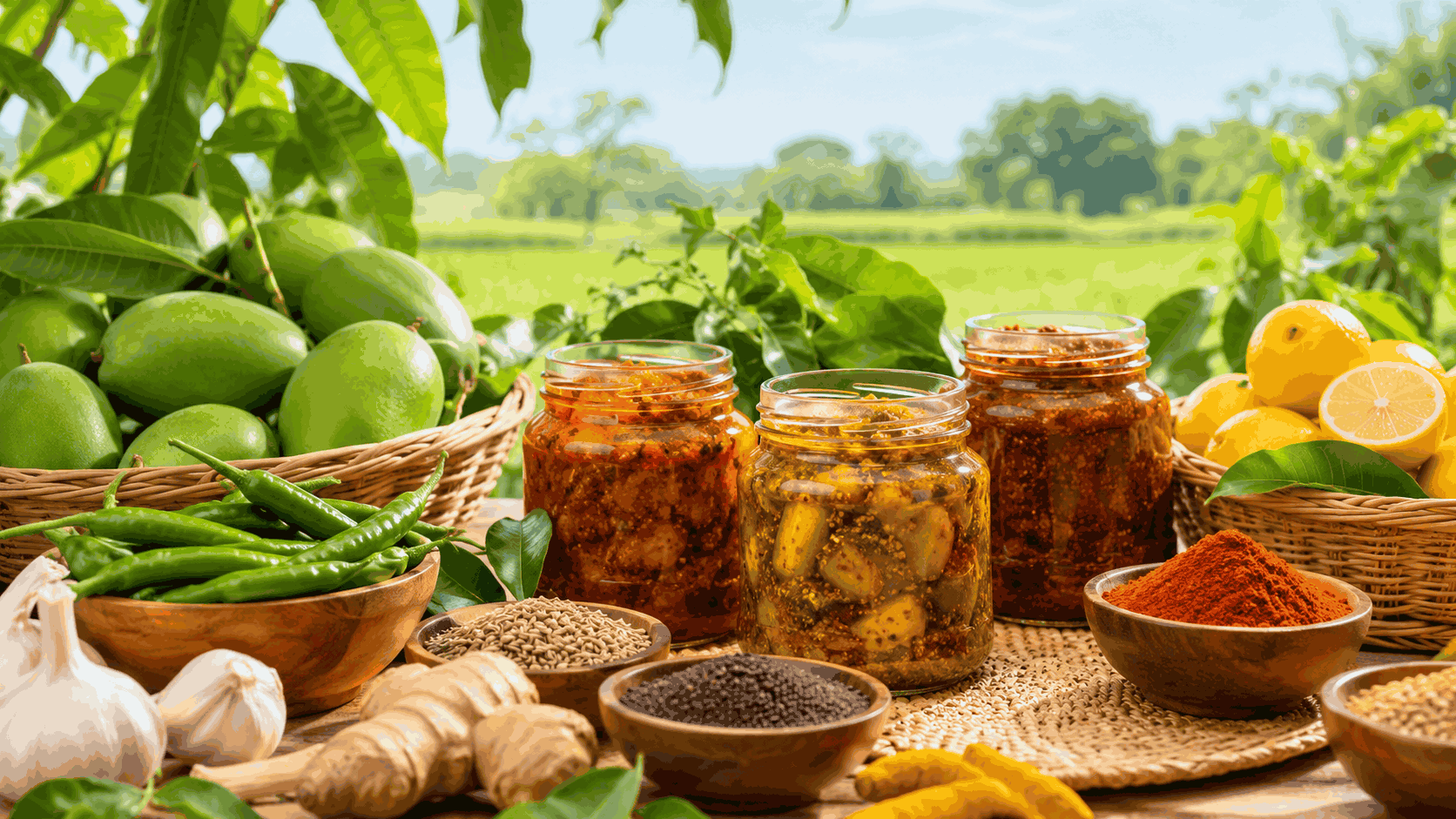
Raw materials play a significant role in determining the taste, texture, aroma, and overall quality of pickles. Common raw materials for pickle making include mangoes, lemons, chillies, vegetables, salt, edible oils, vinegar, and different spices. The selection depends on the type of pickle being manufactured and its intended flavour profile.
For example, mango pickle manufacturing requires suitable raw mangoes with the desired maturity, firmness, and quality. Similarly, garlic, lemon, chilli, and mixed vegetable pickles require ingredients that meet specific quality requirements.
Manufacturers should establish clear purchasing specifications for every ingredient. These specifications may cover freshness, physical condition, moisture levels, cleanliness, and supplier documentation. Proper ingredient selection helps create consistency throughout the pickle making process.
Businesses can explore different varieties through the EXIITO Pickle Product Range, which includes traditional Indian pickle varieties.
Sustainable Sourcing Practices for Pickle Manufacturers
Building Relationships with Responsible Suppliers
Establishing long-term relationships with reliable farmers, agricultural producers, and ingredient suppliers can improve the consistency of raw material procurement. Manufacturers should evaluate suppliers based on ingredient quality, delivery reliability, hygiene practices, and their ability to meet purchasing specifications.
Purchasing seasonal agricultural produce from suitable local suppliers may also reduce transportation requirements and improve access to fresh ingredients. However, supplier selection should always prioritise quality, safety, and traceability rather than distance alone.
Selecting Fresh and Quality Agricultural Produce
Freshness is essential when purchasing fruits and vegetables for commercial pickle production. Damaged, spoiled, or contaminated ingredients can negatively affect the finished product and increase processing losses.
During procurement, manufacturers should inspect incoming raw materials for visible damage, unusual odours, signs of spoilage, and foreign matter. Raw mangoes, lemons, chillies, and other vegetables should be selected according to their intended processing requirements.
A systematic inspection process helps manufacturers maintain ingredient consistency and minimise unnecessary wastage.
Responsible Sourcing of Spices and Other Ingredients
Spices contribute significantly to the distinctive flavour and aroma of Indian pickles. Ingredients such as mustard seeds, fenugreek, turmeric, chilli powder, and other seasonings should be purchased from suppliers who can provide consistent quality and appropriate documentation.
Manufacturers should also pay attention to the storage conditions of spices and edible oils. Proper packaging, suitable storage environments, and stock rotation can help maintain ingredient quality before production.
Responsible sourcing practices should extend to packaging materials and other production inputs wherever practical.
The Role of Quality Control in Sustainable Pickle Production
Sustainable sourcing and quality management should work together throughout the manufacturing operation. Effective quality control in food processing begins when raw materials arrive at the facility and continues until finished products are ready for dispatch.
Incoming ingredients should be checked against approved specifications. Manufacturers can maintain supplier records, purchase documentation, inspection reports, and batch identification details to improve traceability.
During pickle processing, appropriate controls should be established for cleaning, cutting, mixing, seasoning, filling, and packaging. Depending on the product formulation, important quality parameters may include acidity, salt concentration, moisture, oil quality, and packaging integrity.
Food safety procedures should also address hygiene, equipment sanitation, pest management, and prevention of cross-contamination. These practices help support consistent production and reduce the possibility of quality-related losses.
Benefits of Sustainable Sourcing for Pickle Manufacturing Businesses
Adopting responsible sourcing practices can provide several operational benefits. Reliable suppliers and clearly defined purchasing standards can help manufacturers maintain consistent ingredient quality and improve production planning.
Better raw material inspection can reduce avoidable waste caused by unsuitable or damaged ingredients. Seasonal procurement planning may also help businesses manage agricultural supply variations and purchasing requirements.
For a growing pickle manufacturing business, traceable sourcing practices can strengthen supplier relationships and improve confidence among distributors, retailers, and business partners.
These practices can also support manufacturers operating within the wider food processing industry in India, where product quality, food safety, and responsible resource management remain important considerations.
Challenges and Future Trends in Raw Material Sourcing
Despite its advantages, sustainable sourcing presents certain challenges. Agricultural production can be affected by weather conditions, seasonal availability, transportation difficulties, and fluctuations in raw material prices. These factors may create procurement uncertainty for manufacturers handling large production volumes.
To address these challenges, businesses can develop multiple approved supplier relationships, maintain suitable inventory levels, and establish clear procurement schedules. Digital inventory records and supplier evaluation systems can also improve purchasing visibility and planning.
In the future, greater attention to ingredient traceability, responsible agricultural practices, recyclable packaging, and resource-efficient manufacturing may influence sourcing decisions. Manufacturers that continuously review their procurement processes can be better prepared to respond to changing market and operational requirements.
Conclusion and CTA
Sustainable raw material sourcing is an important part of building a reliable and quality-focused pickle manufacturing operation. Selecting suitable agricultural produce, working with responsible suppliers, maintaining ingredient traceability, and implementing effective quality checks can strengthen the overall pickle manufacturing process.
For businesses planning to expand into commercial pickle production, responsible procurement should be treated as a long-term operational priority rather than a one-time activity.
EXIITO focuses on premium food manufacturing across beverages, namkeen, makhana, and pickles, with an emphasis on quality standards and food-safety discipline. Explore our pickle product range and company profile to learn more about our business.
Looking for reliable pickle manufacturing solutions for your brand? Connect with EXIITO to discuss your product and manufacturing requirements.