
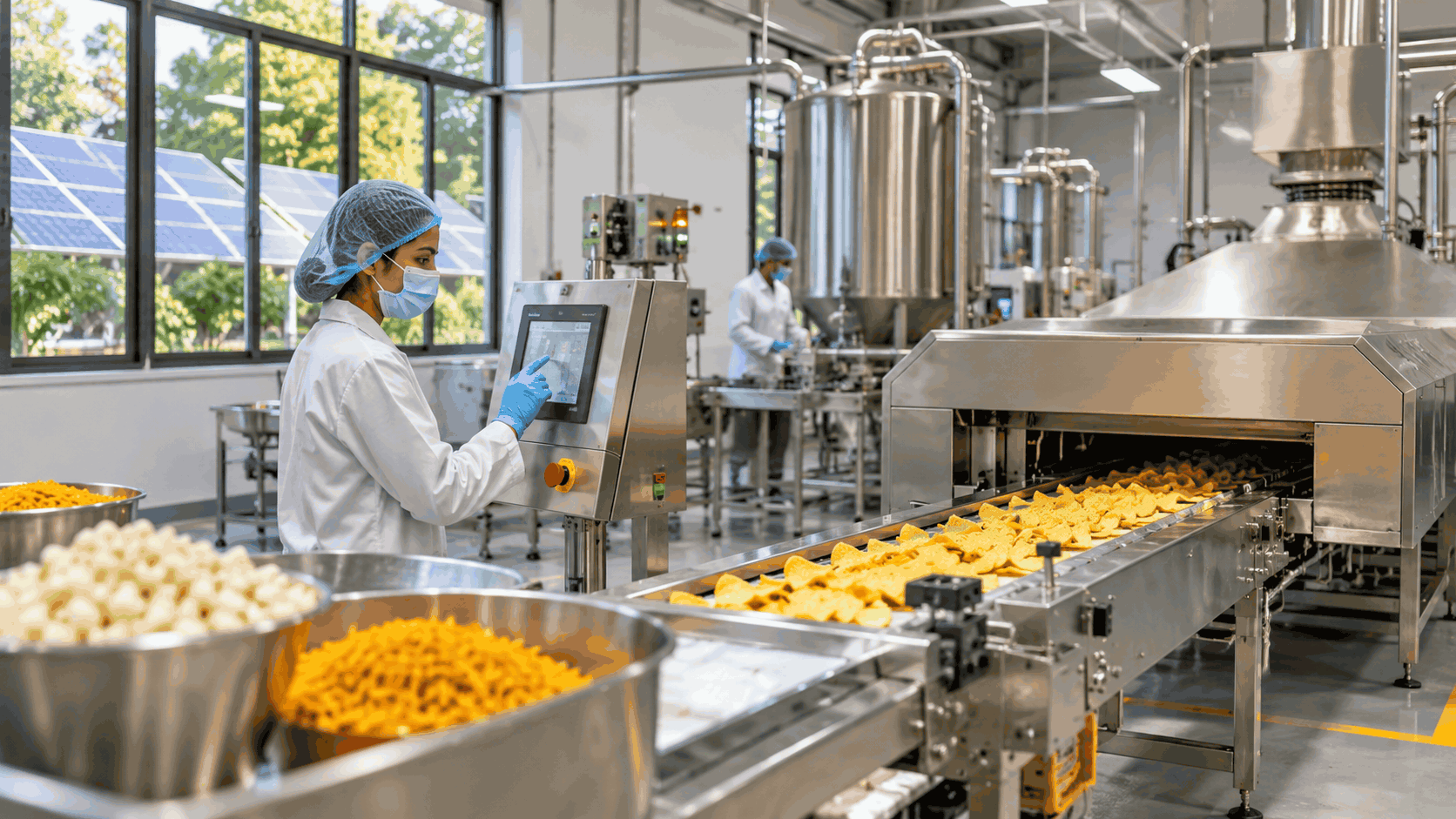
Introduction
The food processing industry is evolving as manufacturers look for smarter ways to reduce operating costs, improve productivity, and minimize environmental impact. Rising electricity expenses, increasing production demands, and sustainability expectations are encouraging businesses to adopt advanced manufacturing solutions.
Energy Efficient Food Processing has become an important strategy for modern food manufacturers. From automated machinery and intelligent monitoring systems to heat recovery and energy-efficient refrigeration, innovative technologies are helping food processing plants optimize energy consumption while maintaining product quality and safety.
For India's growing food manufacturing sector, adopting energy-efficient technologies can support long-term competitiveness and more responsible production practices.
Why Energy Efficiency Matters in Food Processing Plants
Energy is essential throughout food manufacturing, including raw material preparation, mixing, heating, cooling, packaging, and storage. However, inefficient equipment, unnecessary machine operation, and poor maintenance can increase electricity consumption and operating expenses.
Improving Energy Efficiency in Food Processing Industry operations allows manufacturers to use resources more effectively without compromising production standards.
Effective Energy Conservation in Food Industry facilities also supports cost management, equipment reliability, and environmental sustainability.
Manufacturers interested in practical efficiency improvements can explore best practices for improving efficiency in food processing plants.
Key Energy-Efficient Technologies Transforming Food Processing
Smart Automation and Intelligent Production Systems
Automation in Food Processing Plants is changing how manufacturers manage production operations. Automated equipment can control processing times, monitor operating conditions, and coordinate manufacturing activities with greater consistency.
Smart sensors and programmable control systems help identify unnecessary machine operation and improve process accuracy.
By integrating automation with Modern Food Processing Technology, manufacturers can reduce avoidable energy consumption while supporting consistent product quality.
Learn more about how automated packaging machines improve food production efficiency.
Energy-Efficient Motors and Processing Equipment
Motors power essential food processing equipment, including mixers, pumps, conveyors, and packaging machinery. Older or improperly sized motors may consume more electricity than necessary.
Energy-efficient motors and variable frequency drives can adjust equipment speed according to production requirements, reducing unnecessary power consumption.
Upgrading suitable machinery is an important part of Energy Efficient Manufacturing, particularly for facilities operating equipment over extended production periods.
Advanced Refrigeration and Heat Recovery Systems
Refrigeration and temperature control are essential for many food products, particularly beverages, dairy products, and temperature-sensitive ingredients.
Modern refrigeration systems use improved controls, efficient compressors, and better insulation to manage cooling requirements.
Heat recovery technology can capture usable thermal energy from suitable processing operations and redirect it toward water heating or other applications.
These improvements support Energy Saving in Food Processing while maintaining appropriate temperature conditions and food safety requirements.
Digital Energy Monitoring and Management
Digital monitoring systems allow manufacturers to understand where and when energy is consumed.
Through Industrial Energy Management, food processing facilities can monitor electricity usage, compare equipment performance, and identify opportunities for operational improvements.
Energy monitoring software can also support maintenance planning and help production managers make informed decisions.
Integrating digital monitoring with Food Processing Plant Technology creates opportunities for more efficient, data-driven manufacturing.
Benefits of Energy-Efficient Food Processing Technologies
Lower Operating Costs and Improved Productivity
Energy-efficient technologies can reduce unnecessary electricity consumption, improve equipment utilization, and support better production scheduling.
Manufacturers can strengthen cost control by combining efficient machinery with preventive maintenance and optimized operating procedures.
For additional guidance, explore how food manufacturers can reduce energy consumption and operating costs.
Reduced Environmental Impact
Sustainable Food Processing focuses on reducing unnecessary resource consumption while maintaining manufacturing performance.
Lower energy demand can help reduce environmental impacts, particularly when electricity comes from fossil-fuel-based sources.
Combining efficient equipment, responsible resource management, and waste reduction supports broader Sustainable Manufacturing Practices.
Challenges in Adopting Energy-Efficient Technologies
Despite their advantages, energy-efficient technologies can require significant initial investment, technical expertise, and employee training.
Manufacturers may also face challenges when integrating modern equipment with existing production lines.
A practical approach involves conducting energy assessments, identifying high-consumption operations, evaluating potential savings, and implementing improvements gradually.
Equipment upgrades must also be assessed against food safety requirements, production capacity, and maintenance needs.
Future Trends in Energy-Efficient Food Manufacturing
The future of food processing will increasingly involve connected equipment, intelligent monitoring, predictive maintenance, and renewable energy integration.
Advanced analytics can help manufacturers identify energy consumption patterns and improve production planning.
As technology becomes more accessible, food processing businesses can explore scalable solutions that balance operational efficiency, product quality, and sustainability.
Conclusion
Energy-efficient technologies are transforming food processing plants by improving resource utilization, supporting productivity, and reducing avoidable operating expenses.
From smart automation and efficient motors to advanced refrigeration and digital monitoring, these innovations offer practical opportunities for manufacturers seeking more sustainable operations.
Adopting Energy Efficient Food Processing practices requires thoughtful planning, appropriate technology selection, and continuous performance monitoring.
Partner with EXIITO for Food Manufacturing Solutions
EXIITO Beverages Private Limited provides food manufacturing solutions across beverages, namkeen, makhana, flour, and pickles.
Businesses looking for reliable production support can explore EXIITO's contract manufacturing services to understand available manufacturing arrangements, production planning, and quality requirements.
Visit EXIITO Beverages to discover our manufacturing solutions and discuss your business requirements.