
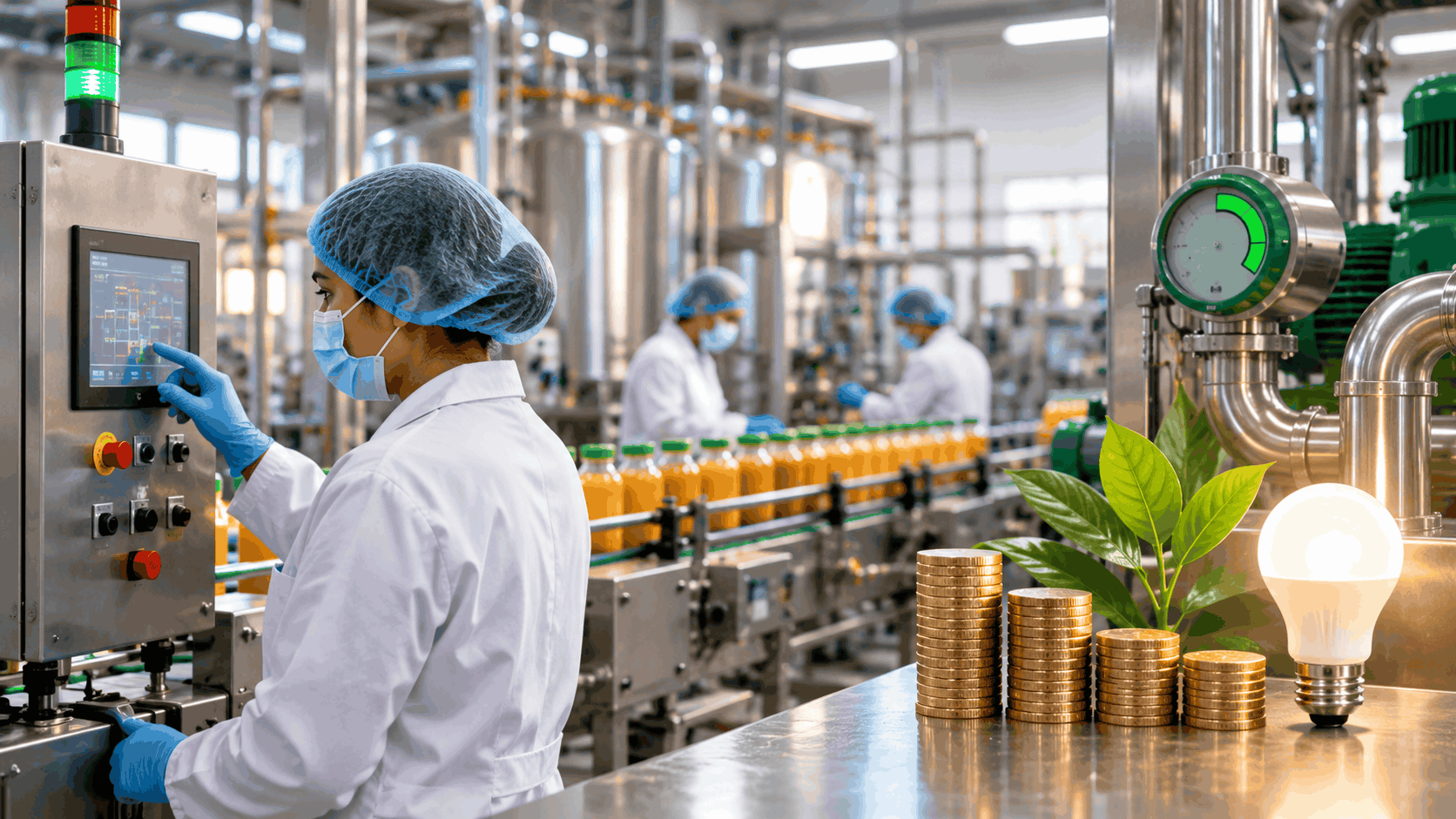
Introduction
Running a food manufacturing business involves more than managing ingredients, production, and packaging. Energy bills are another major expense, especially for factories that operate machinery, refrigeration units, boilers, and processing lines every day. When equipment is inefficient or energy is wasted, production costs can quickly increase.
This is why food manufacturing energy efficiency matters. By making practical changes to equipment, maintenance routines, and everyday operations, manufacturers can control energy consumption without compromising product quality or food safety. The good news is that many improvements start with simple steps rather than expensive investments.
Why Energy Efficiency Matters in Food Manufacturing
Energy is used at almost every stage of food production, from mixing ingredients and heating products to cooling, storing, and packaging finished goods. Beverage manufacturers, dairy processors, bakeries, and frozen food producers may all have different energy requirements, but they share one common goal: keeping production efficient while controlling expenses.
Improving energy efficiency in food processing helps businesses identify unnecessary consumption and make better use of available resources. Lower energy use can also help manufacturers manage operating budgets, maintain reliable production schedules, and remain competitive in a cost-conscious market.
Practical Ways to Reduce Energy Costs in Food Manufacturing
Choose the Right Equipment
Older or poorly maintained machines can consume more energy than necessary. Motors, pumps, compressors, and processing equipment should be checked regularly to ensure they are operating efficiently.
When purchasing new machinery, manufacturers should compare energy ratings, maintenance requirements, production capacity, and long-term operating costs. The most expensive equipment is not always the most efficient choice. Selecting machinery that matches actual production needs can help avoid unnecessary energy consumption.
Keep Refrigeration Systems Efficient
Refrigeration is essential for many food businesses, particularly those handling dairy products, beverages, frozen foods, and other temperature-sensitive items. However, damaged door seals, dirty condenser coils, and poor insulation can make cooling systems work harder than necessary.
Regular cleaning and maintenance can help prevent these problems. Employees should also avoid leaving cold-room doors open longer than needed. Temperature settings must always follow product storage and food safety requirements.
Where practical, manufacturers can explore heat recovery systems that reuse suitable waste heat for other processes.
Reduce Heat Loss During Production
Processes such as cooking, pasteurization, heating, and cleaning often require considerable thermal energy. When steam pipes, boilers, or processing tanks are poorly insulated, valuable heat can escape into the surrounding environment.
Manufacturers can address this by repairing steam leaks, insulating hot pipes, servicing boilers, and checking temperature controls. Recovering waste heat may also help reduce the energy needed for certain operations.
These improvements should be planned carefully to maintain the temperatures required for safe food processing.
Reduce Electricity Consumption in Food Factories
Lighting, ventilation, conveyors, pumps, and compressed air systems all contribute to electricity bills. Small inefficiencies across these systems can add up over time.
Installing LED lighting, repairing compressed air leaks, and switching off equipment when it is not needed are useful starting points. Variable-frequency drives can also help control motor speed where production requirements allow.
Manufacturers should review idle equipment during breaks, cleaning periods, and production changes. If a machine does not need to run continuously, adjusting its operating schedule may help reduce electricity consumption.
Make Preventive Maintenance a Routine
Equipment problems do not always cause an immediate breakdown. Dirty filters, worn bearings, loose belts, and blocked ventilation can gradually reduce performance while increasing energy use.
A regular maintenance schedule helps teams identify these issues early. Recording inspections, repairs, and recurring faults also makes it easier to decide when equipment needs servicing or replacement.
Preventive maintenance can therefore support both energy savings and more dependable production.
Track Energy Use and Involve Employees
Energy-saving tips for food manufacturers work best when businesses understand where their energy is going. Reviewing electricity bills is useful, but monitoring individual production areas can reveal more specific problems.
For example, a factory can compare electricity consumption with the amount of product manufactured. Tracking energy used per batch or per tonne of finished goods helps managers understand whether efficiency is improving as production changes.
Employees also play an important role. Training teams to report leaks, close cold-room doors, follow shutdown procedures, and identify unusual equipment behaviour can help prevent avoidable waste.
Benefits and Business Opportunities
Reducing energy consumption offers several advantages for food industry businesses:
- Lower operating costs: Using less electricity and fuel can help control production expenses.
- More reliable operations: Well-maintained equipment can reduce avoidable interruptions.
- Better cost management: Energy monitoring helps managers make informed purchasing and investment decisions.
- Improved environmental performance: Lower energy consumption can reduce operational emissions, depending on the energy source.
- Stronger business relationships: Demonstrating responsible resource use may support relationships with customers and supply-chain partners.
For manufacturers, ingredient suppliers, distributors, and retailers, efficient operations can help build a more resilient business.
Challenges and Future Trends
Improving energy efficiency does require planning. New equipment, monitoring systems, and insulation upgrades can involve upfront costs. Smaller manufacturers may also lack the technical resources needed to assess every process.
A sensible approach is to begin with an energy assessment, identify the biggest sources of waste, and prioritize improvements that are affordable and practical. Before investing in major upgrades, businesses should estimate potential savings and calculate the expected payback period.
Looking ahead, smart energy meters, automated controls, efficient refrigeration, heat recovery, and suitable renewable energy systems may offer further opportunities. The right solution will depend on the facility, production schedule, local energy costs, and investment budget.
Conclusion: Make Food Manufacturing Energy Efficiency a Priority
Reducing energy consumption does not always require a complete factory upgrade. Better maintenance, efficient refrigeration, improved insulation, and careful monitoring can all help manufacturers identify waste and control expenses.
By making these changes gradually and measuring the results, businesses can improve food manufacturing energy efficiency, manage operating costs, and maintain the quality and safety standards their customers expect.