
Introduction
Food manufacturing involves several stages, from raw material sourcing and preparation to processing, packaging, and distribution. At every stage, businesses use ingredients, water, energy, and packaging materials. However, inefficient production practices can result in unnecessary waste, higher operational costs, and environmental challenges. This makes Food Processing Waste Management an important priority for modern food manufacturers.
As the food industry continues to grow, manufacturers are focusing on improving production efficiency while reducing their environmental impact. Better resource management, improved production planning, and sustainable manufacturing practices can help businesses minimise waste and use available resources more effectively. By adopting practical waste reduction strategies, food processing companies can improve productivity, maintain product quality, and support sustainable food production.
Understanding Food Processing Waste
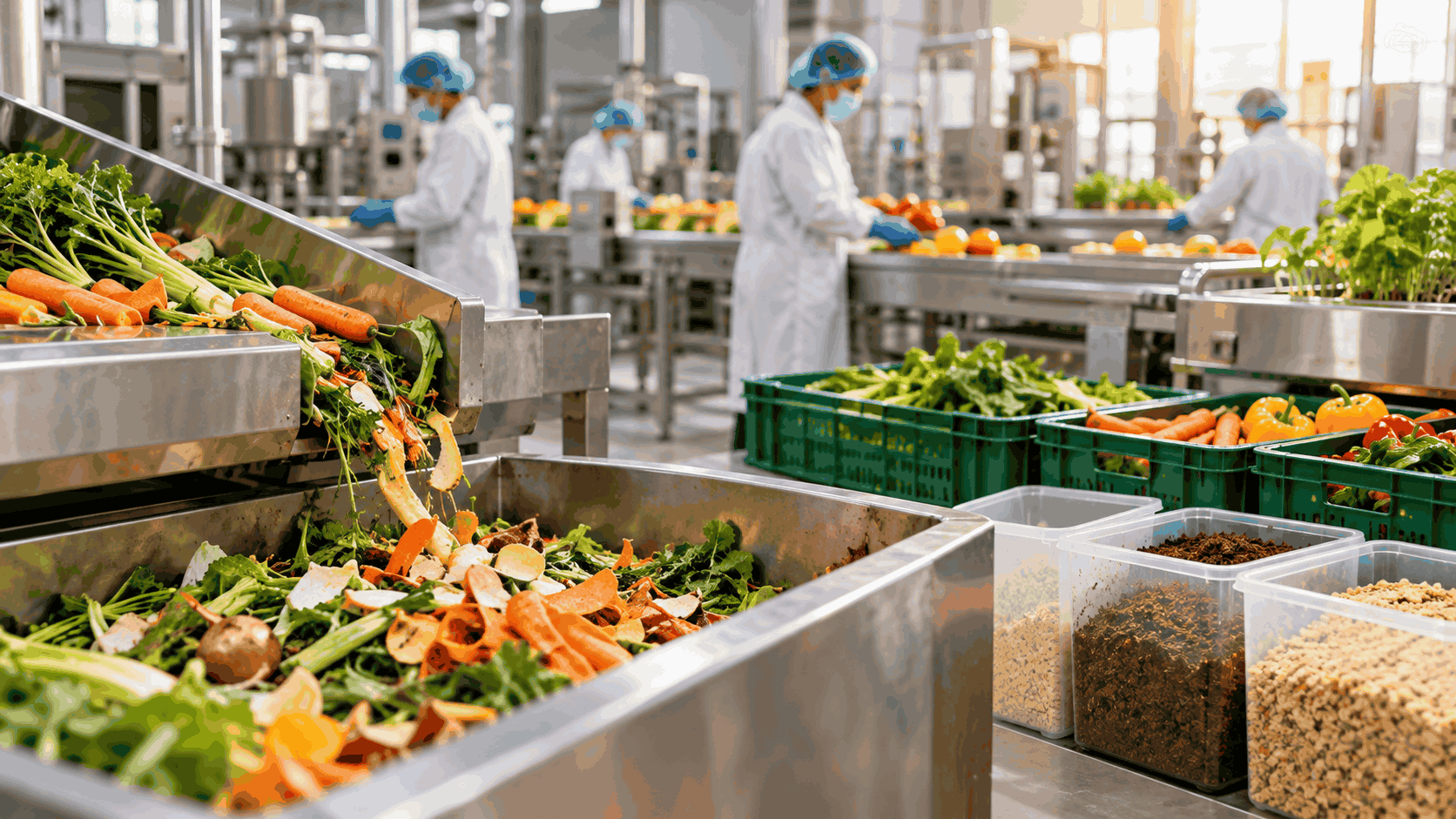
Food processing waste refers to materials that are discarded, lost, or left unused during manufacturing operations. It can include damaged raw ingredients, rejected products, food residues, excess packaging materials, and wastewater.
Poor storage conditions, inaccurate production planning, equipment inefficiencies, and inadequate inventory management are common causes of waste. For example, improper temperature control can affect ingredient quality, while inaccurate measurements can result in unnecessary material consumption.
Effective waste management in food processing begins with identifying where losses occur. Manufacturers should regularly monitor production activities, review material usage, and identify opportunities to improve operational performance.
Effective Strategies for Food Processing Waste Management
Improve Raw Material Management
Raw materials represent a significant part of food manufacturing operations. Poor purchasing decisions, incorrect storage, and improper handling can increase material losses.
Businesses can achieve raw material waste reduction by maintaining accurate inventory records, monitoring expiry dates, and following suitable storage conditions. The First-In, First-Out (FIFO) and First-Expired, First-Out (FEFO) methods help manufacturers manage inventory effectively and reduce the possibility of ingredient spoilage.
Accurate demand forecasting also helps businesses purchase appropriate quantities of ingredients, preventing excess inventory and unnecessary disposal.
Optimise Production Processes
Efficient production planning plays an important role in reducing food manufacturing waste. Manufacturers should align production quantities with actual demand to avoid overproduction and excess inventory.
Regular equipment maintenance, accurate ingredient measurements, and standardised processing procedures can reduce production losses. Modern monitoring systems can also help identify process variations and improve consistency throughout manufacturing operations.
Read more about best practices for improving efficiency in food processing plants to understand how better production planning and equipment management support manufacturing efficiency.
Focus on Water and Energy Conservation
Water and energy are essential resources in food manufacturing. They are used for cleaning, processing, cooling, heating, and maintaining hygienic production environments.
Food manufacturers can improve resource management in the food industry by installing water-efficient cleaning systems, identifying leakage points, maintaining equipment, and evaluating opportunities for wastewater treatment and reuse where regulations and food safety requirements permit.
Businesses can explore water conservation strategies for sustainable food processing to understand practical ways to manage water consumption.
Energy consumption can also be reduced through efficient machinery, improved insulation, preventive maintenance, and optimised production schedules. Manufacturers can learn more about how renewable energy supports greener food production.
Reduce Packaging and Material Waste
Packaging materials are another important consideration in food industry waste management. Excess packaging, damaged containers, incorrect labelling, and inefficient packaging operations can increase production costs.
Manufacturers should review packaging specifications, improve material handling procedures, and select suitable packaging materials that protect products while minimising unnecessary consumption.
Proper packaging inspection and equipment calibration can also reduce filling errors, sealing defects, and rejected packaging. These improvements support efficient resource utilisation in food manufacturing.
Implement Sustainable Food Processing Practices
Sustainable food processing focuses on reducing unnecessary resource consumption while maintaining product quality and safety.
One effective approach is adopting circular economy practices. Instead of treating every processing by-product as waste, manufacturers can evaluate whether suitable materials can be reused, recycled, composted, or converted into other useful resources.
For example, certain fruit and vegetable residues may be suitable for composting or animal feed, depending on their composition, safety, and applicable regulations. Similarly, recyclable packaging materials can help reduce the amount of waste sent for disposal.
Explore the shift towards circular economy practices in food manufacturing to understand how resource recovery and waste reduction can support sustainable manufacturing.
Manufacturers can also investigate turning food waste into valuable by-products to discover opportunities for recovering useful materials from food processing operations.
Benefits of Better Resource Management in Food Manufacturing
Effective food processing waste management offers several operational and environmental benefits. Reducing raw material losses helps manufacturers make better use of purchased ingredients and control production expenses. Improved water and energy management can also reduce unnecessary utility consumption.
Better production planning improves equipment utilisation, minimises avoidable downtime, and supports consistent product quality. Additionally, responsible waste handling and recycling practices can reduce environmental pressure and strengthen a company's sustainability efforts.
These improvements help food manufacturers build more efficient operations while maintaining customer expectations and applicable food safety standards.
Challenges and Future Trends in Food Waste Reduction
Although waste reduction offers significant opportunities, implementing effective systems can involve challenges. Upgrading equipment, introducing monitoring technologies, training employees, and establishing waste management procedures may require financial investment.
Smaller manufacturers may also face difficulties identifying suitable recycling facilities or managing processing by-products. Therefore, businesses should begin by identifying their largest sources of waste and implementing improvements according to operational priorities.
In the future, automation, digital monitoring, artificial intelligence, and advanced inventory management systems may help manufacturers identify production inefficiencies more accurately. Renewable energy and improved resource recovery technologies are also becoming important considerations for sustainable food production.
Conclusion
Reducing food processing waste requires a planned approach to managing raw materials, water, energy, packaging, and production activities. By adopting effective inventory management, improving manufacturing processes, maintaining equipment, and implementing sustainable practices, businesses can minimise unnecessary losses and improve operational efficiency.
Food Processing Waste Management is not just an environmental responsibility; it is also an important part of building productive and cost-effective manufacturing operations. Consistent monitoring, employee awareness, and continuous improvement can help food manufacturers make better use of available resources.
At EXIITO Beverages, we believe that quality-focused manufacturing and responsible production practices are important for long-term business growth. Explore our EXIITO website to learn more about our food and beverage offerings.
Looking for a reliable food manufacturing partner? Contact EXIITO to explore business opportunities and discuss your requirements.