
Introduction
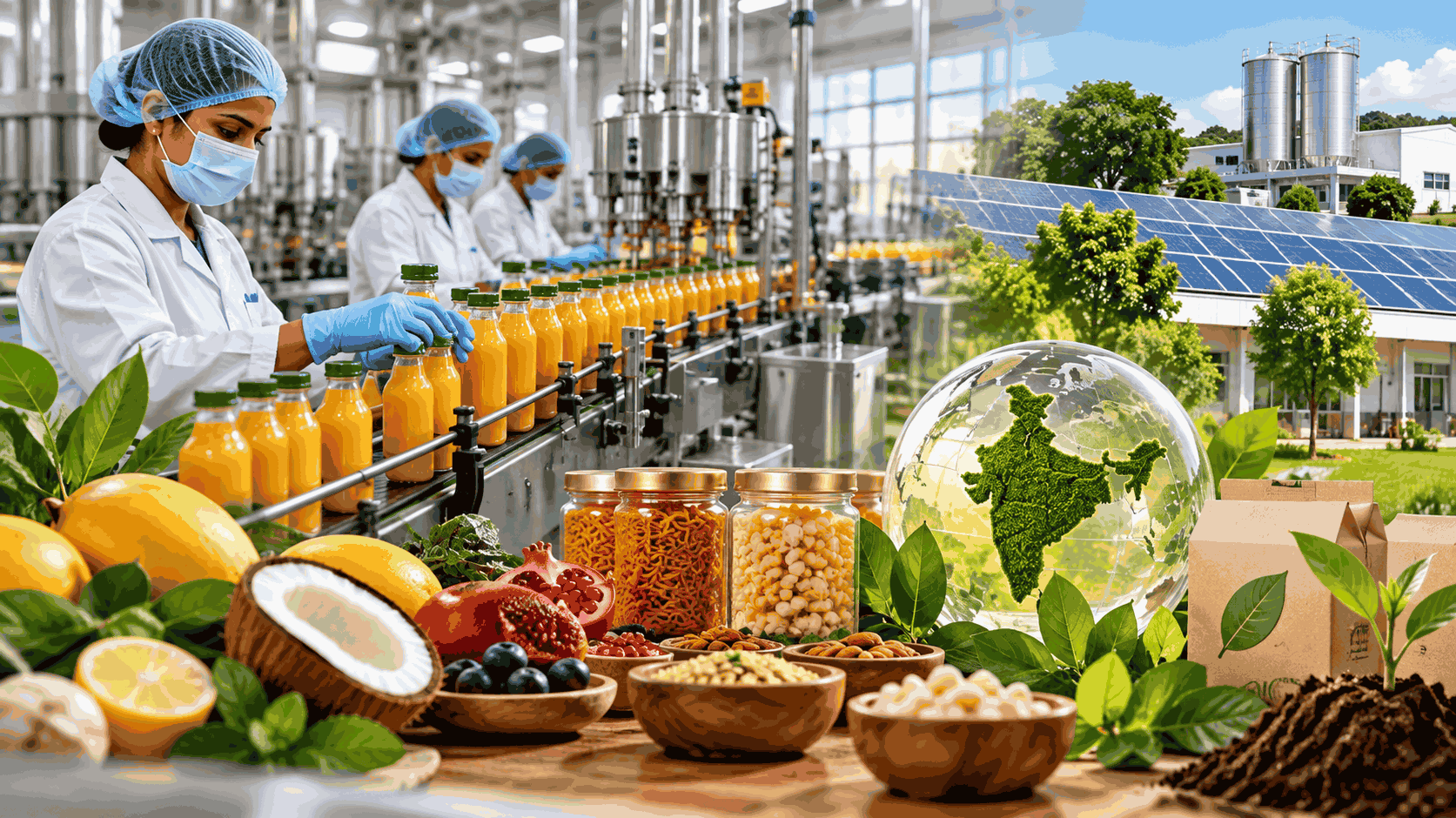
India's food industry is evolving as manufacturers respond to changing consumer expectations, increasing production requirements, resource limitations, and environmental concerns. Businesses are recognising that long-term growth depends not only on product quality and production capacity but also on responsible resource management. This shift has made Sustainable Manufacturing Practices in the Food Industry an important part of modern food production.
From reducing water consumption to improving energy efficiency and minimising production waste, manufacturers are exploring practical ways to make their operations more environmentally responsible. Sustainable food manufacturing also creates opportunities to improve operational efficiency, manage production costs, and build stronger relationships with environmentally conscious consumers.
As India's food processing and FMCG sectors continue to develop, sustainability is becoming an important consideration for manufacturers of beverages, packaged foods, snacks, and other consumer products.
Understanding Sustainable Manufacturing in the Food Industry
Sustainable manufacturing focuses on producing food products while using natural resources responsibly and reducing unnecessary environmental impact. It involves improving production methods, selecting suitable materials, managing waste, and making better use of energy and water.
Sustainable food manufacturing goes beyond environmentally friendly packaging. It includes responsible sourcing, efficient processing, hygienic production facilities, effective inventory management, and careful handling of raw materials.
For Indian manufacturers, adopting sustainable manufacturing practices means finding a balance between production efficiency, product safety, business profitability, and environmental responsibility.
Energy-Efficient Food Manufacturing
Energy consumption is an important consideration in food processing facilities. Manufacturing equipment, refrigeration systems, heating operations, lighting, and packaging machinery all contribute to electricity requirements.
Energy-efficient food manufacturing involves identifying areas of unnecessary consumption and improving equipment performance. Manufacturers can consider energy-efficient motors, LED lighting, automated temperature controls, preventive equipment maintenance, and improved production scheduling.
Renewable energy in food manufacturing is another developing opportunity. Solar power installations can help facilities reduce their dependence on conventional electricity sources, depending on location, installation costs, and operational requirements.
These improvements support green manufacturing in the food industry while helping businesses manage energy expenses over time.
Waste Reduction in Food Manufacturing
Food manufacturing generates different types of waste, including raw material losses, rejected products, packaging waste, and wastewater. Poor inventory management, inaccurate production planning, and inefficient processing can increase unnecessary losses.
Waste reduction in food manufacturing begins with understanding where materials are being lost during production. Manufacturers can improve raw material storage, monitor batch quantities, introduce accurate weighing systems, and maintain production records.
Food by-products may also offer opportunities for reuse or recovery when technically safe, commercially practical, and compliant with applicable regulations.
Reducing material losses improves resource utilisation and supports more efficient production operations. It also encourages manufacturers to adopt a more responsible approach to purchasing, processing, and packaging.
Water Conservation in Food Processing
Water plays an essential role in food manufacturing, particularly in ingredient preparation, equipment cleaning, processing, and sanitation. However, excessive water consumption can increase operating costs and place additional pressure on local water resources.
Water conservation in food processing requires regular monitoring of consumption and identifying opportunities to improve cleaning and operational procedures.
Manufacturers can explore efficient cleaning systems, controlled water flow, leak detection, and suitable wastewater treatment facilities. Reusing treated water for permitted non-product-contact applications may also reduce freshwater requirements, subject to food safety and regulatory requirements.
These measures can help food processing facilities use water more responsibly without compromising hygiene standards.
Sustainable Packaging and Green Food Processing Technologies
Packaging is another important part of sustainable food production. Manufacturers are exploring recyclable packaging materials, lightweight packaging designs, reusable transport packaging, and alternatives that reduce unnecessary material consumption.
However, packaging decisions must consider food safety, product shelf life, transportation conditions, and compatibility with existing production equipment. A packaging material is not automatically sustainable simply because it is labelled biodegradable or recyclable.
Green food processing technologies can also support more efficient manufacturing through automation, accurate filling systems, improved temperature controls, and digital production monitoring.
For beverage and packaged food manufacturers, selecting the right combination of processing and packaging technologies can help reduce material losses while maintaining product quality. Businesses can explore EXIITO's manufacturing capabilities to understand different food production and packaging requirements.
Benefits and Challenges of Sustainable Food Production in India
Sustainable food production in India offers several operational and business opportunities. Better resource management can reduce avoidable energy, water, and raw material consumption. Improved production planning can also minimise losses, while responsible packaging choices can strengthen a company's environmental positioning.
Nevertheless, implementing sustainable manufacturing practices can involve challenges. Upgrading machinery, installing renewable energy systems, introducing wastewater treatment, and changing packaging materials may require considerable investment.
Smaller manufacturers may also face technical limitations, supplier constraints, and difficulties measuring their environmental performance.
A practical approach is to begin with an operational assessment, identify high-consumption areas, establish measurable targets, and implement improvements in stages. This allows manufacturers to evaluate costs and results before expanding sustainability initiatives.
Future of Sustainable FMCG Manufacturing in India
Sustainable FMCG manufacturing is expected to remain an important area of development as businesses focus on resource efficiency, packaging innovation, supply chain responsibility, and transparent production processes.
Digital monitoring systems can help manufacturers track energy consumption, water usage, production losses, and equipment performance. Automation can improve process consistency, while better inventory management can reduce raw material wastage.
Manufacturers are also likely to pay greater attention to supplier selection, packaging recovery, and responsible sourcing.
These sustainable manufacturing trends in India present opportunities for businesses willing to combine technology, operational discipline, and environmental responsibility.
Conclusion
Sustainable Manufacturing Practices in the Food Industry are becoming an important part of India's changing food manufacturing landscape. Energy efficiency, water conservation, waste reduction, responsible packaging, and modern processing technologies can help manufacturers build more efficient and environmentally responsible operations.
The transition does not need to happen all at once. Businesses can begin with practical improvements, measure their impact, and gradually develop a long-term sustainability strategy.
At EXIITO Beverages, we focus on premium food manufacturing across beverages, namkeen, makhana, and pickles, supported by manufacturing services for partner brands. Explore our manufacturing services, factory infrastructure, and quality assurance processes to learn more about our manufacturing approach.
Looking for a food manufacturing partner for your next product? Contact EXIITO to discuss your requirements and explore opportunities for collaboration.