
Introduction
Food production does not end with the finished product. Every day, food processing companies generate peels, seeds, pulp, husks, and other leftover materials. Much of this material is discarded, even though some of it could be used to make valuable products.
This is where Food Waste Valorization comes in. It involves finding practical ways to turn food waste into useful ingredients, agricultural inputs, and other products instead of sending everything for disposal.
For food manufacturers, this approach offers more than an environmental benefit. It can help reduce material losses, improve resource efficiency, and create new business opportunities. With the right processes in place, what was once considered waste can become a useful resource.
What Is Food Waste Valorization?
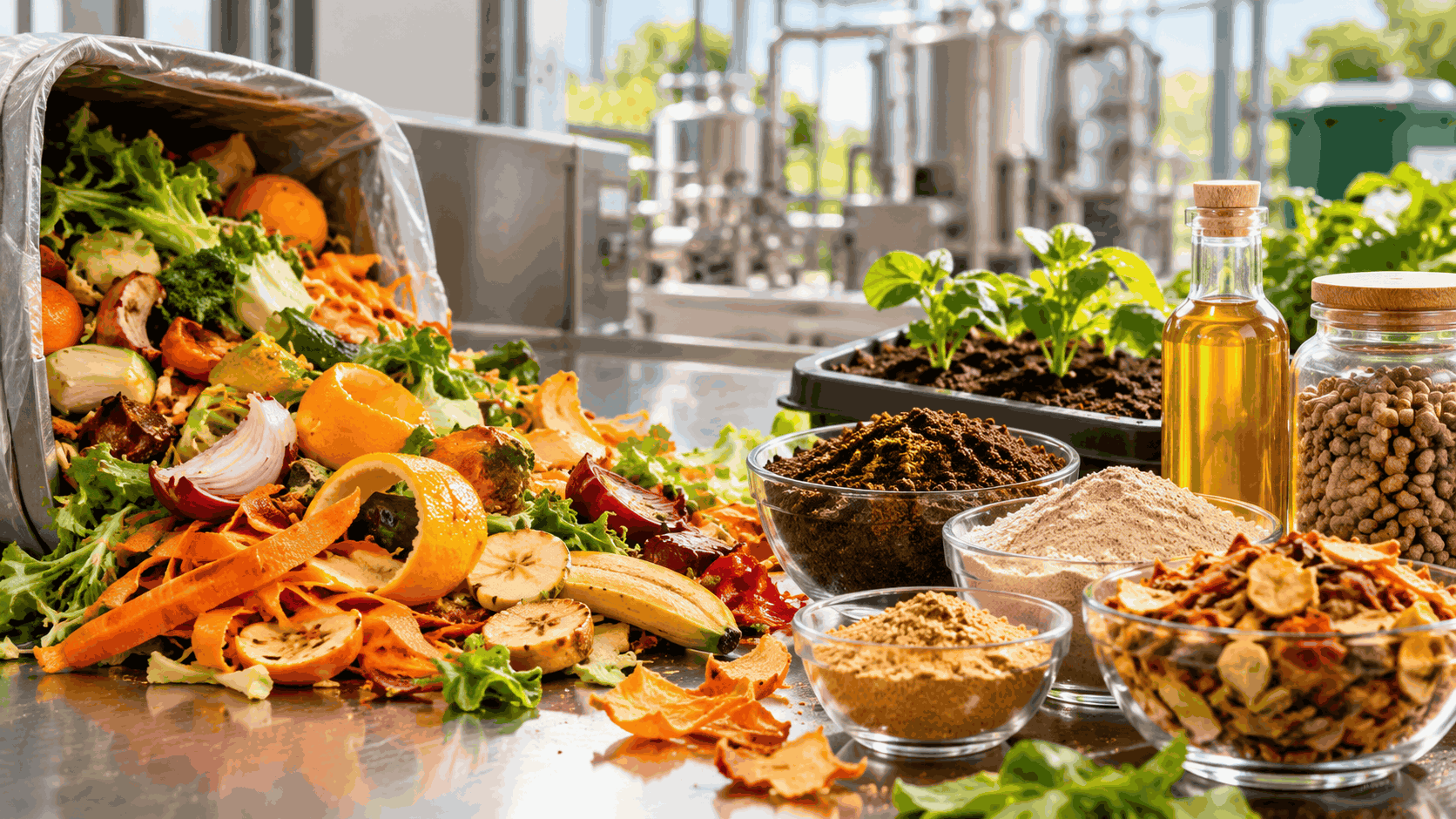
Food Waste Valorization means recovering value from food materials that are left over during processing, preparation, or production. Instead of discarding these materials, businesses explore ways to reuse them or convert them into useful products. Consider a fruit processing unit. After extracting juice, the company may be left with peels, seeds, and pulp. Depending on their quality and composition, some of these materials could be used to recover pectin, produce fibre-rich ingredients, or support other industrial applications.This approach can also be applied to grain processing, vegetable production, and other food manufacturing processes. The goal is simple: make better use of available resources while reducing unnecessary waste.
How Can Food Processing By-Products Be Reused?
Turning Fruit and Vegetable Waste into Ingredients
Fruit and vegetable processing creates several types of leftover materials. However, these residues may still contain useful components.
For example, citrus peels can be processed to recover pectin, an ingredient commonly used in jams and jellies. Suitable fruit pulp and vegetable residues may also be converted into fibre-rich powders for specific food applications.
For manufacturers, these possibilities create an opportunity to recover useful ingredients from materials that might otherwise be discarded. The final application depends on food safety, processing requirements, and the quality of the recovered material.
Finding New Uses for Grain and Cereal By-Products
Rice milling, wheat processing, and grain production produce by-products such as bran, husks, and broken grains. Depending on their characteristics, some of these materials can be used in animal feed, while selected fractions may be suitable for other food or industrial applications.Separating and storing these materials properly makes it easier to identify potential uses. It also helps businesses improve food waste management by reducing the amount of material that is unnecessarily mixed together or discarded.
Converting Organic Waste into Useful Resources
Not every food processing residue can be turned into a food ingredient. Some materials are better suited to other applications.
For example, suitable organic waste can be converted into compost or processed through anaerobic digestion to produce biogas. These options allow businesses to make productive use of certain waste streams while reducing the volume sent for disposal.
Choosing the right method depends on the type of waste, available infrastructure, processing costs, and local requirements.
Business Benefits of Food Waste Upcycling
Food Waste Upcycling can help businesses improve the way they manage materials and identify opportunities beyond their main products.
Better Use of Raw Materials
When manufacturers understand where waste is generated, they can identify opportunities to reduce losses and use purchased ingredients more efficiently.
Additional Revenue Opportunities
Some food processing by-products may be suitable for sale to ingredient manufacturers, agricultural businesses, or other industries. Before investing in recovery methods, companies should evaluate market demand, product quality standards, and anticipated production costs.
Potential Savings on Waste Disposal
Minimizing waste disposal can help businesses reduce handling and transportation costs. The actual savings depend on the costs of collection, storage, processing, and the equipment required.
More Responsible Manufacturing
Food waste recycling and recovery can play an important role in a company’s overall sustainability strategy. By making better use of raw materials, businesses can take practical steps towards more responsible production and resource management.
Challenges Businesses Should Consider
Although food waste valorization presents several opportunities, successful implementation requires careful planning. Maintaining quality and safety: Food residues can spoil quickly or become contaminated. Materials used in food products must comply with applicable food safety and quality standards. Managing Collection and Storage: Different waste materials may require separate collection, appropriate storage conditions, and prompt processing to maintain their quality and safety. Evaluating costs: New equipment, energy use, transportation, and testing can make recovery expensive. Businesses should compare these costs with the potential value of the final product. Finding the right market: Producing a useful by-product is only part of the process. Companies also need buyers who require that material and can accept it at a commercially viable price. A practical first step is to assess waste generated at each production stage, measure available quantities, and identify feasible recovery opportunities before investing in new equipment.
Future Opportunities in Sustainable Food Manufacturing
As food manufacturers look for better ways to use resources, processing technologies are opening up new possibilities for recovering useful components from food waste. Techniques such as fermentation, enzymatic processing, and advanced separation methods can help extract valuable ingredients from suitable materials. Digital production monitoring can also help companies identify where losses occur and where improvements are possible. Collaboration is equally important. Food manufacturers, ingredient suppliers, research institutions, and waste processing partners can work together to develop practical applications for materials that might otherwise go unused. However, the effectiveness of these methods depends on product quality, processing expenses, regulatory compliance, and sustained market demand.
Conclusion: Turning Food Waste into Opportunity
Food Waste Valorization gives food manufacturers a practical reason to look at waste differently. Fruit peels, grain residues, vegetable pulp, and other food processing by-products can be transformed into useful resources through appropriate handling and processing methods.