
Introduction
Every food product that reaches a customer goes through several stages, from processing raw ingredients to packaging, storage, and transportation. These activities require energy, and for many food manufacturers, electricity and fuel are a major part of daily operating costs.
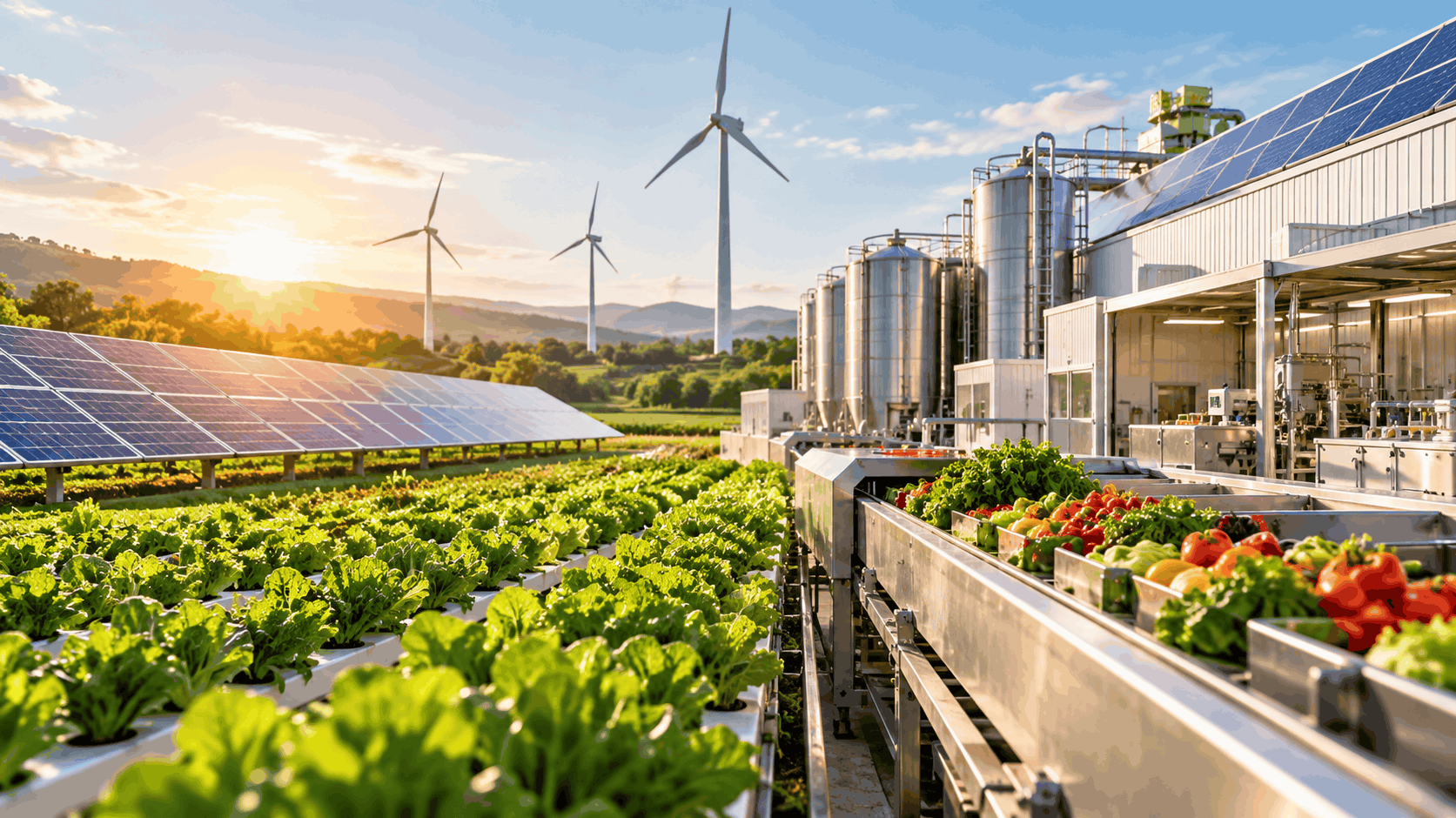
As businesses look for ways to reduce their environmental impact, renewable energy is becoming an important part of the conversation. Renewable Energy in Food Production allows manufacturers to explore cleaner power sources, such as solar energy, wind power, and biogas, while improving the way they manage energy.
For food processing companies, switching to renewable energy is not just about protecting the environment. It is also an opportunity to manage energy expenses, improve production practices, and build a more sustainable business for the future.
Why Renewable Energy Is Important for Food Manufacturing
Food factories use energy for many everyday activities, including running processing machines, heating ingredients, cooling products, operating refrigeration systems, and packaging finished goods. These operations often require a reliable energy supply to maintain product quality and keep production running smoothly.
When businesses depend mainly on conventional energy sources, their operations may contribute to greenhouse gas emissions. Renewable Energy in Food Manufacturing offers another way to meet some of these energy needs while working towards more responsible production.
For example, a beverage manufacturing facility may install rooftop solar panels to generate electricity for lighting, machinery, or other operations. A food processing company may also explore renewable energy for heating water or managing suitable organic waste.
The right solution depends on the facility's energy consumption, available space, budget, and production requirements.
Renewable Energy Solutions for Food Production
Solar Energy in Food Processing
Solar energy is one of the options food manufacturers can consider when looking for cleaner electricity. Rooftop solar panels can generate power for equipment, lighting, offices, and other electrical needs.
Some facilities may also use solar thermal systems to heat water for suitable processing applications.
For businesses that operate mainly during daylight hours, solar power can help meet part of their electricity demand. Before installing a system, manufacturers should consider their available roof space, local sunlight conditions, installation costs, and backup power requirements.
Wind Energy and Clean Electricity
Wind power is another renewable energy source that can support the food industry. Businesses located in suitable areas may consider wind energy generation, while others can explore purchasing renewable electricity through available arrangements.
This allows food manufacturers to investigate cleaner energy without necessarily installing their own wind turbines.
The most suitable option will depend on the location, electricity demand, infrastructure, and overall project cost.
Turning Food Waste into Biogas
Food processing often produces organic waste, such as vegetable peels, fruit pulp, and other biodegradable materials. Instead of sending all suitable waste for disposal, businesses may be able to use it to produce biogas.
Biogas systems break down organic material under controlled conditions and produce a fuel that can be used for certain heating or energy applications.
This approach can help reduce waste while generating renewable energy. Before investing, companies should evaluate waste types and volumes, equipment needs, operating expenses, and safe handling practices.
Benefits of Renewable Energy for Food Businesses
Supporting Sustainable Food Production
Using renewable energy can help food manufacturers reduce their dependence on fossil-fuel-based electricity and fuel. Depending on the energy source being replaced, this may also help lower the environmental impact of production.
Combined with responsible water use, waste reduction, and efficient processing, renewable energy can become an important part of sustainable food production.
Managing Energy Costs
Energy expenses can put pressure on manufacturing budgets, particularly in facilities that rely on refrigeration, heating, and continuous production.
Generating electricity through solar panels or adopting other suitable renewable energy solutions may help businesses manage some of these expenses over time. The actual savings will depend on installation costs, energy usage, maintenance, and local electricity prices.
Building Stronger Business Relationships
Sustainability is becoming an important consideration for many customers, retailers, and business partners. Food manufacturers that take practical steps to improve their environmental performance can demonstrate a commitment to responsible production.
These efforts may also help businesses respond to sustainability expectations when working with retailers, distributors, and other commercial partners.
Creating Opportunities Across the Supply Chain
The benefits of cleaner energy can extend beyond food factories. Ingredient suppliers, packaging manufacturers, warehouses, distributors, and retailers can also explore renewable electricity and energy-efficient equipment.
Combining Green Energy Solutions for the Food Industry with better energy management can help businesses reduce unnecessary consumption before investing in additional energy capacity.
Challenges and Future Trends
Although renewable energy offers several opportunities, adopting it requires planning and investment. Initial costs, limited installation space, changing weather conditions, and the need for a reliable power supply can make the transition challenging.
Food manufacturers must also ensure that any new system supports hygiene standards, temperature control, production schedules, and food safety requirements.
A practical starting point is to review electricity bills, identify equipment that consumes the most energy, and improve maintenance practices. Businesses can then assess whether solar power, energy storage, biogas, or other solutions would be suitable for their operations.
Future developments in renewable energy systems, battery storage, and energy monitoring may give manufacturers more options for managing their power needs. However, each business should evaluate these technologies based on its actual requirements rather than following trends without a clear plan.
Conclusion
Renewable Energy in Food Production is helping food businesses explore cleaner and more responsible ways to operate. From solar panels and wind power to biogas generated from suitable organic waste, different solutions can support more sustainable manufacturing practices.
The key is to choose an approach that fits the facility's energy needs, budget, and production process. Even small improvements in energy efficiency can be a useful starting point before making larger investments.
By combining renewable energy with efficient equipment and better resource management, food manufacturers can take practical steps towards reducing their environmental impact while building a stronger foundation for long-term business growth.