
Introduction
Packaging plays an important role in the food industry by protecting products, maintaining quality, and providing convenience to consumers. As customer expectations change and businesses look for more efficient packaging options, flexible packaging is becoming an important part of modern food production. From snack packets and beverage pouches to frozen food bags and ready-to-eat meal packaging, flexible materials are used across many food categories.
Flexible Packaging in the Food Industry is gaining attention because it can offer convenience, product protection, and efficient use of materials. At the same time, growing environmental concerns are encouraging manufacturers to explore recyclable materials and more sustainable designs. Understanding these developments can help food businesses make better packaging decisions and prepare for future market demands.
What Is Flexible Packaging?
Flexible packaging refers to packaging made from materials that can bend, fold, or change shape, such as plastic films, paper, aluminum foil, and combinations of different materials. Unlike rigid containers, flexible packaging can adapt to the shape and size of the product.
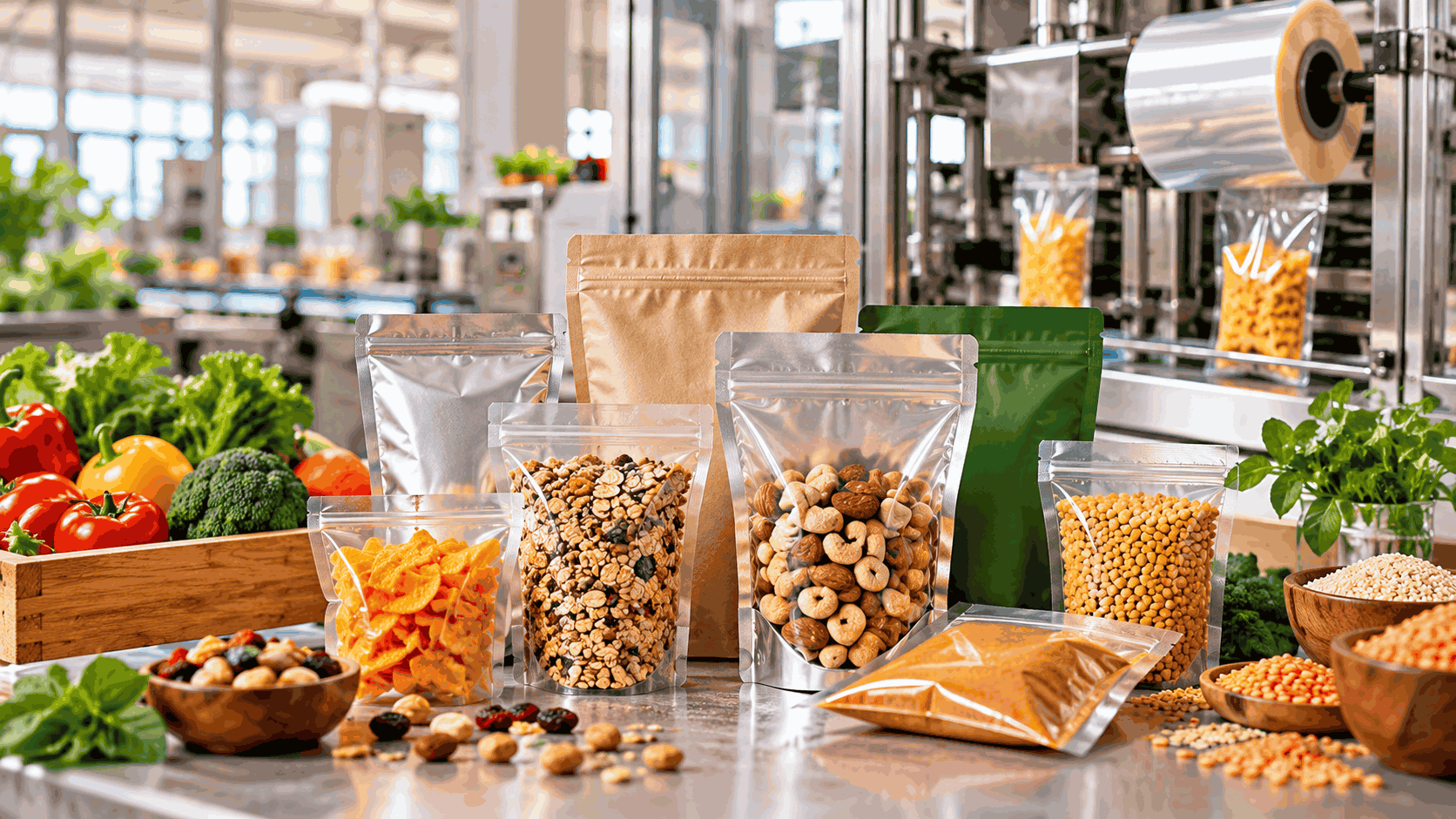
Common examples include stand-up pouches, sachets, wrappers, laminated bags, and flexible beverage packs. These formats are widely used for snacks, biscuits, spices, sauces, powdered ingredients, and various other food products.
Flexible packaging manufacturers continue to improve material performance, sealing methods, and packaging designs to meet the needs of food businesses. The right packaging depends on the product's shelf-life requirements, moisture sensitivity, storage conditions, transportation needs, and intended use.
Why Is Flexible Packaging Important in the Food Industry?
Better Product Protection and Freshness
Food products can be affected by moisture, oxygen, light, and contamination. Suitable packaging materials help preserve product freshness, prevent contamination, and maintain quality throughout storage, handling, and transportation.. For example, packaging with appropriate moisture and oxygen barriers can help preserve the freshness of snacks, powders, and other sensitive food products. The type and amount of protection needed depend on the product’s nature, composition, and storage requirements. Therefore, manufacturers should select packaging based on food safety requirements, storage conditions, and expected shelf life rather than appearance alone.
Convenience for Consumers and Businesses
Convenience is another major advantage of flexible food packaging solutions. Lightweight pouches, resealable packs, and easy-open designs can make food products easier to store, carry, and use. These features are particularly useful for products consumed in multiple servings or purchased for travel and on-the-go consumption.
For food manufacturers, flexible packaging can also support efficient packing, storage, and distribution. Its suitability depends on the product, packaging equipment, and supply chain requirements.
Efficient Storage and Transportation
Flexible packaging can require less storage space than some rigid packaging formats because empty films and pouches can often be stored compactly. Its lightweight construction may also help reduce transportation weight.
These benefits can support better logistics and inventory management. However, businesses should evaluate the complete packaging system, including material use, product protection, transportation, and end-of-life disposal, before deciding which option is most suitable.
Sustainable Flexible Packaging: A Growing Priority
Environmental responsibility is becoming an important consideration for food manufacturers. Businesses are exploring Sustainable Flexible Packaging to reduce unnecessary material use and improve packaging's environmental performance.
One approach is lightweight packaging, which aims to use less material while maintaining the required strength and protective properties. Another is developing packaging structures that are easier to collect, sort, and recycle through suitable waste-management systems.
Recyclable Food Packaging is also attracting attention. However, not every flexible package is recyclable simply because it contains plastic or carries an environmental claim. Multilayer packaging may combine different materials to achieve the required barrier properties, making recycling more difficult in some systems.
Manufacturers should therefore assess material composition, local recycling infrastructure, food-contact safety, and product protection before selecting sustainable packaging alternatives. Clear communication about disposal instructions can also help consumers make informed decisions.
Emerging Food Packaging Trends
Improved Materials and Packaging Technology
Food Packaging Trends increasingly include developments in barrier films, sealing performance, and material structures designed for specific applications. These improvements can help manufacturers balance product protection, packaging performance, and material efficiency.
Packaging technologies must also meet the practical needs of production lines. Businesses should test new materials for sealing strength, compatibility with filling equipment, transport durability, and suitability for the intended food product before introducing them commercially.
Recyclable and More Resource-Efficient Designs
Packaging designers are exploring simplified material structures and packaging formats designed to improve recyclability. These innovations may help businesses respond to changing customer expectations and packaging regulations.
Nevertheless, the best solution depends on the product and the recycling systems available in its target market. Reducing packaging material should never compromise food safety or cause avoidable product waste.
Greater Focus on Consumer-Friendly Design
Modern consumers often value packaging that is easy to open, store, carry, and dispose of responsibly. Brands are responding with practical designs, improved resealability, and clearer product information.
The Future of Food Packaging will likely involve balancing these expectations with affordability, operational efficiency, and environmental considerations.
Challenges Businesses Need to Consider
Despite its advantages, flexible packaging presents several challenges. Some material combinations are difficult to recycle, while sustainable alternatives may require changes to existing packaging equipment or production processes. Manufacturers must also consider material costs, supplier reliability, regulatory compliance, and consistent packaging quality.
Testing is essential before adopting a new format. Food businesses should evaluate shelf-life performance, seal integrity, product compatibility, and transportation conditions. Working with experienced packaging suppliers can help companies identify suitable materials and avoid unnecessary production issues.
Conclusion
The future of Flexible Packaging in the Food Industry will be shaped by innovation, convenience, product protection, and sustainability. Flexible packaging offers practical benefits, but selecting the right solution requires careful consideration of food safety, material performance, cost, and end-of-life management.
As packaging technology develops, food manufacturers have opportunities to improve packaging efficiency and respond to evolving customer expectations.
Looking for suitable packaging solutions for your food or beverage products? Explore packaging materials that match your product requirements, production process, and sustainability goals. Connect with reliable packaging suppliers, request samples, and conduct performance testing before making your final decision.