
Introduction
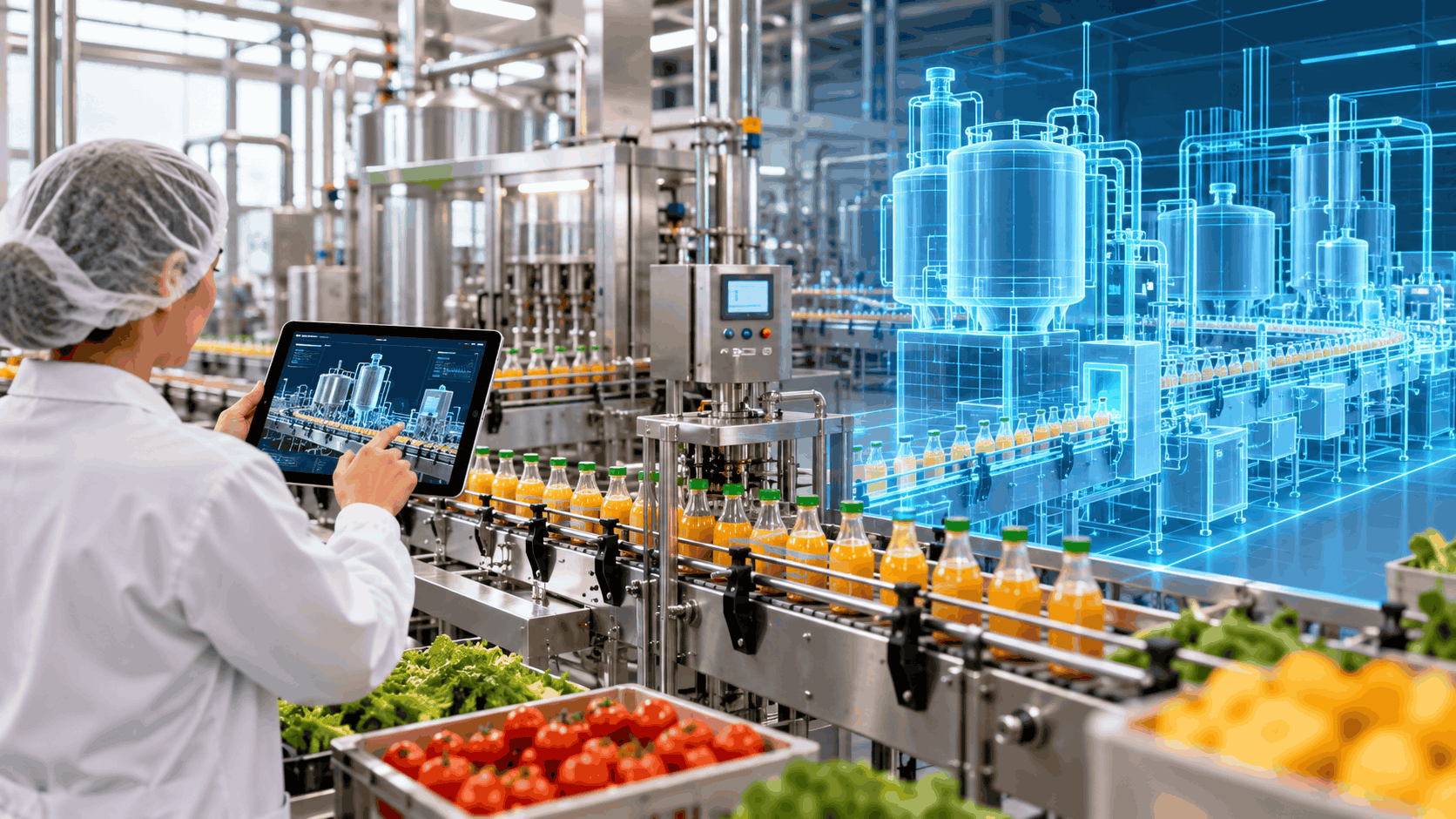
Food manufacturers are continually looking for ways to improve production efficiency, maintain consistent quality, and reduce operational disruptions. As production systems become more complex, digital technologies are creating new opportunities to understand and manage manufacturing processes. One emerging approach is Digital Twins in Food Processing, which involves creating a virtual representation of a physical asset, production line, or entire manufacturing process.
By combining operational data with digital models, manufacturers can explore how processes behave, identify potential inefficiencies, and evaluate possible improvements before implementing changes on the production floor. Although implementation requires careful planning, digital twins can support more informed decisions and contribute to the wider digital transformation of the food industry.
What Are Digital Twins in Food Processing?
A digital twin is a virtual model of a real-world object or process that can be updated using relevant operational data. In food manufacturing, this model may represent a processing machine, packaging line, storage environment, or complete production system.
Unlike a static simulation, a connected digital twin can reflect changing operating conditions when suitable data connections are available. This enables manufacturers to compare expected performance with actual results and explore how adjustments might affect production.
Digital Twin Technology in Food Manufacturing can bring together information from equipment, production records, sensors, and other digital systems. The quality of the insights depends on the accuracy of the underlying data, the design of the model, and how effectively the technology is integrated into existing operations.
How Digital Twins Improve Food Manufacturing
Virtual Simulation in Food Production
One important application is testing production scenarios in a virtual environment. Manufacturers can model changes to processing parameters, equipment settings, production schedules, or line configurations before applying them in practice.
This approach to Process Simulation in Food Manufacturing can help teams compare alternatives, identify possible bottlenecks, and assess operational risks. For example, a manufacturer planning to increase production capacity could use a suitable model to evaluate whether existing equipment and process arrangements can support the proposed changes.
Virtual simulation does not replace physical testing or food safety validation. Instead, it provides an additional way to investigate possible outcomes before committing resources to a change.
Real-Time Production Monitoring
When integrated with reliable data sources, digital twins can support Real-Time Production Monitoring by displaying how actual operating conditions compare with expected performance. Depending on the system, relevant information may include equipment status, processing temperatures, production rates, and energy consumption.
This visibility can help production teams recognise unusual patterns and investigate potential causes earlier. However, real-time monitoring depends on suitable sensors, data connectivity, and reliable information systems. A digital twin cannot provide accurate insights when its underlying data is incomplete or outdated.
Predictive Maintenance in Food Processing
Equipment breakdowns can interrupt production, delay deliveries, and increase maintenance costs. Digital twins may support Predictive Maintenance in Food Processing by helping teams analyse equipment performance and explore patterns associated with potential failures.
When combined with suitable condition-monitoring data and validated analytical models, these systems can help maintenance teams prioritise inspections and plan servicing more effectively. The results depend on the availability of meaningful historical data and the reliability of the model. Digital twins should therefore complement established maintenance procedures rather than automatically replace them.
Key Benefits of Digital Twin Technology
Food Processing Optimization
Digital twins can support Food Processing Optimization by helping manufacturers understand relationships between equipment, process conditions, and production outcomes. Simulating different operating scenarios may reveal opportunities to reduce avoidable delays, improve resource allocation, and make better use of existing production capacity.
These insights can contribute to Food Manufacturing Efficiency, particularly when teams use the findings to make measurable, evidence-based improvements. Potential benefits vary according to the process being modelled and the quality of implementation.
Better Planning and Data-Driven Decisions
Digital models can help teams compare planned performance with actual production results. This supports Data-Driven Food Production, allowing operational decisions to be informed by collected evidence rather than assumptions alone.
For example, manufacturers may use process data to investigate recurring bottlenecks, evaluate production schedules, or understand how equipment changes could affect throughput. The value comes not simply from collecting data, but from interpreting it correctly and translating the findings into practical action.
Challenges and Future Opportunities
Despite their potential, digital twins present several implementation challenges. Developing a useful model may require investment in software, sensors, connectivity, data management, and employee training. Integrating information from different equipment systems can also be complicated, especially in facilities with older machinery.
Data security, system maintenance, and model accuracy require ongoing attention. Food manufacturers must also ensure that any operational changes remain consistent with applicable food safety requirements and validated production procedures.
In the future, closer integration between digital twins, industrial sensors, automation, and advanced analytics may expand opportunities for Smart Food Manufacturing. However, successful adoption will depend on clear business objectives, dependable data, and a practical implementation strategy. Starting with one production line or a specific operational challenge can help businesses assess value before expanding the approach.
Conclusion
Digital Twins in Food Processing offer a promising way to simulate operations, improve process visibility, support maintenance planning, and identify opportunities for greater efficiency. While the technology requires investment and reliable data, a carefully planned approach can help food manufacturers make more informed operational decisions.
At EXIITO Beverages, we recognise the importance of product development, quality-focused processes, and continuous improvement in beverage manufacturing. Explore our beverage manufacturing services, learn about our research and development and quality control approach, or contact our team to discuss your beverage manufacturing requirements.