
Introduction
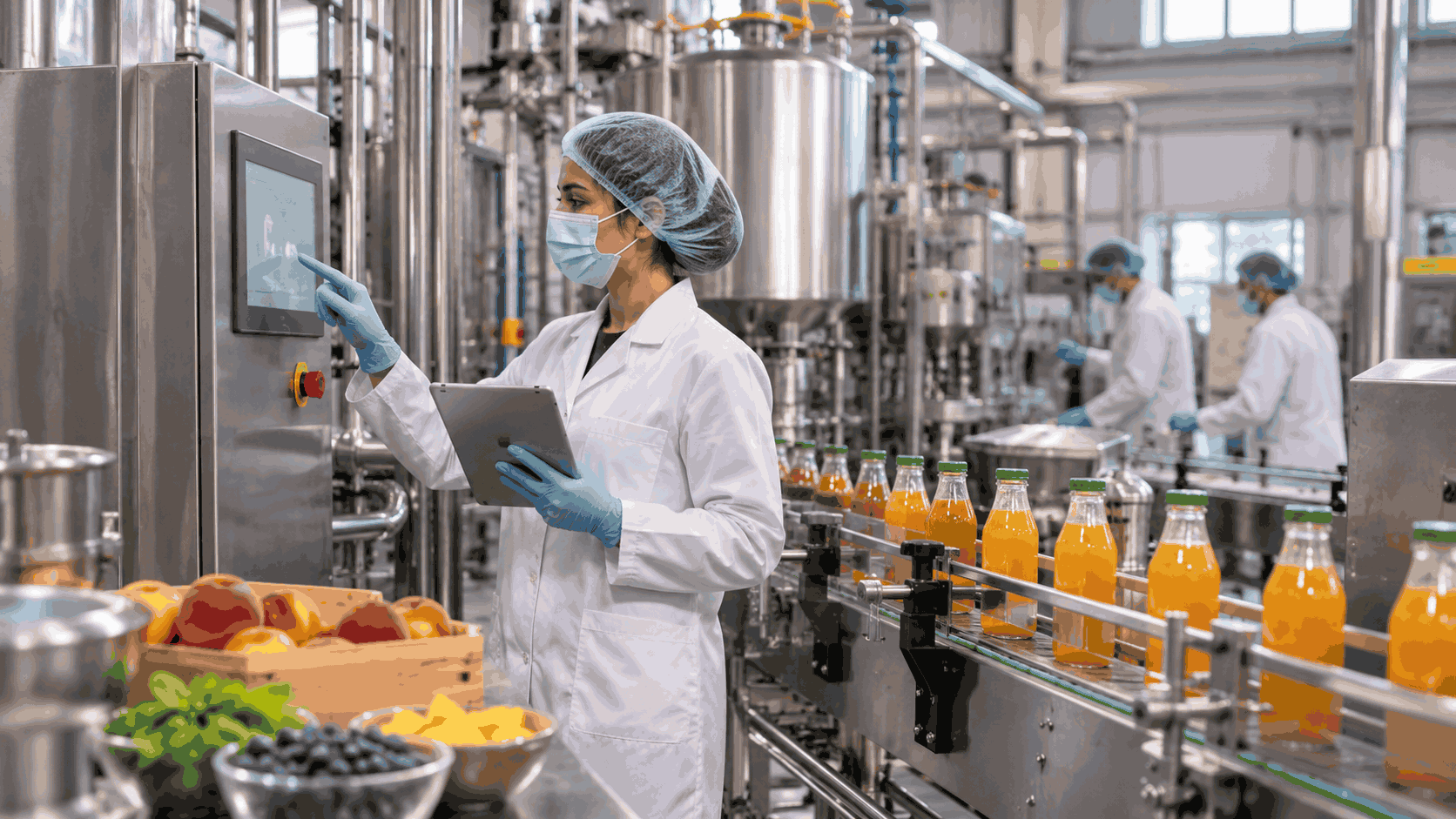
The food manufacturing industry is rapidly evolving as businesses adopt modern technologies to improve production efficiency, product quality, and operational performance. Traditional manufacturing methods are increasingly supported by digital systems that help manufacturers monitor processes, manage resources, and make informed decisions. Digital Technologies in Food Manufacturing are becoming essential for businesses looking to increase productivity while maintaining consistent food safety and quality standards.
From automated production equipment to artificial intelligence and real-time monitoring, digital solutions are transforming how food products are processed, inspected, packaged, and distributed. These advancements help manufacturers reduce manual errors, minimise production delays, and improve overall manufacturing efficiency.
Understanding Digital Transformation in Food Manufacturing
Digital transformation in food manufacturing involves integrating advanced technologies into different stages of production. It connects machinery, employees, operational systems, and production data to create more efficient manufacturing environments.
Modern food manufacturing facilities use connected equipment, digital monitoring systems, and automated processes to manage daily operations. These technologies provide better visibility into production activities and help identify operational issues before they affect output.
The adoption of Industry 4.0 in food processing is also encouraging manufacturers to move towards smart factories. By combining connected devices, intelligent software, and automated equipment, businesses can improve coordination between production stages. Read more about how smart manufacturing is transforming food production lines.
Key Digital Technologies Improving Food Manufacturing Productivity
Internet of Things (IoT) in Food Manufacturing
The Internet of Things (IoT) plays an important role in modern manufacturing by connecting machines and sensors through digital networks. These devices collect information about equipment performance, temperature, humidity, and operating conditions.
IoT in food manufacturing helps production teams monitor critical parameters without relying entirely on manual inspections. For example, connected sensors can track temperature conditions in storage areas and alert employees when readings move outside defined limits. This supports better process monitoring, timely corrective action, and improved operational control.
Artificial Intelligence in Food Production
Artificial intelligence (AI) is helping manufacturers analyse production information and identify patterns that may not be immediately visible through manual observation. AI-powered systems can support production planning, quality inspection, demand forecasting, and equipment performance analysis.
In food processing facilities, intelligent inspection technologies can help identify packaging defects, inconsistent product appearance, and other quality issues. AI-based predictive maintenance can also analyse equipment data to identify possible performance problems before unexpected breakdowns occur.
These applications support better decision-making and help improve food manufacturing productivity.
Food Processing Automation
Food processing automation reduces the need for repetitive manual activities and improves coordination across production operations. Automated machinery can support material handling, mixing, filling, sealing, labelling, and packaging.
Automated food production systems help maintain consistent operating conditions and reduce variations caused by manual handling. They can also improve production speed, support better resource utilisation, and minimise avoidable processing errors.
Automation is particularly valuable for manufacturers handling multiple product categories, where different processing and packaging requirements must be managed efficiently. Explore the role of automation in scaling food manufacturing operations for further insights.
Data Analytics and Digital Monitoring
Data analytics in food manufacturing allows businesses to convert production information into useful operational insights. Digital systems can collect data related to production output, machine downtime, material consumption, quality checks, and energy usage.
Manufacturers can use this information to identify inefficiencies, compare production performance, and improve resource planning. Digital dashboards also provide a clearer overview of manufacturing activities, helping managers make timely decisions based on actual operating data rather than assumptions.
These digital manufacturing solutions can also support better cost management. Learn more about reducing food manufacturing costs without compromising quality.
Digital Quality Control in Food Processing
Maintaining consistent product quality is essential for every food manufacturing business. Digital quality control systems help record inspection results, monitor production parameters, and maintain batch-related information.
Digital records improve traceability and make it easier to review production history when investigating quality concerns. When integrated with appropriate monitoring equipment, these systems can also help identify process variations and support timely corrective action.
Benefits of Smart Food Manufacturing
Smart food manufacturing offers several operational advantages. Automated equipment and connected monitoring systems help reduce unnecessary manual work and improve production coordination. Better visibility into machinery performance can support preventive maintenance and reduce unexpected interruptions.
Digital manufacturing solutions also improve resource management by helping businesses monitor raw material consumption, production output, and energy usage. Improved data accessibility supports more accurate planning and helps manufacturers identify opportunities to reduce waste.
Furthermore, integrated digital systems can strengthen documentation, improve quality monitoring, and support consistent manufacturing practices across different production batches.
Challenges and Future Trends in Digital Food Manufacturing
Although digital transformation offers significant opportunities, implementing new technology requires careful planning. Initial investment, employee training, system integration, and data security are important considerations for manufacturers.
Businesses must select technologies according to their production requirements, operational capacity, and long-term objectives. Employees also need suitable training to operate digital systems effectively and understand the information generated by connected equipment.
In the coming years, smart factory technology is expected to become increasingly important in food production. Greater use of AI, robotics, predictive maintenance, cloud-based monitoring, and integrated production management systems will continue to influence food industry innovation.
Conclusion and CTA
Digital technologies are changing the way food manufacturing businesses operate by improving automation, monitoring, quality control, and production planning. From IoT-enabled equipment to AI-powered inspection and data analytics, these solutions help manufacturers build more efficient, reliable, and organised production environments.
As the industry continues to advance, adopting suitable digital manufacturing solutions will become increasingly important for maintaining competitiveness and meeting changing market expectations.
Looking for a reliable food manufacturing partner? EXIITO is a premium food manufacturing company offering own-brand products across beverages, namkeen, makhana, and pickles, along with partner manufacturing solutions. Explore our food manufacturing services and learn more about EXIITO and its manufacturing capabilities.
For manufacturing enquiries and business collaborations, contact the EXIITO team to discuss your requirements.