Introduction
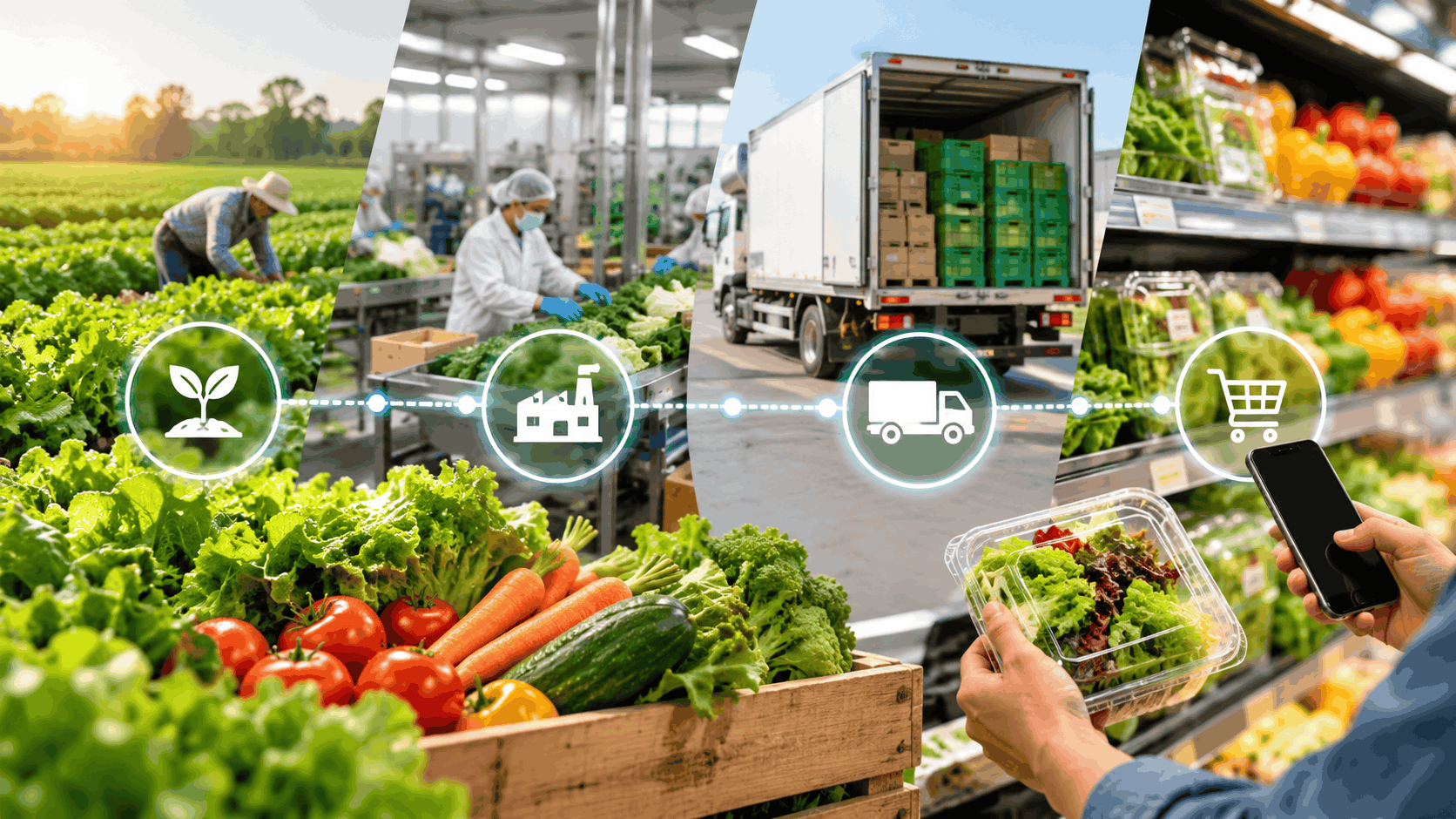
Food products often pass through several stages before reaching consumers, including raw material sourcing, manufacturing, packaging, warehousing, and distribution. Tracking products across these stages is essential for maintaining quality, supporting food safety, and responding effectively to potential problems. Traditional recordkeeping methods can make it difficult to access accurate information quickly, particularly when data is spread across different suppliers and systems.
Digital Food Traceability uses digital tools to record, organise, and share information about a food product as it moves through the supply chain. Technologies such as cloud-based databases, barcode scanning, Internet of Things (IoT) sensors, and blockchain can help businesses improve visibility and make informed decisions. As the food industry becomes increasingly connected, digital systems are creating new opportunities to strengthen transparency and supply-chain management. The GS1 standards also provide guidance on identifying and tracing products across supply chains.
What Is Digital Food Traceability?
Digital food traceability refers to the ability to follow a food product's movement and relevant history using electronic records. Depending on the system, these records may include supplier details, ingredient batches, production dates, processing information, packaging records, storage conditions, and distribution details.
Food Supply Chain Traceability integrates information across production and distribution stages, enabling businesses to monitor ingredient origins, track handling processes, and follow finished products through the supply chain. This information can be especially valuable when investigating quality concerns or identifying affected batches.
However, effective traceability relies on maintaining accurate, complete, and up-to-date records throughout the supply chain. Digital tools make records easier to access, but businesses must establish reliable procedures for collecting, checking, and updating data. The Codex Alimentarius food hygiene principles provide an additional reference for food safety and hygiene practices.
Technologies Improving Food Supply Chain Traceability
Cloud-Based Platforms and Digital Records
Cloud-based platforms allow authorised users to store and access supply-chain information through connected systems. Instead of relying entirely on paper documents or separate spreadsheets, businesses can organise supplier records, batch information, inspection reports, and dispatch details in a centralised location.
This method minimises duplicate data entry and helps teams access important records more efficiently. It can also improve coordination between manufacturers, suppliers, distributors, and retailers when information is shared appropriately.
For businesses involved in food manufacturing and supply-chain operations, organised digital records can support better documentation and communication across operational activities.
Barcode and QR Code Tracking
Barcodes and QR codes provide a practical way to identify products, packages, and batches. When scanned, they can connect authorised users to relevant information stored in a digital system, depending on how the tracking solution is designed.
For example, a batch code can help a manufacturer connect a finished product to its production records and ingredient lots. During distribution, scanning systems can record product movements between warehouses and delivery locations.
These tools can improve Real-Time Food Tracking when scans and updates are captured promptly. However, a code alone does not guarantee traceability; the underlying records must be accurate, accessible, and properly maintained.
Internet of Things and Food Quality Monitoring
The Internet of Things uses connected devices and sensors to collect information about environmental or operational conditions. In suitable food supply chains, temperature and humidity sensors can help monitor storage and transportation conditions.
This information can alert staff to potential deviations that may affect product quality. For temperature-sensitive foods, timely alerts can support faster investigation and corrective action.
Food Quality Monitoring becomes more useful when sensor readings are connected to product batches, shipment details, and defined operating limits. Nevertheless, sensors require appropriate calibration, maintenance, and interpretation. Monitoring conditions also does not replace product testing or established food safety procedures.
Blockchain in Food Traceability
Blockchain is a type of shared digital record system in which transactions are recorded in linked blocks. Depending on the design and governance of the system, it can make recorded information more difficult to alter without detection.
In food supply chains, blockchain may help participating businesses share records about product origin, batch movement, and transfers between organisations. This can improve the visibility of transactions when all relevant parties contribute reliable information.
However, blockchain cannot independently verify whether the original information is true. Its effectiveness depends on data quality, participation, system design, cost, and integration with existing processes. It is one possible tool for Food Traceability Technology, rather than a universal solution for every business.
Benefits of Digital Supply Chain Management
A well-designed Digital Supply Chain in Food Industry can improve access to records, support more efficient inventory management, and help businesses investigate product issues. When a quality concern arises, connected batch records may help teams identify affected products and trace their distribution more quickly.
Digital systems can also strengthen communication between suppliers, manufacturers, and distributors. Better information sharing can help businesses coordinate deliveries, manage stock, and identify gaps in documentation. These improvements support Food Safety and Transparency by making relevant product information easier to review and verify.
Food manufacturers can complement digital recordkeeping with established quality procedures. EXIITO's quality assurance approach highlights the importance of incoming material checks, in-process controls, finished-product inspections, and traceability in food manufacturing.
Challenges and Future Trends
Implementing digital traceability can require investment in software, scanning equipment, sensors, employee training, and system integration. Smaller businesses may face additional challenges when suppliers use different recordkeeping methods or have limited digital capabilities.
Data security and access control are also important. Businesses should establish clear responsibilities, protect sensitive commercial information, and maintain reliable backup and recovery procedures. Staff training is necessary to ensure records are entered correctly and updated consistently.
In the future, artificial intelligence, connected sensors, and improved data-sharing platforms may help businesses identify patterns, detect potential disruptions, and improve supply-chain planning. Their value will depend on practical implementation, reliable data, and measurable operational benefits.
Conclusion
Digital Food Traceability is helping the food industry improve product tracking, strengthen documentation, and increase visibility across supply-chain operations. Cloud platforms, barcodes, connected sensors, and blockchain each offer different capabilities, but their effectiveness depends on accurate data, consistent procedures, and cooperation between supply-chain partners.
Combining appropriate digital tools with strong quality management can help businesses make better-informed decisions and respond more efficiently to product concerns.