
Introduction
Pickles are popular food products known for their distinctive flavours, traditional preparation methods, and ability to complement everyday meals. From mango and lemon pickles to garlic and mixed vegetable varieties, proper storage plays an important role in maintaining their taste, texture, aroma, and overall quality. However, improper handling, unsuitable storage conditions, moisture exposure, and contamination can affect pickle freshness and increase the risk of spoilage.
Following the Best Practices for Storing Pickles to Maintain Quality and Freshness helps consumers, retailers, distributors, and food manufacturers protect product quality throughout storage and handling. Understanding suitable containers, temperature requirements, hygiene practices, and preservation techniques is essential for maintaining consistent quality and supporting food safety.
Understanding the Importance of Proper Pickle Storage
Pickle storage is an important part of food preservation because ingredients such as oil, salt, spices, vinegar, and other acidic components contribute to the preservation process. Their effectiveness depends on the recipe, preparation method, acidity, moisture content, and packaging conditions.
Improper storage can expose pickles to moisture, air, contaminants, and unsuitable temperatures. These factors may affect flavour, colour, texture, and product stability. Therefore, proper pickle storage methods are essential for maintaining product quality and ensuring that pickles remain suitable for consumption throughout their intended shelf life.
Best Practices for Storing Pickles Properly
Choose Clean and Airtight Storage Containers
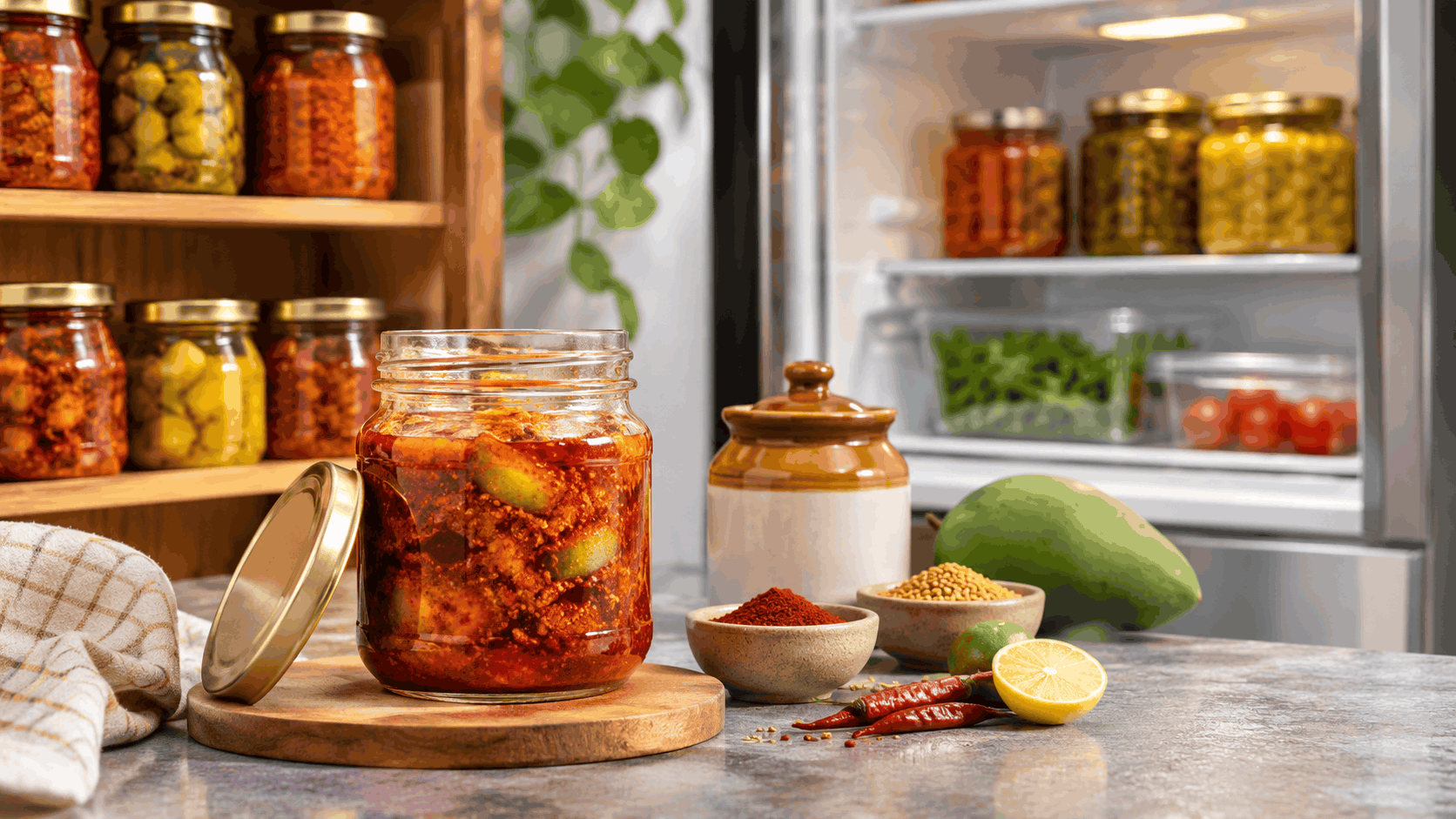
Selecting suitable containers is one of the most important food storage best practices. Pickles should be stored in clean, food-grade containers that protect the contents from external contamination and environmental exposure. Glass jars are commonly used because they are non-reactive when suitable for food contact, easy to clean, and allow users to inspect the contents.
Airtight packaging for pickles helps minimise unnecessary exposure to air and moisture. Lids should be closed securely after every use, and containers should be checked for cracks, leakage, or damaged seals. Using unsuitable or unclean containers can compromise product quality and increase contamination risks.
Maintain Appropriate Temperature Conditions
Temperature control for pickle storage depends on the product formulation and manufacturer instructions. Some commercially prepared pickles can be stored at room temperature before opening, while others require refrigeration. After opening, certain products may need refrigeration to maintain their quality and safety.
Pickles should always be stored according to the instructions provided on their packaging. Avoid exposing containers to direct sunlight, excessive heat, or frequent temperature fluctuations. Maintaining stable and suitable storage conditions helps preserve flavour, texture, and product consistency.
Use Clean and Dry Serving Utensils
Hygiene is essential when handling stored pickles. Introducing water, food particles, or contaminants into a container can affect product quality and encourage spoilage. Always use clean, completely dry spoons or serving utensils when removing pickles.
Avoid touching the contents directly with hands or using utensils that have previously contacted other foods. Closing the container immediately after use also reduces unnecessary exposure to air and environmental contaminants. These food safety and hygiene practices support better pickle preservation.
Follow Traditional Pickle Preservation Methods
Traditional pickle preservation methods often involve ingredients such as salt, oil, spices, vinegar, and natural acidity. These components contribute to flavour development and preservation when used in appropriately controlled recipes and preparation processes.
However, traditional methods alone do not guarantee indefinite freshness or food safety. Ingredient proportions, preparation hygiene, moisture management, and suitable packaging must all be considered. Food manufacturers should follow validated preservation processes and quality checks to maintain consistent product standards.
Monitor Packaging, Expiry Dates, and Product Condition
Packaging plays an important role in protecting pickles during storage, transportation, and distribution. Properly sealed containers help reduce exposure to external contaminants and protect the product from physical damage.
Always check manufacturing dates, best-before dates, storage instructions, and packaging integrity before purchasing or consuming pickles. Discard products showing signs such as unusual mould growth, leakage, damaged seals, or abnormal changes in appearance or smell. Do not taste questionable products to determine whether they are safe.
Factors Affecting Pickle Shelf Life
Pickle shelf life depends on several factors, including ingredient quality, acidity, salt concentration, oil content, moisture levels, processing conditions, and packaging materials. Variations in these factors can influence how well a product maintains its original characteristics during storage.
Environmental conditions also matter. Excessive heat, humidity, direct sunlight, and improper handling may accelerate deterioration. For manufacturers and distributors, regular quality inspections, appropriate warehouse conditions, and stock rotation help maintain product quality throughout the supply chain.
Challenges and Future Trends in Pickle Storage
Maintaining pickle freshness can be challenging when products move through different storage and transportation environments. Temperature fluctuations, damaged packaging, poor handling, and inadequate inventory management can create quality concerns.
Modern food packaging solutions are helping manufacturers improve product protection through better sealing technologies, suitable food-grade materials, and packaging designs that minimise environmental exposure. Improved quality monitoring and traceability systems can also help businesses identify storage issues and manage product batches more effectively.
These developments support more reliable pickle preservation techniques while helping manufacturers meet changing consumer expectations for quality, convenience, and food safety.
Conclusion and CTA
Following proper pickle storage methods is essential for maintaining flavour, texture, freshness, and overall product quality. Clean airtight containers, suitable temperature conditions, hygienic handling, appropriate packaging, and regular shelf-life monitoring all contribute to effective pickle preservation.
Whether storing traditional homemade pickles or commercially packaged products, following the recommended storage instructions helps minimise spoilage risks and maintain quality.
Looking for quality-focused pickle manufacturing solutions? Explore the EXIITO Pickle Range to discover different pickle varieties. For manufacturing and business enquiries, visit EXIITO and explore its food manufacturing capabilities.