
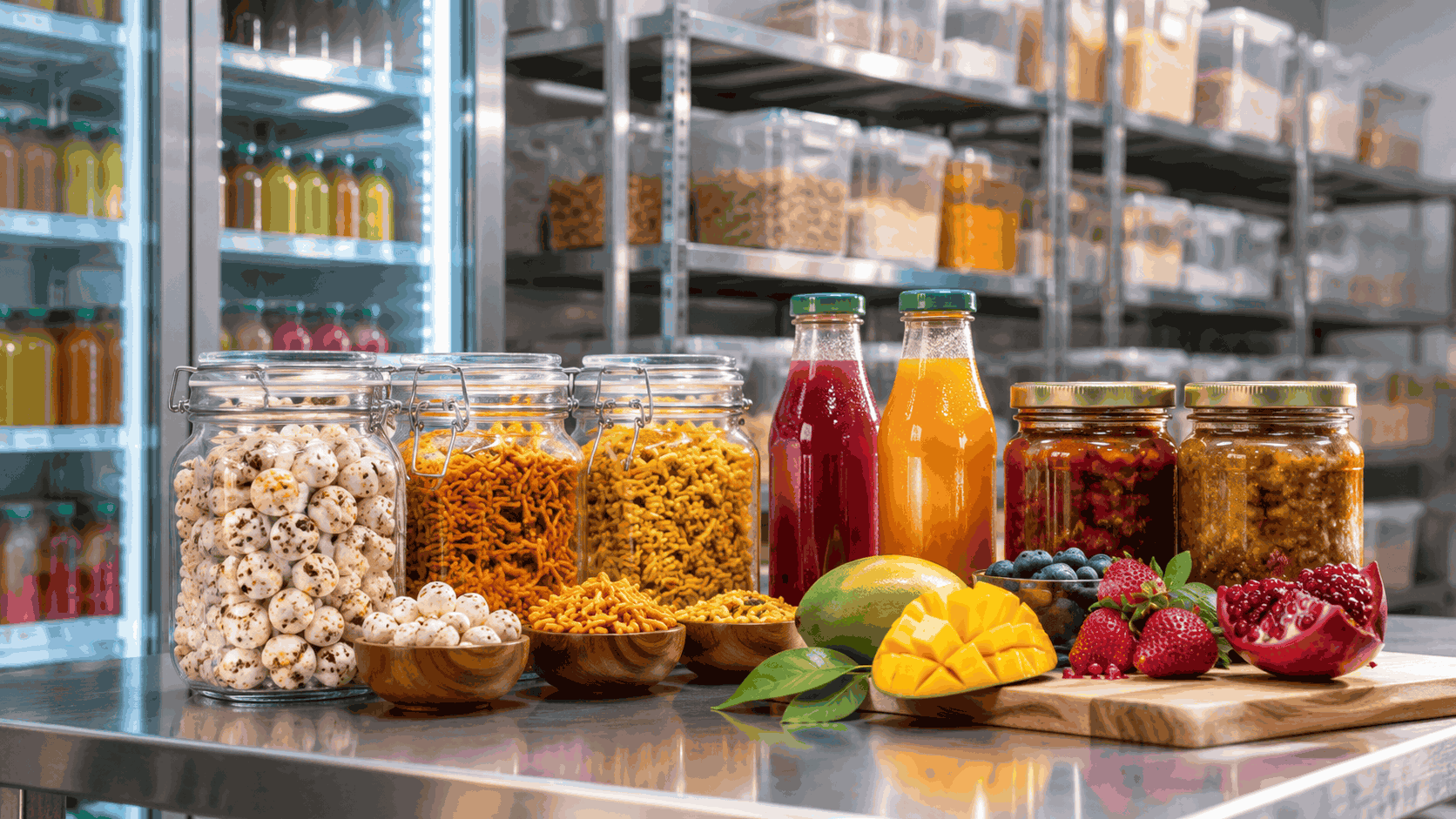
Introduction
Proper food storage plays an important role in maintaining the quality, safety, and freshness of food products. From beverages and packaged snacks to pickles and other processed foods, every product requires suitable storage conditions to preserve its original characteristics. Improper storage can affect taste, texture, aroma, appearance, and overall product quality while increasing the risk of spoilage.
For food manufacturers, distributors, retailers, and consumers, understanding the importance of proper food storage is essential. Maintaining suitable temperatures, controlling moisture, using appropriate packaging, and following hygienic storage practices can help protect food products throughout the supply chain. By implementing effective food storage best practices, businesses can maintain product consistency, reduce unnecessary waste, and support a better consumer experience.
Why Proper Food Storage Is Important for Food Quality
Food products are exposed to several environmental factors during manufacturing, transportation, and storage. Temperature fluctuations, humidity, oxygen, light, and contamination can gradually affect their quality. Proper food storage helps minimise these risks and maintain the intended characteristics of products.
Maintaining food quality and freshness is particularly important for packaged food manufacturers because consumers expect products to retain their original taste, texture, and appearance until the end of their stated shelf life. Suitable storage conditions also help businesses maintain product consistency and reduce losses caused by premature deterioration.
Essential Food Storage Best Practices
Maintaining Proper Temperature Conditions
Temperature control in food storage is one of the most important factors influencing product quality. Different food products require different storage temperatures depending on their ingredients, processing methods, packaging, and preservation requirements.
Perishable products may require refrigeration or freezing, while many shelf-stable packaged foods can be stored at controlled room temperatures. Exposure to unsuitable temperatures can encourage microbial growth, accelerate chemical changes, or affect product texture and flavour.
Food manufacturers should establish suitable temperature requirements for each product and monitor storage areas regularly. Consistent temperature management helps maintain product stability and supports food safety throughout storage and distribution.
Controlling Moisture and Humidity
Moisture control in food storage is particularly important for products such as namkeen, makhana, biscuits, and other dry snacks. Excessive moisture can reduce crispness, affect texture, and create conditions that encourage spoilage.
Maintaining appropriate humidity levels and using moisture-resistant packaging can help protect these products. Storage areas should remain clean, dry, and properly ventilated. Food packages should also be protected from direct contact with water and excessive humidity.
For moisture-sensitive products, suitable packaging materials and properly sealed containers play an important role in preserving freshness.
Choosing Appropriate Packaging and Storage Methods
Packaging protects food products from external environmental conditions, physical damage, contamination, and moisture exposure. Selecting suitable packaging materials is therefore an essential part of safe food storage methods.
Different products require different packaging solutions. Airtight packaging can help protect dry snacks from moisture and air exposure, while suitable sealed containers can protect liquids and other packaged foods from contamination and leakage.
Manufacturers should ensure that packaging materials are compatible with the product and provide the required level of protection. Proper sealing and packaging inspections also help maintain product quality during transportation and storage.
Food Preservation Techniques That Help Extend Shelf Life
Food preservation techniques help slow down the processes that cause food deterioration. Common approaches include refrigeration, freezing, drying, heat treatment, and the use of approved preservation methods.
Each technique serves a different purpose depending on the food category and its processing requirements. Refrigeration helps maintain suitable conditions for temperature-sensitive products, while drying reduces moisture availability in certain food products. Heat treatment can help control microorganisms when applied through an appropriate, validated process.
Food manufacturers must select preservation methods according to product formulation, safety requirements, packaging compatibility, and intended storage conditions. Proper preservation combined with suitable storage practices can help maintain food freshness and shelf life.
Challenges in Maintaining Food Quality During Storage
Maintaining consistent storage conditions can become challenging when food products move between manufacturing facilities, warehouses, distributors, and retail outlets. Temperature fluctuations, damaged packaging, poor inventory management, and inadequate hygiene can affect product quality.
Another important challenge is monitoring storage conditions across different locations. Without proper inspection and documentation, businesses may find it difficult to identify the reasons behind quality deterioration.
Implementing organised warehouse management, regular cleaning schedules, packaging inspections, and suitable inventory rotation practices can help address these challenges. Following the first-in, first-out approach where appropriate also helps ensure that older stock is distributed before newer stock.
Future Trends in Food Storage and Quality Management
Modern food manufacturing is increasingly adopting technology to improve storage management and product protection. Digital temperature monitoring, automated warehouse systems, humidity sensors, and inventory tracking solutions are helping businesses monitor storage conditions more efficiently.
These technologies can provide timely information about environmental changes and support faster corrective action. Improved packaging materials and better supply chain monitoring are also creating opportunities to protect food products during longer distribution journeys.
As the food industry continues to evolve, combining traditional food safety and hygiene practices with modern monitoring technologies will remain important for effective food quality management.
Conclusion and CTA
Proper food storage is essential for maintaining product quality, freshness, safety, and shelf life. Effective temperature control, moisture management, suitable packaging, hygienic handling, and regular inspections help protect food products from avoidable deterioration.
For food manufacturers and businesses, adopting reliable storage practices is not just about protecting products; it is also about maintaining consumer confidence and delivering consistent quality.
At EXIITO, quality-focused food manufacturing and process discipline are important parts of building reliable food products. Explore our food manufacturing solutions and product range to learn more about our offerings across beverages, namkeen, makhana, and pickles.
Visit EXIITO Beverages to explore our products and manufacturing capabilities.