
Introduction
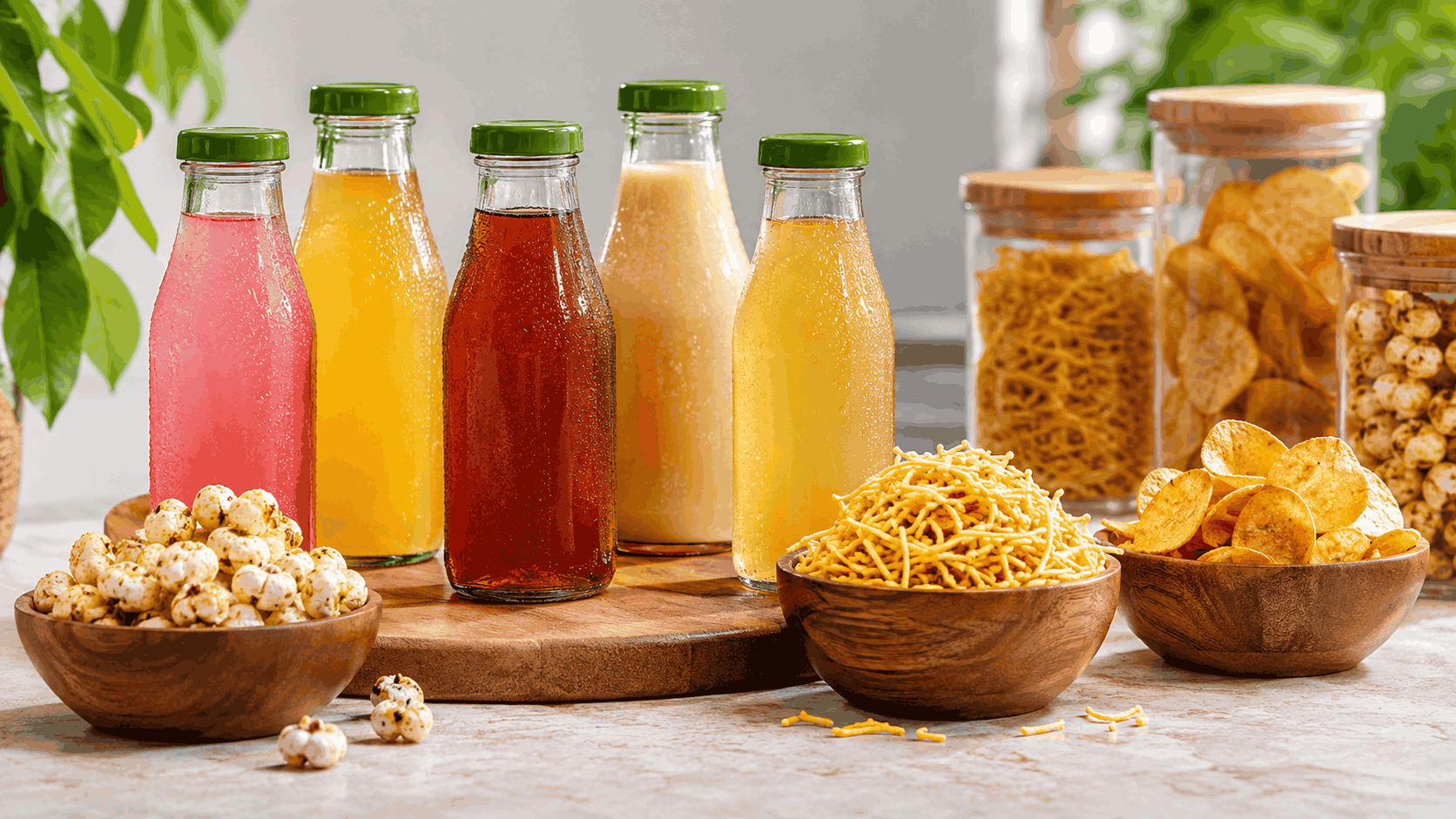
Shelf life is an important factor in the food and beverage industry because it determines how long a product can maintain its expected quality, freshness, safety, and overall characteristics under specified storage conditions. Whether it is a bottled beverage, flavoured drink, namkeen, or roasted makhana, every packaged food product requires proper preservation, packaging, and quality management to maintain its intended condition.
Understanding the Shelf Life of Bottled Beverages and Packaged Snacks helps manufacturers develop reliable products, reduce unnecessary product losses, and maintain consumer confidence. Factors such as ingredients, processing methods, packaging materials, moisture levels, and storage conditions can significantly influence how long a product remains suitable for consumption.
What Does Shelf Life Mean in the Food and Beverage Industry?
Shelf life refers to the period during which a food or beverage product maintains its required safety and quality when stored according to the recommended conditions. It is generally determined through product-specific testing and evaluation.
For bottled beverages, shelf life can be influenced by microbial stability, ingredient composition, acidity, oxygen exposure, light, and processing methods. For packaged snacks, factors such as moisture absorption, oil oxidation, packaging integrity, and storage temperature play an important role.
Manufacturers must understand these differences because beverages and snacks require different food preservation methods to maintain their expected product characteristics.
Key Factors Affecting the Shelf Life of Bottled Beverages
Ingredients and Product Formulation
Ingredient selection is one of the most important beverage shelf life factors. Water quality, fruit ingredients, dairy components, sweeteners, flavouring agents, and other ingredients can influence product stability.
For example, beverages containing dairy ingredients may require different processing and storage conditions compared with acidic fruit-based drinks or iced tea. Manufacturers must evaluate ingredient compatibility and develop formulations that support the desired quality and safety requirements.
Processing and Manufacturing Conditions
Processing methods directly influence the stability of bottled beverages. Appropriate heat treatment, pasteurisation, hygienic filling, and controlled manufacturing practices can help manage microbial risks and maintain product consistency.
Manufacturers should select processing conditions according to the beverage formulation, packaging type, and applicable food safety requirements. Consistent production practices are essential for maintaining quality across different batches.
Packaging Materials and Storage Conditions
Food packaging and shelf life are closely connected. Bottles must provide suitable protection against external contamination, oxygen exposure, light, and other environmental factors.
Glass bottles, for example, provide a strong barrier to gases and moisture when properly sealed. However, the closure system, filling process, and product formulation also influence the final shelf life.
Recommended beverage storage conditions, including temperature and protection from direct sunlight, should be established through product-specific evaluation.
Understanding the Shelf Life of Packaged Snacks
Moisture Control and Packaging Integrity
Moisture is one of the major factors affecting packaged snacks shelf life. Products such as namkeen, roasted makhana, and other crispy snacks can lose their texture when exposed to excess humidity.
Moisture control in snack packaging helps maintain crispness, texture, and overall product quality. Suitable moisture-barrier packaging materials and properly sealed packs help reduce exposure to environmental humidity.
Oil Oxidation and Ingredient Stability
Many savoury snacks contain oils and fats that can undergo oxidation during storage. This process may result in undesirable flavours, aromas, and changes in product quality.
Selecting suitable ingredients, controlling processing conditions, and using appropriate packaging can help minimise oxidation. Manufacturers should also evaluate the stability of seasonings, flavouring ingredients, and other components throughout the intended storage period.
Food Preservation and Quality Control Practices
Importance of Shelf Life Testing
Shelf life testing for food products helps manufacturers understand how products change over time under different storage conditions. Testing may include microbiological analysis, sensory evaluation, moisture measurement, acidity checks, texture assessment, and monitoring of packaging performance, depending on the product.
For bottled beverages, testing can help evaluate changes in taste, colour, aroma, and microbial stability. For packaged snacks, it can identify changes in crispness, flavour, moisture content, and signs of rancidity.
These evaluations help manufacturers establish appropriate shelf life dates and recommended storage instructions based on documented results rather than assumptions.
Maintaining Food Safety and Quality Control
Food safety and quality control must remain consistent throughout manufacturing, packaging, storage, and distribution. Hygienic production environments, controlled handling, equipment sanitation, raw material inspection, and finished-product checks all contribute to product reliability.
A well-defined quality assurance system also supports batch traceability and helps manufacturers identify potential quality issues. EXIITO follows a quality-focused approach involving incoming material checks, in-process controls, finished goods inspection, and traceability. Learn more about its quality assurance and food safety practices.
How Manufacturers Can Extend the Shelf Life of Packaged Products
Extending shelf life requires a combination of suitable formulation, effective processing, appropriate packaging, and controlled storage. No single preservation technique works for every product because different ingredients and product categories have different stability requirements.
Manufacturers should select packaging materials according to the product's sensitivity to moisture, oxygen, light, and environmental conditions. For example, snacks may require moisture-resistant packaging, while beverages may need suitable bottle materials, effective closures, and controlled filling conditions.
Food preservation techniques such as pasteurisation, approved preservatives, moisture management, and protective packaging can support product stability when appropriately selected and validated.
Regular quality assessments, supplier evaluation, production documentation, and storage monitoring also help maintain consistent product standards throughout the supply chain.
Challenges and Future Trends in Food Preservation
Modern food manufacturers face several challenges when managing product shelf life. Changing environmental conditions, transportation delays, packaging limitations, ingredient variations, and inconsistent storage practices can affect product quality.
At the same time, the industry is moving towards improved packaging materials, better processing technologies, automated quality monitoring, and more reliable testing methods. Packaging innovations that provide improved barrier protection can help maintain product freshness while supporting practical storage and distribution requirements.
Manufacturers are also exploring packaging solutions that balance product protection, consumer convenience, sustainability, and cost efficiency. These developments are creating new opportunities to improve the shelf life of packaged food products without compromising their intended quality.
For businesses developing new beverages or snack products, working with an experienced manufacturing partner can help address formulation, packaging, processing, and quality requirements together. EXIITO offers food and beverage manufacturing solutions across multiple product categories.
Conclusion: Maintaining Quality from Manufacturing to Consumption
The shelf life of bottled beverages and packaged snacks depends on several interconnected factors, including ingredient quality, manufacturing processes, packaging materials, moisture control, and storage conditions. Understanding these factors helps manufacturers protect product freshness, maintain consistent quality, and support food safety throughout the supply chain.
Effective preservation is not limited to extending a product's storage period. It also involves ensuring that products retain their intended taste, texture, appearance, and safety under recommended conditions. Consistent testing, suitable packaging, and reliable quality control are essential for achieving these objectives.
CTA: Looking for reliable food and beverage manufacturing solutions for your brand? Explore EXIITO's product range or contact the EXIITO team to discuss your product development, packaging, and manufacturing requirements.