
Introduction
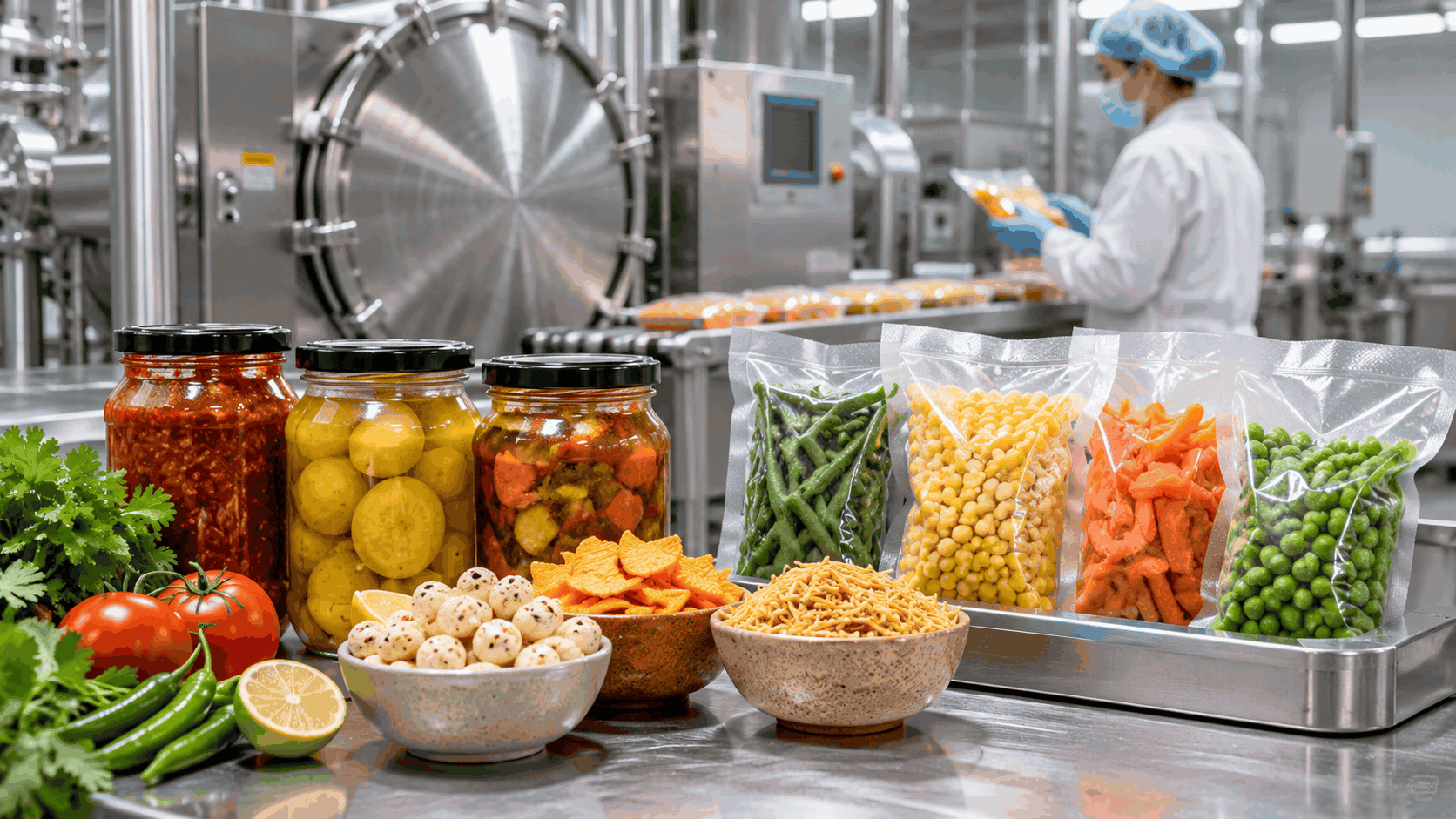
Maintaining food quality, safety, and freshness is one of the most important responsibilities in modern food manufacturing. From packaged snacks and beverages to pickles and other processed food products, manufacturers must ensure that products remain suitable for consumption during storage, transportation, and distribution. This makes food preservation an essential part of the manufacturing process.
Today, Food Preservation Techniques in Modern Food Manufacturing involve a combination of traditional practices and advanced technologies designed to control microbial growth, slow down spoilage, and maintain product characteristics. Appropriate preservation methods help manufacturers manage product shelf life, improve food safety, reduce unnecessary waste, and maintain consistent quality.
As consumer expectations continue to evolve, food manufacturers are exploring modern food preservation methods that support efficient production while protecting the taste, texture, nutritional value, and freshness of their products.
Understanding Food Preservation in Modern Food Manufacturing
Food preservation involves applying suitable processing, storage, and packaging methods to slow down the natural deterioration of food products. Spoilage can occur due to microorganisms, enzymatic activity, oxidation, moisture changes, and unsuitable storage conditions.
In commercial manufacturing, food processing and preservation work together to produce safe and stable products. The appropriate method depends on the food's ingredients, moisture content, acidity, packaging format, intended shelf life, and distribution requirements.
For example, beverages may require controlled heat treatment and hygienic filling, while packaged snacks may depend on moisture control, suitable packaging barriers, and appropriate storage conditions. Selecting the right preservation approach helps manufacturers maintain product quality throughout the supply chain.
Major Food Preservation Techniques Used in Modern Manufacturing
Thermal Food Processing Techniques
Thermal processing is one of the widely used industrial food preservation methods. It involves applying controlled heat to reduce harmful microorganisms and inactivate enzymes that contribute to food deterioration.
Pasteurisation and commercial sterilisation are common examples. Pasteurisation uses a controlled heating process to reduce targeted microorganisms, while sterilisation processes are designed to achieve a higher level of microbial control under specified conditions.
These thermal food processing techniques are used in different food and beverage applications. However, manufacturers must carefully manage processing temperatures and treatment times because excessive heat can affect flavour, colour, texture, and nutritional characteristics.
Refrigeration and Freezing
Temperature control in food manufacturing plays an important role in maintaining freshness and slowing down spoilage. Refrigeration keeps products at controlled low temperatures, helping slow microbial growth and certain chemical reactions.
Freezing reduces the availability of liquid water for microbial activity and slows down many deterioration processes. It is commonly used for products that require frozen storage and distribution.
Both methods require suitable temperature monitoring throughout storage and transportation. Any interruption in temperature control can affect product quality and safety.
Non-Thermal Food Preservation Methods
Non-thermal food preservation methods are gaining attention because they can help manufacturers reduce microbial activity without relying primarily on conventional heat treatment.
High-pressure processing (HPP), pulsed electric fields, and ultraviolet treatment are examples of technologies used in specific food applications.
High-pressure processing uses intense pressure to inactivate selected microorganisms while helping retain certain fresh-food characteristics. Pulsed electric field technology applies short electrical pulses and is particularly relevant to certain liquid food products. Ultraviolet treatment can help reduce microbial contamination on suitable surfaces, water, and liquid products, depending on the application.
These advanced food preservation technologies require careful validation to ensure they meet the product's safety and quality requirements.
Drying and Moisture Control
Moisture management is another important aspect of food preservation. Many microorganisms require available water to grow, making moisture reduction an effective approach for improving the stability of suitable food products.
Drying methods such as hot-air drying, spray drying, and vacuum drying are used across different food manufacturing applications.
For products such as roasted snacks and makhana, controlling moisture levels helps maintain the desired crispness and texture. Manufacturers must also consider environmental humidity and packaging protection to prevent moisture absorption during storage.
Food Packaging and Preservation
Packaging plays a significant role in protecting food products from external conditions that may cause deterioration. Suitable packaging materials help control exposure to moisture, oxygen, light, and environmental contaminants.
Vacuum packaging, modified atmosphere packaging (MAP), and high-barrier packaging materials are examples of modern approaches used in food preservation.
The packaging solution must be compatible with the product, processing method, storage conditions, and transportation requirements. Proper sealing and packaging quality checks are equally important for maintaining product integrity.
Explore EXIITO's food manufacturing capabilities to understand its approach to manufacturing across beverages, namkeen, makhana, and pickles.
Fermentation and Chemical Preservation
Fermentation is a traditional preservation technique that continues to play an important role in modern food manufacturing. It uses beneficial microorganisms to transform food components, producing conditions that can help inhibit certain unwanted microorganisms.
This method is commonly associated with products such as fermented vegetables, dairy products, and traditional food preparations. Pickling also uses preservation principles involving acidity, salt, and controlled processing conditions.
Depending on the formulation, approved preservatives may also be used to control microbial growth, oxidation, or other deterioration processes. Their selection and application must follow applicable food safety regulations and permitted usage limits.
Importance of Food Safety and Quality Control
Preservation methods are effective only when supported by proper manufacturing practices. Food safety and quality control help ensure that preservation processes deliver the intended results without compromising consumer safety.
Manufacturers should monitor raw materials, processing parameters, hygiene conditions, packaging integrity, and finished-product quality. Microbial testing, suitable laboratory analysis, and shelf-life studies can help verify whether a preservation method is appropriate for a particular product.
Effective microbial control in food processing also requires clean equipment, trained employees, controlled production environments, and documented procedures.
EXIITO follows a structured approach to quality management through its Quality Assurance systems, covering incoming material inspections, in-process controls, finished-goods checks, and batch traceability.
Benefits and Challenges of Modern Food Preservation
Modern food preservation methods offer several advantages to food manufacturers. Appropriate preservation techniques can extend product shelf life, reduce spoilage, maintain product consistency, and support longer distribution periods. They also help manufacturers manage inventory and reduce avoidable food waste.
However, selecting and implementing preservation technologies involves certain challenges. Advanced equipment may require significant investment, specialised technical knowledge, regular maintenance, and employee training. Some processing methods can also influence the original flavour, texture, colour, or nutritional properties of food.
Manufacturers must therefore evaluate product characteristics, processing costs, packaging compatibility, regulatory requirements, and storage conditions before selecting a suitable method.
Future Trends in Food Preservation Technology
The future of food preservation is expected to involve greater adoption of advanced processing technologies, improved monitoring systems, and more sustainable production practices.
Research into non-thermal processing, intelligent packaging, improved barrier materials, and automated temperature monitoring is creating new possibilities for the food industry. These developments may help manufacturers improve preservation efficiency while maintaining desirable product characteristics.
Sustainable food preservation techniques are also receiving attention. Reducing energy consumption, improving packaging efficiency, minimising food waste, and optimising storage conditions can support more responsible manufacturing operations.
Companies investing in modern food processing technology and research-driven product development can explore preservation approaches that match changing consumer expectations and industry requirements.
Conclusion and CTA
Food preservation is an essential part of modern food manufacturing. From thermal processing and refrigeration to drying, fermentation, and advanced non-thermal technologies, each method serves a specific purpose in maintaining product quality and safety.
Choosing the right preservation technique requires careful consideration of ingredients, processing conditions, packaging, microbial risks, and intended shelf life. Combining suitable preservation methods with effective quality control can help manufacturers produce consistent, safe, and reliable food products.
At EXIITO Beverages, we understand the importance of quality-focused food manufacturing across beverages, namkeen, makhana, and pickles. Explore our food manufacturing and product development capabilities or contact our team to discuss your food manufacturing requirements.