
Introduction
The shelf life of packaged food products is an important consideration for food manufacturers, distributors, retailers, and consumers. It determines how long a product can maintain its expected quality, taste, texture, freshness, and safety under specified storage conditions. Understanding the factors affecting the shelf life of packaged food products helps manufacturers develop better preservation strategies, select suitable packaging materials, and maintain consistent product quality.
Several elements influence food shelf life, including ingredient quality, moisture content, processing methods, packaging technology, storage temperature, and microbial activity. Managing these factors effectively is essential for reducing food spoilage, maintaining consumer confidence, and improving product stability.
Ingredient Quality and Food Composition
The quality of raw materials plays a significant role in determining the shelf life of packaged food. Fresh, properly handled, and high-quality ingredients provide a better foundation for producing stable food products. Poor-quality ingredients or contaminated raw materials can introduce microorganisms and accelerate deterioration.
Food composition also influences product stability. Moisture-rich products may support microbial growth, while foods containing higher levels of fats can become rancid through oxidation. Ingredients such as natural acids, salt, sugar, and approved preservatives can influence product stability by affecting microbial activity and chemical reactions.
Therefore, manufacturers must carefully evaluate ingredient quality and formulation during food product development.
Moisture Content and Humidity Control
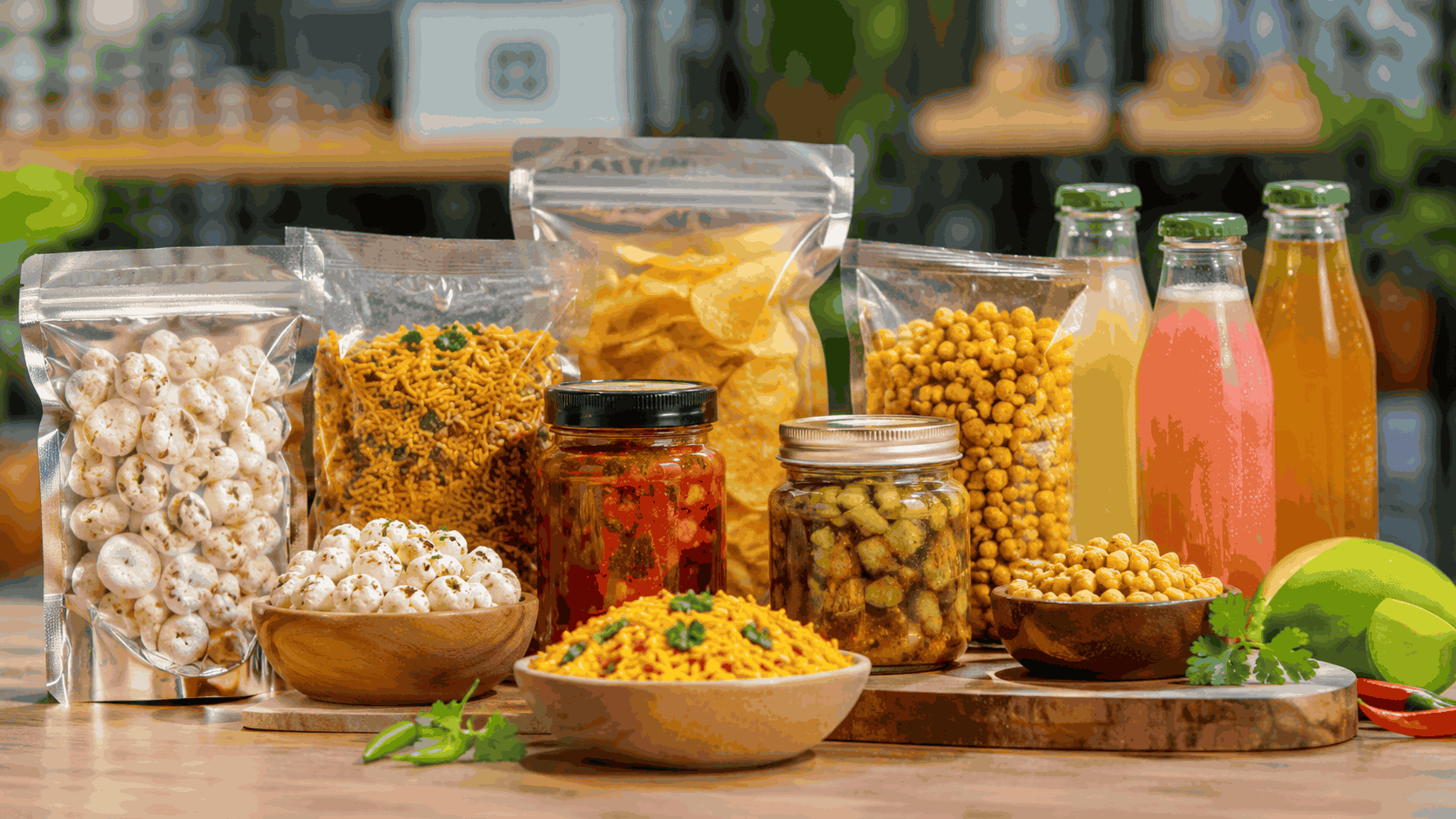
Moisture is one of the most important food shelf life factors. Excess moisture can encourage mould growth, bacterial activity, and texture deterioration. Products such as namkeen, makhana, and other crispy snacks can lose their crunch when exposed to moisture.
Moisture control in food packaging helps maintain the original texture and quality of packaged products. Packaging materials with appropriate moisture-barrier properties reduce the movement of water vapour between the product and its surrounding environment.
Storage conditions also matter. High humidity can affect packaging performance and product quality, particularly when packaging is not properly sealed. Maintaining suitable moisture levels throughout manufacturing, packaging, transportation, and storage helps prevent premature spoilage.
Food Packaging Materials and Their Performance
Food packaging and shelf life are closely connected because packaging acts as a protective barrier against environmental conditions. The choice of packaging material depends on the product's characteristics, storage requirements, and expected distribution period.
Flexible pouches, glass bottles, plastic containers, and laminated packaging materials offer different protective properties. Some materials provide better resistance to moisture, oxygen, and light, while others offer durability and convenience.
Proper sealing is equally important. Damaged packaging, weak seals, or leakage can allow air, moisture, and contaminants to enter the product. Selecting suitable food packaging materials and maintaining consistent sealing quality help preserve freshness and product integrity.
Temperature and Food Storage Conditions
Temperature has a direct influence on food quality and shelf life. Improper storage temperatures can accelerate chemical reactions, reduce product freshness, and encourage microbial growth.
Temperature-sensitive products may require refrigeration or controlled storage environments, while many dry packaged foods can remain stable under suitable ambient conditions. Temperature fluctuations during transportation and warehousing can also affect product quality.
Manufacturers should establish appropriate storage recommendations based on product composition and processing requirements. Clear storage instructions on packaging help distributors, retailers, and consumers maintain suitable conditions.
Microbial Growth and Food Spoilage Prevention
Microorganisms such as bacteria, yeast, and mould are major contributors to food spoilage. Their growth depends on factors such as moisture availability, temperature, acidity, oxygen exposure, and the characteristics of the food itself.
Food preservation techniques help control microbial activity and reduce the possibility of contamination. Maintaining hygienic production environments, using suitable processing methods, and preventing cross-contamination are important steps in food spoilage prevention.
Effective sanitation, proper handling of ingredients, and controlled packaging operations also contribute to food quality and safety. Manufacturers should establish appropriate quality checks throughout production to identify potential risks before products reach the market.
Food Processing and Preservation Methods
Food processing and preservation directly influence how long packaged products maintain their intended quality. Techniques such as pasteurisation, drying, roasting, cooling, and other validated preservation methods can help control spoilage, depending on the product.
For example, drying reduces available moisture in many food products, while appropriate heat treatments can reduce microbial loads. However, processing parameters must be carefully controlled because excessive heat or unsuitable processing conditions may negatively affect flavour, colour, texture, and nutritional quality.
Choosing appropriate food preservation methods requires an understanding of the product's ingredients, characteristics, and packaging requirements.
Packaging Technology and Shelf Life Extension
Modern packaging technology supports better product protection and improved shelf life management. Depending on the food product, manufacturers may consider vacuum packaging, modified atmosphere packaging, oxygen barriers, and moisture-resistant packaging solutions.
These technologies help manage exposure to environmental factors that contribute to food deterioration. However, packaging alone cannot guarantee product safety or extended shelf life. Its effectiveness depends on correct product formulation, hygienic processing, suitable packaging selection, and proper storage.
Combining appropriate preservation methods with reliable packaging systems can help manufacturers maintain consistent product quality throughout distribution.
Challenges and Future Trends in Shelf Life Management
Food manufacturers face several challenges when managing product shelf life, including changing environmental conditions, transportation delays, packaging limitations, and maintaining consistency across production batches.
Modern food manufacturing is increasingly focusing on improved packaging materials, better process monitoring, digital quality management, and more efficient preservation technologies. These developments can help manufacturers identify quality issues earlier and improve control over storage and distribution conditions.
Sustainable packaging solutions are also gaining attention. Manufacturers are exploring packaging options that balance environmental considerations with the protective properties required to maintain food quality and safety.
Conclusion and CTA
The shelf life of packaged food products depends on several interconnected factors, including ingredient quality, moisture levels, packaging materials, processing techniques, storage temperatures, and microbial control. Managing these elements through suitable food preservation methods and consistent quality checks helps manufacturers maintain product freshness, safety, and reliability.
As food manufacturing continues to evolve, investing in improved packaging technology, effective preservation techniques, and better quality management will remain essential for long-term product stability.
At EXIITO Beverages, we focus on quality-driven food manufacturing across beverages, namkeen, makhana, and pickles. Explore our quality assurance practices, R&D and quality control processes, and manufacturing capabilities.