
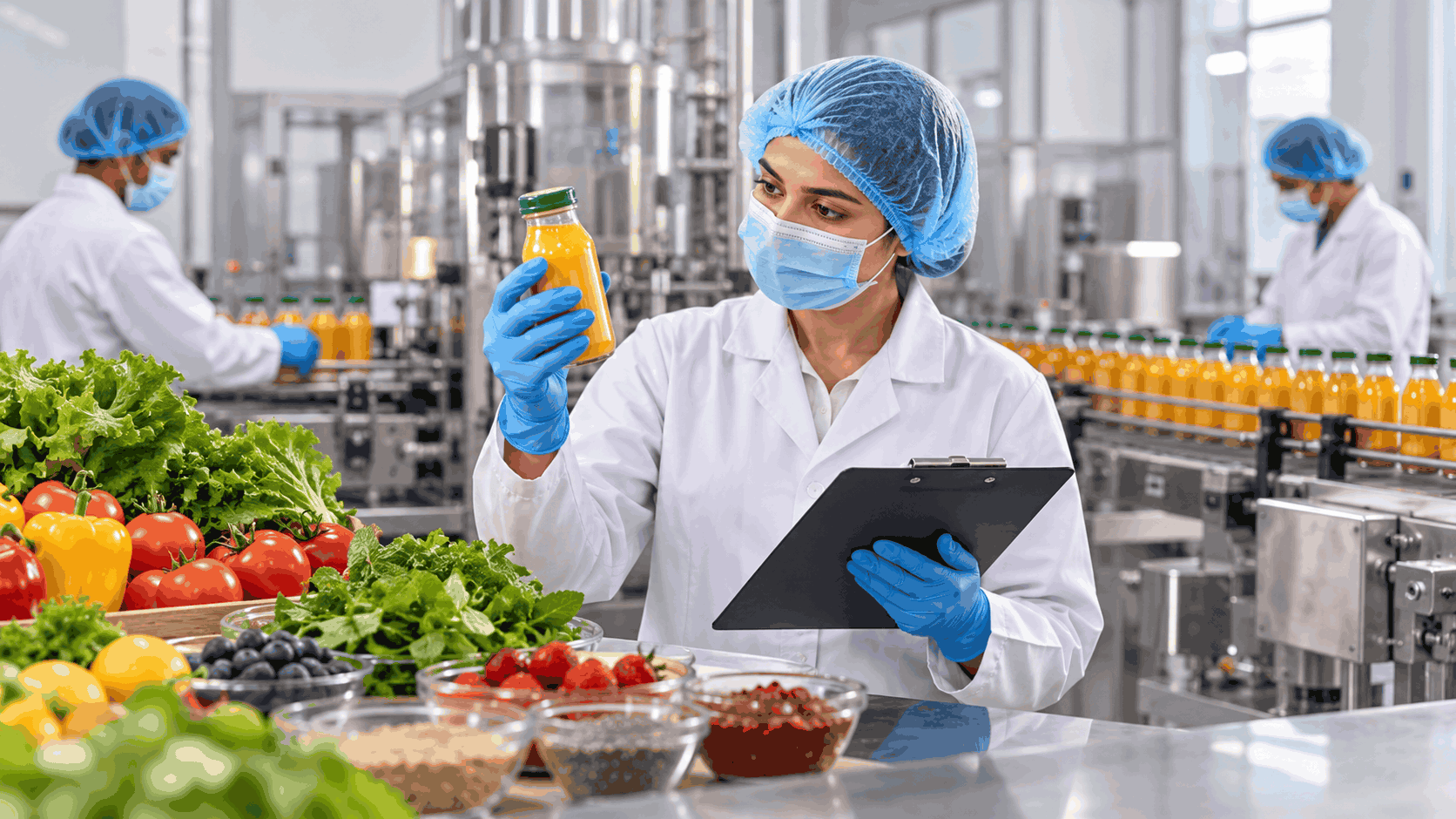
Introduction
Food safety is one of the most important responsibilities of every food manufacturing business. Consumers expect products that are safe, hygienic, and consistent in quality. Maintaining these standards requires careful control at every stage of production, from raw material sourcing and storage to processing, packaging, and distribution.
Food Safety Standards in Food Manufacturing help businesses prevent contamination, maintain product quality, and comply with applicable regulations. In India, the Food Safety and Standards Authority of India (FSSAI) establishes important regulatory requirements for food businesses. Implementing Good Manufacturing Practices (GMP), Hazard Analysis and Critical Control Points (HACCP), and effective hygiene procedures helps manufacturers create safer and more reliable production environments.
Understanding Food Safety Regulations in the Food Industry
Food manufacturing businesses must follow applicable regulations to ensure their products meet food safety and quality requirements. In India, FSSAI regulates food businesses under the Food Safety and Standards Act, 2006, and associated regulations.
Food businesses must obtain the appropriate FSSAI registration or licence according to their business category. They must also follow applicable hygiene requirements, maintain appropriate manufacturing conditions, and implement a documented Food Safety Management System (FSMS).
These requirements cover production premises, equipment, employee hygiene, food handling, storage, sanitation, and operational controls. Following the relevant FSSAI food safety regulations helps manufacturers establish organised production systems and maintain regulatory compliance.
Essential Food Safety Standards for Manufacturers
1. Good Manufacturing Practices (GMP)
Good Manufacturing Practices (GMP) form the foundation of safe food production. They establish procedures for maintaining hygienic facilities, suitable equipment, employee hygiene, and controlled manufacturing environments.
Food manufacturing safety practices include maintaining clean production areas, inspecting equipment, using approved raw materials, and following documented operating procedures. Employees should receive appropriate training to understand hygiene requirements and safe food-handling practices.
Implementing GMP standards helps reduce contamination risks and supports consistent manufacturing operations.
2. HACCP in Food Manufacturing
Hazard Analysis and Critical Control Points (HACCP) is a systematic approach to identifying, evaluating, and controlling potential food safety hazards during manufacturing.
The approach considers biological, chemical, and physical hazards that may affect food products. Manufacturers identify critical control points, establish monitoring procedures, and define corrective actions when deviations occur.
For example, monitoring processing temperatures, preventing foreign material entry, and checking packaging integrity can help minimise food safety risks. HACCP in food manufacturing encourages preventive quality management instead of relying only on finished-product inspections.
3. Employee Hygiene and Food Handling
Employees play an important role in maintaining food safety throughout production. Poor personal hygiene and improper food handling can introduce contaminants into manufacturing environments.
Food manufacturers should establish clear hygiene requirements, including regular handwashing, clean uniforms, appropriate protective equipment, and suitable access controls for production areas. Regular employee training and supervision also help strengthen food contamination prevention.
4. Sanitation and Equipment Maintenance
Clean manufacturing facilities and properly maintained equipment are essential for preventing contamination. Food processing hygiene standards require regular cleaning and sanitisation of machinery, production surfaces, storage areas, and food-contact equipment.
Manufacturers should establish documented cleaning schedules and use suitable cleaning agents according to their intended applications. Equipment should also undergo routine inspections and preventive maintenance.
These sanitation practices in food processing help maintain hygienic production conditions and protect finished products.
5. Raw Material Inspection and Quality Control
Food safety begins before production starts. Raw materials, ingredients, and packaging materials should be inspected before being accepted for manufacturing.
Manufacturers should verify supplier information, material specifications, storage conditions, and relevant quality documents. Incoming materials should be checked for visible damage, contamination, and other quality deviations.
Food quality control procedures should continue throughout manufacturing. In-process inspections, appropriate laboratory testing, and finished-product evaluations help identify potential issues before products are released.
Learn more about EXIITO's Quality Assurance processes, which cover incoming material checks, in-process controls, finished-goods inspections, and batch traceability.
Food Safety Management Systems and Documentation
A properly implemented Food Safety Management System connects hygiene procedures, hazard controls, employee responsibilities, and quality monitoring into one organised framework.
Documentation is equally important because it provides evidence that food safety procedures are being followed. Manufacturing businesses should maintain relevant records covering raw material inspections, cleaning schedules, production activities, quality checks, corrective actions, and batch traceability.
These records support internal reviews, regulatory inspections, and food safety audits. They also help businesses investigate complaints, identify recurring problems, and improve manufacturing processes.
Businesses interested in product development and manufacturing quality can explore EXIITO's Research and Development and Quality Control capabilities.
Challenges and Future Trends in Food Manufacturing Safety
Food manufacturers face several challenges when maintaining consistent safety standards. These include changing regulatory requirements, supplier-related risks, employee training needs, cross-contamination, and the cost of maintaining suitable infrastructure.
Technology is creating new opportunities to address these challenges. Digital traceability systems, automated monitoring equipment, advanced testing technologies, and quality management software can help manufacturers monitor production more effectively.
Modern manufacturing facilities are also focusing on preventive maintenance, documented procedures, and continuous improvement. Businesses that invest in employee awareness and structured food safety systems can strengthen their operations as industry requirements evolve.
Conclusion
Following food safety standards is essential for protecting consumers, maintaining product quality, and building a reliable food manufacturing business. FSSAI compliance, GMP, HACCP, employee hygiene, sanitation, raw material inspection, and proper documentation all contribute to safer production operations.
Food safety should be treated as an ongoing responsibility rather than a one-time compliance activity. By developing effective management systems and regularly reviewing manufacturing practices, businesses can strengthen product consistency and customer confidence.
Looking for a reliable food manufacturing partner? EXIITO offers food manufacturing capabilities across beverages, namkeen, makhana, and pickles, with a focus on quality-driven production and manufacturing solutions.
Explore EXIITO's food manufacturing capabilities to learn more about its product categories and manufacturing services.
Contact EXIITO Beverages today to discuss your food manufacturing, private-label, white-label, or contract manufacturing requirements.