
Introduction
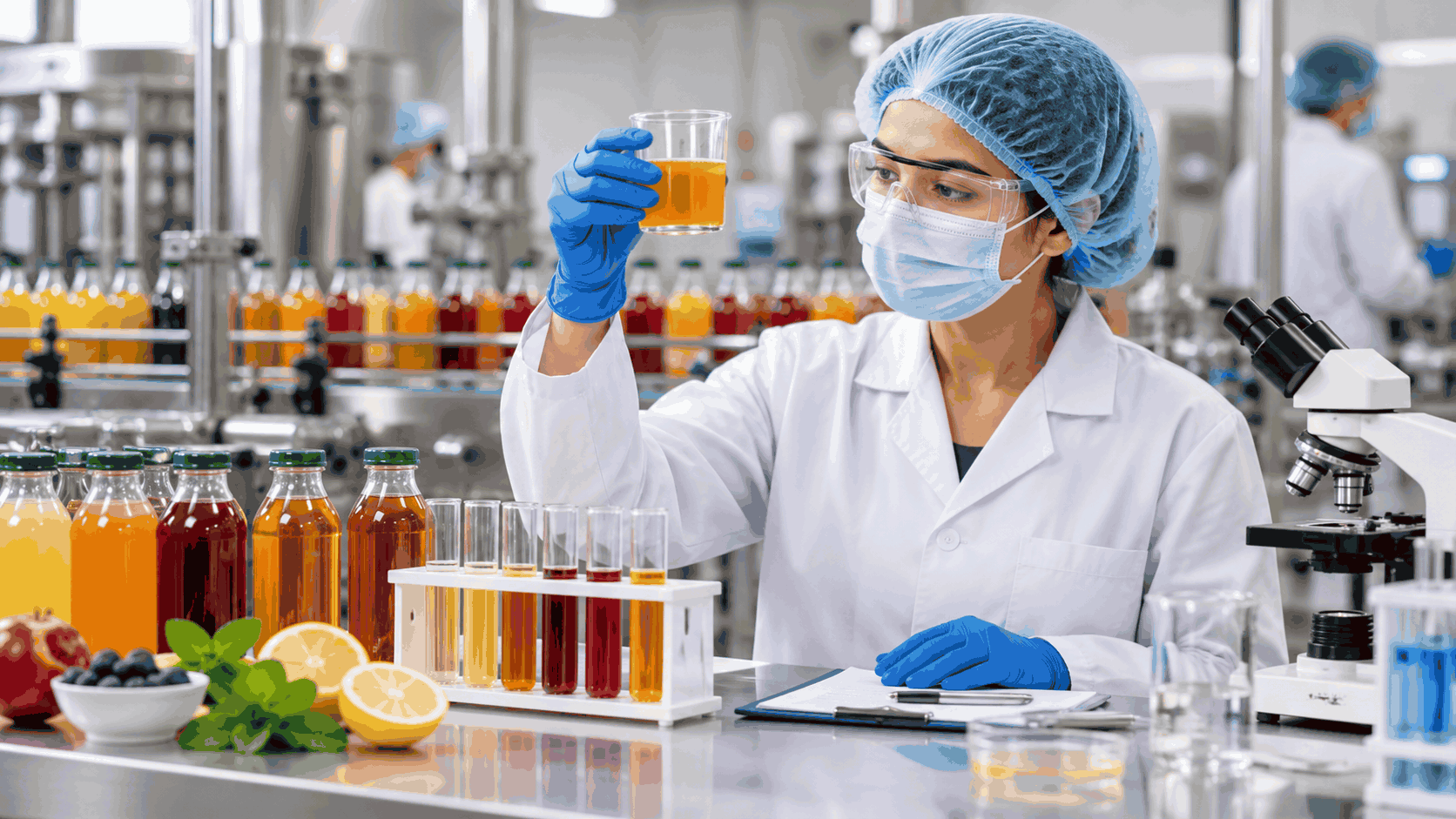
Quality is one of the most important factors in commercial beverage manufacturing. Consumers expect every bottle to deliver consistent taste, freshness, appearance, and safety. To meet these expectations, beverage manufacturers must implement effective testing procedures throughout the production process. Quality Testing in Beverage Manufacturing helps identify potential issues, maintain product consistency, and ensure that beverages meet established food safety and quality requirements.
From raw material inspection to finished product evaluation, quality testing plays an essential role in modern beverage production. Manufacturers use microbiological, chemical, and physical testing methods to assess product characteristics and maintain reliable manufacturing standards.
Why Is Quality Testing Important in Beverage Manufacturing?
Quality control in beverage manufacturing is essential for producing safe and consistent products. Even small variations in ingredients, processing conditions, or packaging can affect the final beverage. Regular inspections and testing help manufacturers identify these variations before products reach consumers.
A well-structured beverage quality assurance programme also supports regulatory compliance, improves production efficiency, reduces product wastage, and strengthens consumer confidence. Implementing appropriate food and beverage quality standards allows manufacturers to maintain consistency across different production batches.
For commercial manufacturers, quality testing is not simply a final inspection activity. It should be integrated into every important stage of the manufacturing process.
Key Quality Testing Methods Used in Beverage Production
Microbiological Testing of Beverages
Microbiological testing is an important part of beverage safety testing procedures. It helps identify microorganisms that may affect product safety, quality, and shelf life. Depending on the beverage formulation and applicable standards, testing may include total plate count, yeast and mould analysis, coliform testing, and checks for specified pathogens.
This testing is particularly important for beverages containing milk, fruit ingredients, or other components that may support microbial growth. Appropriate sampling, hygienic handling, and validated laboratory methods help manufacturers evaluate microbiological quality and identify potential contamination risks.
Chemical Testing in Beverage Production
Chemical testing helps determine whether a beverage meets its formulation and quality specifications. It may involve checking acidity, sugar concentration, preservatives, nutritional components, and other relevant chemical parameters.
These tests are useful for identifying formulation variations and monitoring ingredient consistency. Chemical analysis also helps manufacturers verify that ingredients and finished products comply with applicable food safety requirements.
Physical Testing of Beverages
Physical testing evaluates the appearance and measurable characteristics of beverages. Common parameters include colour, clarity, viscosity, texture, and the presence of unwanted particles.
For example, manufacturers producing flavoured drinks, iced tea, milkshakes, and fruit-based beverages need to maintain consistent visual and physical characteristics. Regular physical inspection helps identify unexpected changes that may indicate processing or formulation issues.
pH Testing in Beverage Production
pH testing measures the acidity or alkalinity of a beverage. It is an important quality control method because pH can influence flavour, product stability, processing requirements, and microbial growth.
Manufacturers use calibrated pH meters to monitor acidity and compare results with established product specifications. Consistent monitoring helps maintain the intended product profile and supports appropriate preservation and processing decisions.
Brix Testing for Beverages
Brix testing measures the concentration of soluble solids in a liquid, commonly used as an indicator of sugar concentration in beverages. It is particularly relevant to fruit drinks, flavoured beverages, and other sweetened products.
A Brix meter is widely used to determine the sugar concentration in liquid products. Maintaining the specified Brix range helps manufacturers achieve consistent sweetness and product formulation across batches.
Beverage Shelf Life Testing
Shelf life testing evaluates how a beverage's quality changes during storage under specified conditions. Manufacturers assess relevant characteristics such as taste, colour, aroma, pH, packaging integrity, and microbiological quality at planned intervals.
These studies help establish appropriate storage conditions and product expiry dates. Shelf life validation is especially important for commercial beverages because different formulations and packaging materials can influence product stability.
Quality Inspection Throughout the Manufacturing Process
Effective quality inspection in beverage manufacturing begins with incoming raw materials and continues through production, filling, packaging, and final dispatch.
Incoming inspections help verify ingredients and packaging materials against approved specifications. During production, manufacturers monitor critical process parameters to maintain consistency and hygiene. Finished goods are then evaluated against defined quality requirements before release.
A structured quality management system also supports documentation, batch traceability, standard operating procedures, and corrective actions when deviations occur.
EXIITO follows a quality-focused approach covering incoming checks, in-process control, finished goods quality assurance, and traceability. Learn more about its quality assurance process.
Challenges and Future Trends in Beverage Quality Testing
Commercial beverage manufacturers face challenges such as changing ingredient quality, contamination risks, production variations, and increasing consumer expectations. Maintaining consistent standards across large production volumes requires trained personnel, suitable testing equipment, documented procedures, and regular monitoring.
Technology is also transforming beverage quality assurance. Automated monitoring systems, digital batch records, advanced laboratory instruments, and improved traceability solutions are helping manufacturers identify variations more efficiently.
As the beverage industry evolves, manufacturers will increasingly focus on preventive quality management, accurate documentation, and data-driven production controls.
Conclusion and CTA
Quality testing is essential for producing safe, consistent, and reliable commercial beverages. Microbiological, chemical, physical, pH, Brix, and shelf life testing methods help manufacturers evaluate different product characteristics and maintain established quality standards.
By integrating quality checks throughout production, beverage manufacturers can reduce risks, improve consistency, and build long-term consumer trust.
Looking for a reliable beverage manufacturing partner? Explore EXIITO's beverage manufacturing solutions for product development, manufacturing, quality-focused production, and packaging support. Visit EXIITO Beverages to discuss your requirements and start your manufacturing journey.