
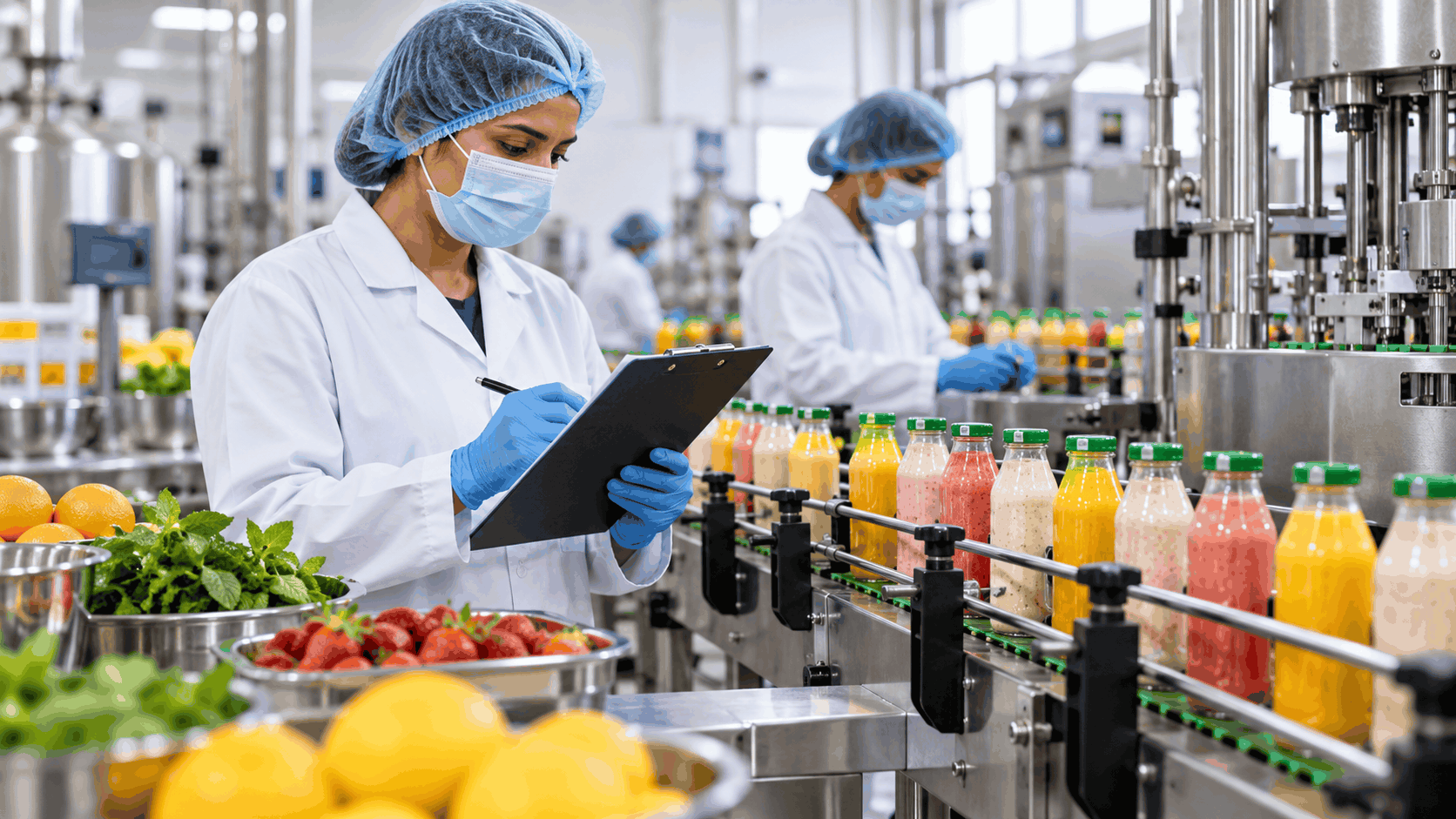
Introduction
HACCP in Food Safety plays an important role in protecting consumers and maintaining product quality throughout food manufacturing. Food production involves several stages, including raw material sourcing, processing, packaging, storage, and distribution. Each stage may introduce potential biological, chemical, or physical hazards if appropriate controls are not followed. Hazard Analysis and Critical Control Points (HACCP) provides a systematic approach to identifying, evaluating, and controlling these risks before they affect finished products. For food manufacturers, implementing an effective HACCP Food Safety System supports preventive risk management, consistent production practices, and stronger documentation. By integrating employee training, hygiene procedures, and quality inspections, HACCP helps businesses maintain stronger food safety controls throughout production.
What Is HACCP and Why Does It Matter?
HACCP is a preventive food safety methodology that identifies potential hazards, determines which steps require critical controls, and establishes procedures for monitoring and managing those risks. Rather than relying entirely on finished-product inspection, the system focuses on preventing hazards throughout the manufacturing process.
In food manufacturing, HACCP helps organisations establish clear responsibilities, monitor essential production parameters, and respond to deviations before unsafe products reach consumers. It also supports food safety management systems by connecting hazard analysis with documented procedures, corrective actions, verification, and recordkeeping.
Implementing HACCP Across Production Lines
Conducting Hazard Analysis
Effective HACCP implementation in food manufacturing begins with understanding the product, ingredients, processing methods, equipment, and intended use. Manufacturers must identify possible biological hazards, such as harmful microorganisms, chemical hazards, such as cleaning chemical residues, and physical hazards, such as metal fragments.
The assessment should consider every relevant production stage, from incoming materials to finished-product storage. Identifying risks early helps manufacturers establish appropriate preventive measures and reduce opportunities for food contamination.
Identifying Critical Control Points
Critical Control Points (CCPs) are specific steps where control is essential to prevent, eliminate, or reduce a significant food safety hazard to an acceptable level. Depending on the product and process, these may involve heat treatment, cooling, or other validated controls.
Manufacturers must establish scientifically supported critical limits for applicable CCPs. For example, a thermal processing step may require a defined time and temperature combination. These limits must be appropriate for the product and process rather than based on assumptions.
Monitoring and Corrective Actions
Regular monitoring helps confirm that critical controls remain within established limits. Trained employees should understand what to measure, how frequently to check it, and how to document the results. Monitoring records provide evidence that established procedures are being followed.
When a deviation occurs, corrective actions should address the immediate issue, assess potentially affected products, and identify the underlying cause. Products should be managed according to the established food safety procedure until their safety and disposition are appropriately determined.
Verification and Documentation
Verification confirms that the HACCP plan is properly implemented and remains effective. Activities may include reviewing monitoring records, checking equipment calibration, conducting inspections, and evaluating corrective actions. Validation is also important because it establishes that the selected controls can effectively manage the identified hazards.
Accurate documentation supports accountability, internal reviews, and regulatory inspections. Digital recordkeeping and traceability tools can make relevant information easier to retrieve, although technology must be supported by reliable procedures and trained personnel.
Benefits of HACCP in Food Manufacturing
A well-designed HACCP Food Safety System strengthens food hazard prevention by addressing risks systematically instead of depending solely on end-product testing. It helps improve process consistency, clarify employee responsibilities, and support timely corrective action when problems arise.
HACCP works alongside essential prerequisite programmes, including cleaning and sanitation, pest control, equipment maintenance, allergen management, and personal hygiene. These foundational practices help create the conditions required for effective hazard control. Together, they support food manufacturing safety standards and improve confidence among customers, business partners, and regulators.
Challenges and Future Trends in HACCP
Implementing HACCP can be challenging when employees lack appropriate training, records are incomplete, equipment requires improvement, or production processes change frequently. Small and growing manufacturers may also need to invest time and resources in hazard assessment, monitoring systems, and verification activities.
Digital monitoring, automated sensors, electronic documentation, and integrated traceability systems are making food safety information easier to manage. However, these tools do not replace sound hazard analysis, competent supervision, or effective corrective action. Manufacturers must regularly review their HACCP plans whenever ingredients, equipment, processes, or product specifications change.
Strengthening Food Safety with a Preventive Approach
HACCP in Food Safety provides a structured framework for identifying hazards, controlling critical risks, and maintaining reliable production practices. Its effectiveness depends on appropriate planning, trained employees, accurate records, and continuous verification. By integrating HACCP principles with strong hygiene practices and quality assurance, food manufacturers can strengthen contamination prevention and support consistent product safety.
For businesses seeking a manufacturing partner, understanding its quality systems, hygiene procedures, documentation practices, and traceability capabilities is an important step in evaluating food safety readiness. Explore EXIITO’s food safety and quality practices to learn more about its manufacturing approach.
Conclusion
Food safety requires consistent attention at every stage of production. A well-maintained HACCP system helps manufacturers move from reactive inspection towards preventive risk management. By strengthening hazard analysis, critical controls, employee training, and documentation, businesses can build more dependable production processes.
Visit EXIITO Beverages to explore its food manufacturing solutions, or contact the EXIITO team to discuss your manufacturing requirements.