
Introduction
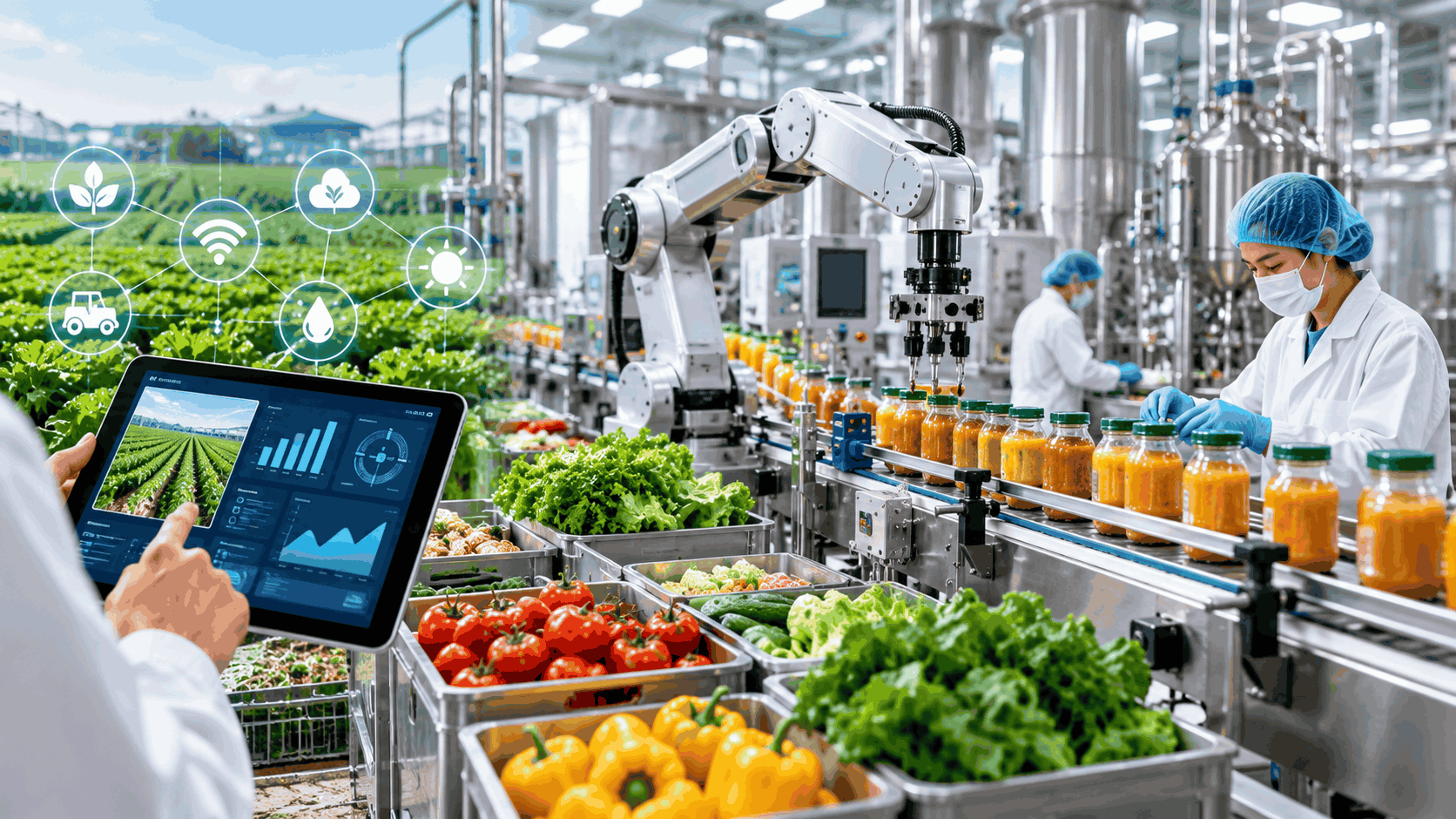
The food industry is undergoing a major transformation as businesses adopt modern technologies to improve production, quality, and efficiency. From automated manufacturing lines to data-driven decision-making, digital tools are changing how food products are developed, processed, packaged, and delivered. Artificial Intelligence in the Food Industry is becoming increasingly important as manufacturers look for practical ways to reduce waste, maintain consistent quality, and respond to changing consumer demands. As technology continues to evolve, AI and digitalization are creating new opportunities for food manufacturers, beverage producers, and supply chain partners.
How Artificial Intelligence Is Changing Food Manufacturing
Artificial intelligence helps food manufacturers analyse information, identify patterns, and make better operational decisions. By using production data, AI systems can help businesses monitor equipment performance, forecast demand, and identify potential problems before they affect operations.
For example, AI in Food Manufacturing can support production planning by analysing historical sales, ingredient availability, and customer demand. This can help manufacturers plan production quantities more effectively, reduce unnecessary inventory, and manage resources efficiently. Digital monitoring systems can also provide greater visibility into manufacturing activities. Learn more about how smart manufacturing is transforming food production lines.
The Role of Digital Transformation in the Food Industry
Digital Transformation in the Food Industry involves replacing manual or disconnected processes with integrated digital systems. These may include inventory management software, production planning tools, digital quality records, and supply chain tracking systems.
When information is recorded and shared digitally, teams can access more accurate and timely updates. This improves coordination between procurement, production, quality control, warehousing, and distribution. Digital records can also support traceability by helping businesses track ingredients, batches, and finished products throughout the manufacturing process.
For growing food businesses, digitalization can provide a stronger foundation for managing operations as product ranges and customer requirements expand. Explore more insights in EXIITO's food manufacturing and processing articles.
Food Industry Automation and Smart Processing
Food Industry Automation uses machinery, sensors, and control systems to perform repetitive tasks with greater consistency. Depending on the application, automation can support filling, weighing, mixing, packaging, labelling, and material handling.
Smart Food Processing Technology takes this further by connecting equipment with monitoring and data analysis systems. Sensors can measure factors such as temperature, pressure, processing time, and other relevant operating conditions. When these readings are monitored effectively, manufacturers can identify deviations and take corrective action sooner.
Automation can improve efficiency and reduce repetitive manual work, allowing employees to focus on supervision, maintenance, process improvement, and product quality. Read more about the role of automation in scaling food manufacturing operations.
AI in Food Quality Control and Safety
Maintaining food safety and consistent product quality is essential for manufacturers. AI in Food Quality Control can support inspection systems that analyse images, detect visible defects, identify irregularities, and flag unusual production patterns.
For instance, computer vision may help inspect packaging, check label placement, or identify certain visible product defects. Predictive maintenance systems can also analyse equipment data to identify warning signs before a breakdown disrupts production.
However, AI should complement established food safety procedures rather than replace them. Laboratory testing, sanitation, employee training, documented quality checks, and applicable regulatory requirements remain essential. Human oversight is particularly important when a decision could affect consumer safety.
Discover more about modern food safety technologies every manufacturer should know and explore food quality control and safety insights.
Digitalization in Food Production and Supply Chains
Digitalization in Food Production can improve coordination from raw material sourcing to finished product dispatch. Digital inventory systems help businesses monitor stock levels, record material usage, and identify replenishment needs. Production software can also help teams compare planned output with actual results.
An AI-Powered Food Supply Chain can use demand forecasts, inventory information, and delivery data to support purchasing and distribution decisions. Better forecasting may help businesses reduce overproduction, manage stock more efficiently, and minimise avoidable food waste.
These benefits depend on reliable data, suitable technology, and effective communication between supply chain partners. Smaller manufacturers can begin with simple digital records and gradually adopt more advanced systems as their needs develop. Businesses can also explore EXIITO's food manufacturing solutions to learn about its manufacturing services and product categories.
Benefits, Challenges, and the Future of Food Technology
The key benefits of digital adoption include improved operational visibility, more consistent processes, better resource planning, and faster access to useful information. These improvements can support productivity and help businesses respond to market changes.
Nevertheless, implementation comes with challenges. New equipment and software can require significant investment, while employee training, cybersecurity, data accuracy, and system integration need careful attention. Manufacturers should assess their priorities before investing and choose solutions that address clear operational needs.
The Future of Food Technology will likely involve wider use of predictive analytics, connected production equipment, intelligent inspection, and more integrated supply chains. Rather than adopting every new tool, successful businesses will focus on technologies that deliver measurable improvements and fit their production requirements.
Conclusion
Artificial intelligence and digitalization are reshaping the food industry by helping manufacturers make informed decisions, improve process control, and manage resources more effectively. Although technology cannot replace professional expertise or established food safety practices, it can strengthen them when implemented responsibly.
At EXIITO, innovation, product development, and manufacturing quality are important considerations in serving evolving market needs. Explore our food and beverage product range or learn more about our OEM and contract manufacturing solutions.