
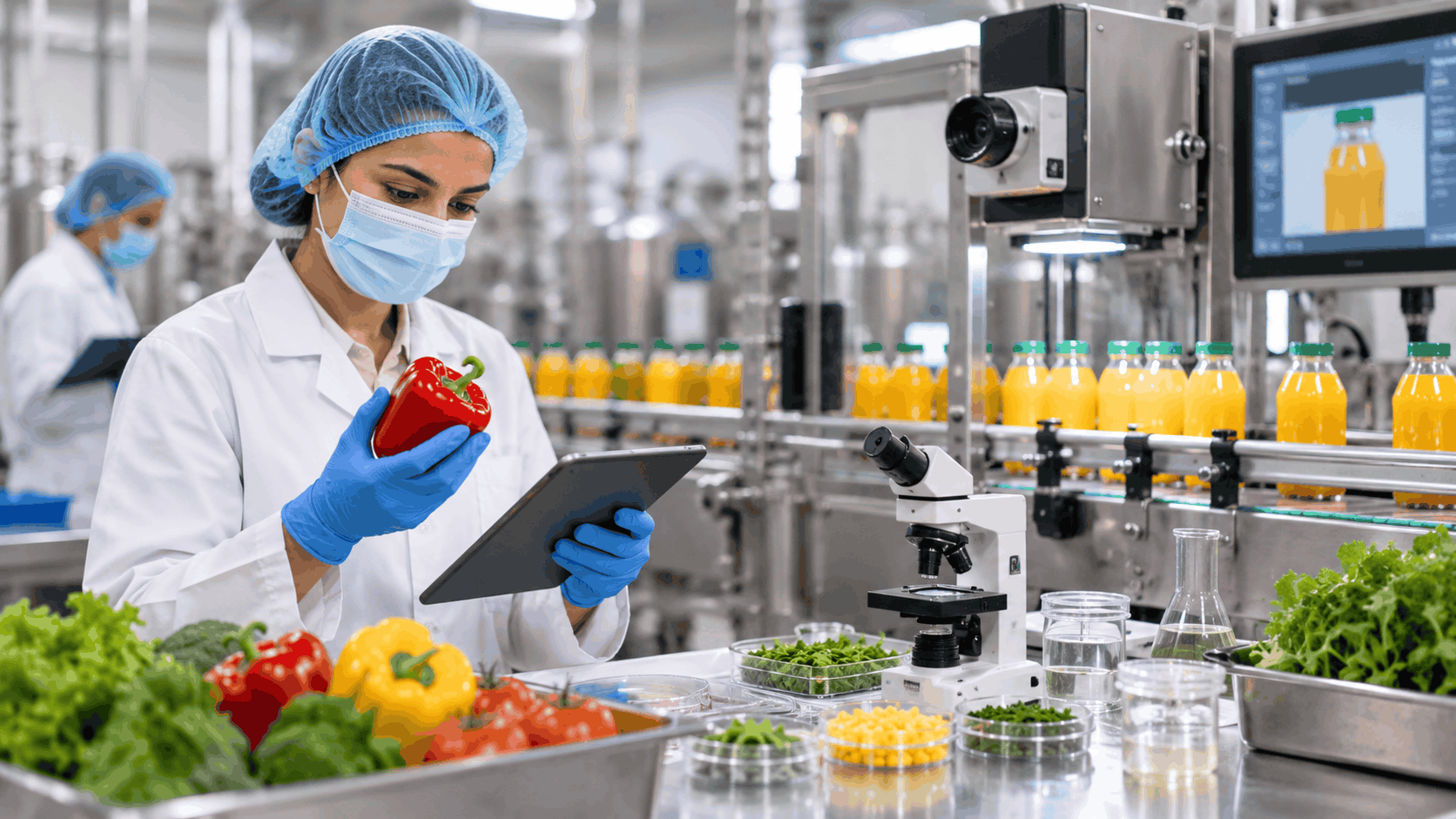
Introduction
Food safety starts well before a product reaches the consumer.. It begins with inspecting raw materials, maintaining clean equipment, monitoring processing conditions, and ensuring that products are stored and packaged correctly. A minor error at any stage of production can compromise product quality and consumer safety.
For food manufacturers, maintaining food safety becomes more challenging as production scales up. Food safety technology can help manufacturers address these challenges more effectively. Modern tools help businesses monitor production, detect potential contamination, maintain accurate records, and respond to problems more quickly.
From digital monitoring systems to automated inspection equipment, these technologies help food manufacturers improve process control and maintain consistent food safety practices.
Modern Food Safety Technologies Used in Food Manufacturing
Digital Food Safety Monitoring Systems
Temperature, humidity, and storage conditions significantly influence food quality and safety. Monitoring these factors manually throughout the day can be difficult, especially in busy production facilities.
Digital food safety monitoring systems make this work easier. Sensors can track conditions in refrigeration units, storage areas, and processing environments. If a reading moves outside the acceptable range, the system can alert staff so they can investigate the problem.
For example, if a cold storage room becomes warmer than its specified limit, an alert can help employees respond before the issue affects stored ingredients or finished products.
Digital food safety management systems help maintain inspection reports, cleaning schedules, and maintenance records in one centralized system.
Automation and Automated Inspection Systems
Manual inspection remains essential, but checking large volumes of products on a production line can be difficult. Food safety automation in food processing helps businesses carry out repetitive checks more consistently. Automated inspection systems can use cameras, sensors, metal detectors, and X-ray equipment to identify certain foreign materials, damaged packaging, incorrect labels, or products that do not meet specified requirements. For instance, a manufacturer packaging snacks or bottled beverages may use automated inspection to check packaging integrity and label placement. This enables the team to identify defects before products are dispatched from the facility. However, equipment must be properly installed, regularly maintained, and tested to ensure consistent and reliable performance.
Food Contamination Detection Technology
Food contamination can occur through physical, chemical, or biological hazards. The right detection method depends on the product and the risks associated with its ingredients and production process.Metal detectors help detect metallic contaminants, while X-ray inspection systems can identify certain foreign materials and product defects.Food safety testing methods should be selected according to a manufacturer's risk assessment and product requirements. No single piece of advanced food safety equipment can detect every possible hazard.Combining suitable testing methods with proper hygiene practices helps businesses control contamination risks more effectively.
AI in Food Safety and Quality Control
Artificial intelligence is opening up new possibilities for food quality control technology. AI-powered cameras and software can analyze product images, detect irregularities, and help production teams identify quality issues early.For example, a vision inspection system may flag a bottle with a damaged cap or a package with an incorrectly positioned label. Data analysis tools can also highlight recurring production problems that require further attention.These systems can streamline inspections and support informed decisions, but trained employees remain essential for effective quality control. Manufacturers should verify their accuracy and ensure that important safety decisions remain subject to appropriate human review.
Food Traceability Technology
Knowing where ingredients come from and where finished products are sent is essential for responsible food manufacturing.Food traceability systems enable businesses to track suppliers, ingredient batches, production dates, and distribution information efficiently. Depending on the system, these records can be linked through barcodes, QR codes, or digital batch management software.If a safety concern arises, accurate records help a manufacturer identify the affected products and determine where they have been distributed. This can make investigations and product recall procedures more efficient.Effective traceability requires accurate records and close coordination among suppliers, manufacturers, distributors, and retailers.
Benefits for Food Manufacturers and Other Businesses
Modern food safety solutions offer practical benefits across the food supply chain.
- Improved Risk Management: Regular monitoring and testing help detect potential hazards early, allowing businesses to address them before they escalate.
- Better product consistency: Automated checks help identify products that do not meet defined quality standards.
- Less paperwork: Digital records make inspections, cleaning schedules, and production reports easier to manage.
- Faster investigations: Traceability records help teams locate affected batches when issues arise.
- More informed decisions: Production data can reveal recurring problems and areas that need improvement.
- Greater customer confidence: Consistent safety practices demonstrate a commitment to product quality and consumer protection.Manufacturers can improve food safety by combining modern technology with established practices such as Hazard Analysis and Critical Control Points (HACCP).
Challenges and Future Trends
Although modern food safety technology offers several advantages, introducing it requires careful planning. Equipment and software can involve upfront costs, and employees need proper training to use them effectively.Businesses should ensure that new systems are compatible with their existing equipment and recordkeeping processes. Sensors must be calibrated, inspection systems validated, and digital records kept accurate and secure.Looking ahead, connected sensors, AI-assisted inspection, predictive analytics, and improved digital traceability are likely to play a growing role in food manufacturing. These advancements can help businesses detect unusual conditions sooner and manage production data more efficiently.Still, technology cannot replace everyday essentials such as personal hygiene, sanitation, equipment maintenance, and employee awareness. Effective food safety depends on using reliable technology alongside established safety procedures.
Conclusion
Food Safety Technology is becoming an important part of modern food manufacturing. Digital monitoring, automated inspection, contamination testing, AI-assisted quality checks, and traceability systems can help businesses manage risks and maintain consistent production standards.Manufacturers should prioritize technologies that meet their specific product requirements, production processes, and food safety needs rather than adopting every new solution. When supported by trained employees, effective hygiene practices, and regular verification, these solutions can help build a safer and more reliable food production environment.