
Introduction
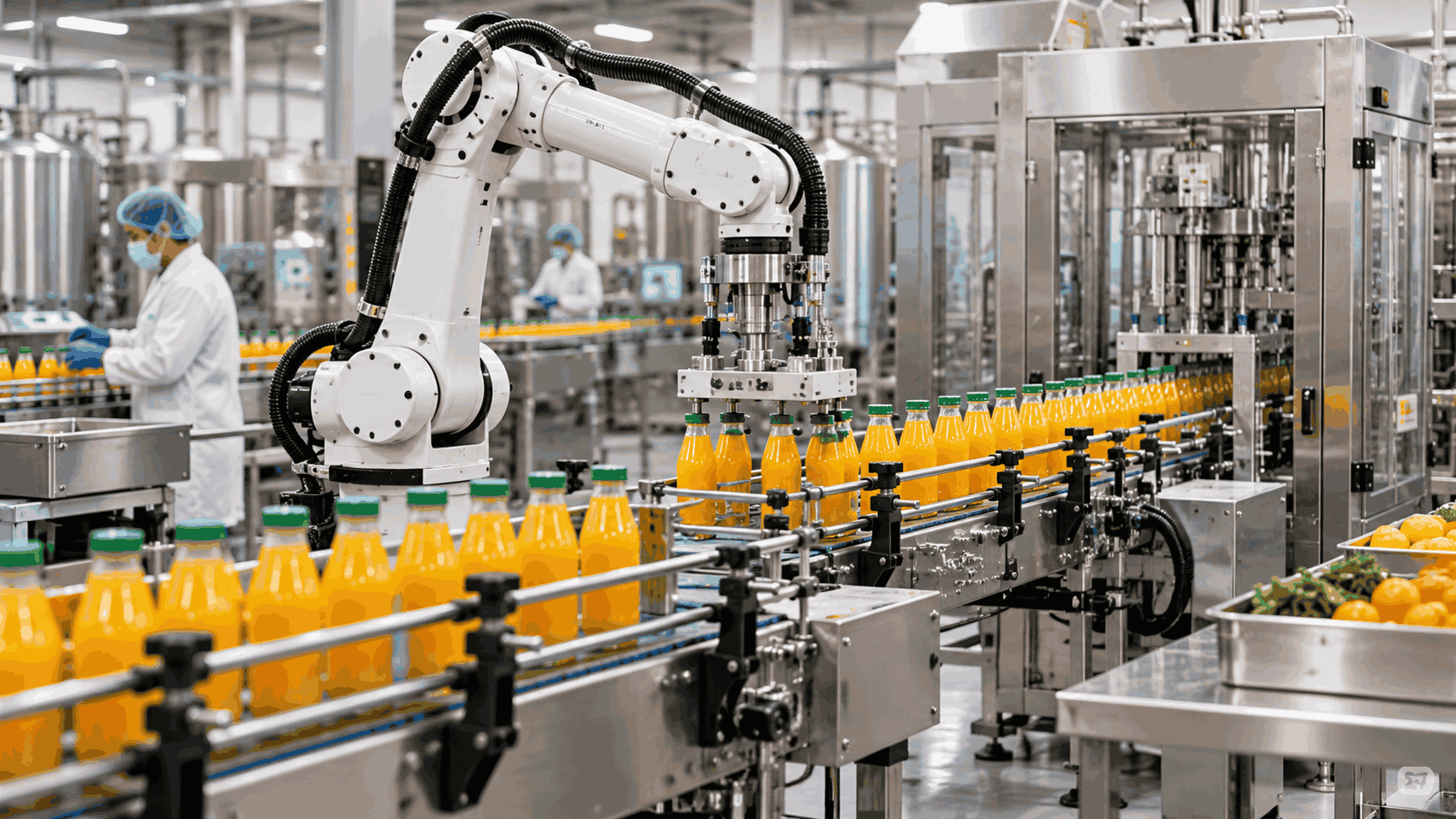
The food manufacturing industry is constantly evolving as businesses work to meet growing demand, maintain product quality, and manage production costs. With increasing competition and changing consumer expectations, manufacturers are exploring new ways to improve their operations. Food Manufacturing Automation is becoming an important part of this transformation by helping businesses streamline routine tasks, improve consistency, and manage production more efficiently.
From ingredient handling to filling, packaging, and quality inspections, automation can support several stages of food production. When implemented correctly, it allows manufacturers to make better use of equipment, time, and resources while maintaining essential food safety practices.
Understanding Food Manufacturing Automation
Food Industry Automation involves using machinery, control systems, sensors, and digital technologies to perform or support tasks that would otherwise require manual work. These systems can be used for repetitive activities such as weighing ingredients, mixing, transferring materials, filling containers, sealing packages, and labelling products.
The level of automation varies depending on the size of the manufacturing facility, product category, production volume, and available investment. Some businesses automate individual tasks, while others integrate multiple machines into connected production lines.
The main objective is not simply to replace manual labour. Instead, automation helps create more organised workflows, reduce avoidable errors, and allow employees to focus on supervision, maintenance, and quality-related responsibilities.
How Automation Improves Food Production Efficiency
Food Production Efficiency depends on how effectively manufacturers manage time, materials, equipment, and labour. Automation can improve these areas by making repetitive operations more consistent and reducing unnecessary production delays.
For example, automated weighing and dosing systems can help deliver ingredients in controlled quantities. Automated mixing equipment can maintain consistent processing conditions, while filling machines can help achieve accurate product volumes. These improvements can reduce variations between batches and support smoother production planning.
Automation can also help reduce product losses caused by manual handling errors or inconsistent operations. However, the actual benefits depend on equipment suitability, maintenance, production planning, and employee training.
Automated Food Processing and Modern Equipment
Automated Food Processing uses machinery and control systems to manage specific manufacturing activities with greater precision. Depending on the product, these activities may include washing, sorting, cutting, blending, heating, cooling, mixing, and packaging.
Modern Food Processing Equipment can support manufacturers in maintaining controlled operating conditions and improving workflow consistency. For beverage production, suitable equipment may include mixing tanks, filtration systems, processing units, filling machines, and capping systems. Other food categories may require specialised machinery based on their ingredients and processing methods.
Selecting equipment requires evaluating the complete production line. If one machine operates faster than the next stage can handle, production may experience delays. Therefore, manufacturers should consider equipment capacity, product compatibility, hygiene requirements, and maintenance needs before making an investment.
Industrial Automation and Smart Food Manufacturing
Industrial Automation in Food Processing can connect different production stages through programmable controls, sensors, and monitoring systems. These technologies help operators observe important process conditions and identify unusual changes during manufacturing.
For example, temperature sensors can monitor heating or cooling operations, while automated controls can maintain selected operating parameters within defined limits. Digital production records may also help managers review performance and identify recurring operational issues.
Smart Food Manufacturing takes this approach further by using connected equipment and production data to support better decision-making. Depending on the system, data analytics and artificial intelligence may assist with production planning, equipment monitoring, and predictive maintenance.
These technologies require reliable data, trained personnel, and clear operating procedures. Digital monitoring should support established quality and safety systems rather than replace necessary inspections.
Food Quality Control Automation
Maintaining consistent quality is essential for customer satisfaction and brand reputation. Food Quality Control Automation can support inspection and monitoring activities by reducing reliance on manual checks for certain measurable parameters.
Depending on the application, automated systems may monitor filling volumes, product weight, temperature, packaging seals, or visible defects. Digital records can also make it easier to review production information and investigate quality variations.
However, automated inspection systems must be properly calibrated, validated, and maintained. Human supervision remains important for interpreting results, investigating deviations, and ensuring that products meet the required specifications.
EXIITO describes its approach to product checks and manufacturing quality on its Quality Assurance page. Its R&D and Quality Control services also cover product development, sampling, sensory evaluation, and process trials.
Benefits and Challenges of Food Manufacturing Technology
Modern Food Manufacturing Technology can help businesses improve production consistency, reduce repetitive manual work, manage resources, and increase operational visibility. Automation may also support better production scheduling and reduce avoidable downtime when equipment is properly integrated.
Despite these advantages, implementation can involve high initial investment, equipment maintenance, system integration, and employee training. Smaller manufacturers may find it more practical to automate specific production bottlenecks before investing in a complete automated line.
Businesses should assess their production requirements, expected benefits, operating costs, and available technical support before choosing a solution.
The Future of Food Manufacturing
The Future of Food Manufacturing is likely to involve greater use of connected machinery, intelligent monitoring, robotics, and data-driven production planning. These developments may help manufacturers respond to changing demand while improving process visibility and resource management.
However, successful automation will continue to depend on the right combination of technology, trained employees, equipment maintenance, and food safety procedures. Manufacturers that adopt solutions according to their actual operational needs can build more reliable and adaptable production systems.
Conclusion
Food Manufacturing Automation is helping the food industry improve productivity by streamlining repetitive tasks, supporting consistent processing, and strengthening production control. From automated equipment to smart monitoring systems, these technologies offer opportunities to improve efficiency while maintaining product quality and safety.
The most effective approach is to identify production challenges, select suitable equipment, and combine automation with skilled employee supervision and strong quality practices.
Looking for a manufacturing partner for your food or beverage product? Explore EXIITO’s manufacturing services to learn about its product development and manufacturing solutions. You can also contact the EXIITO team to discuss your product concept and manufacturing requirements.