Introduction
Launching a food brand involves more than creating an attractive logo and choosing a product name. Businesses must also develop suitable products, source quality ingredients, establish reliable manufacturing arrangements, and meet applicable food safety requirements. For entrepreneurs who want to enter the food industry without setting up their own production facility, Private Label Food Manufacturing can offer a practical business model.
Through this approach, businesses work with an established manufacturer to produce food products that are marketed and sold under their own brand name. It allows new entrepreneurs to focus on branding, sales, distribution, and customer relationships while working with a manufacturing partner for production.
What Is Private Label Food Manufacturing?
Private Label Food Manufacturing is an arrangement in which a manufacturer produces food products for another business, which then sells them under its own brand. The products may follow an existing formulation or be developed according to the brand owner's requirements, depending on the manufacturer's capabilities.
For example, a new business may want to introduce packaged snacks, beverages, sauces, or other food products without investing in a complete manufacturing setup. By partnering with a suitable Private Label Food Manufacturer, the business can explore production options while building its own market identity.
This model is useful for startups, retailers, distributors, and established businesses looking to expand their product portfolios.
How the Private Label Food Manufacturing Process Works
The process generally begins with identifying the product category and understanding the target market. Businesses should research customer preferences, competitor offerings, expected pricing, and product positioning before approaching manufacturers.
The next stage involves discussing product specifications, ingredient preferences, flavour profiles, packaging formats, and expected production quantities. These details help the manufacturer assess feasibility and provide suitable production options.
Once the initial requirements are understood, product samples may be developed and evaluated. Any necessary adjustments to taste, texture, appearance, or formulation can be discussed before final approval. After the product specifications are agreed upon, the manufacturing arrangement, pricing, minimum order quantity, and production schedule can be confirmed.
The final stages involve production, quality checks, packaging, and preparation for dispatch. A clearly defined process helps both parties understand their responsibilities.
Custom Food Product Development and Product Selection
Choosing the right product is an important decision when Starting a Food Brand. Businesses should consider market demand, ingredient availability, manufacturing feasibility, shelf-life requirements, packaging suitability, and target customers.
Custom Food Product Development allows brands to work towards a product that matches their intended taste, formulation, and market positioning. Depending on the manufacturer's capabilities, development may involve selecting ingredients, adjusting formulations, conducting sample trials, and evaluating product characteristics.
For beverage brands, this may include developing iced tea, coffee, fruit-based drinks, or traditional beverages. Food businesses may explore snacks, seasonings, sauces, and other packaged products.
EXIITO provides information about its product development capabilities through its R&D and Quality Control services.
Choosing the Right Manufacturing Partner
Selecting a reliable manufacturing partner is one of the most important decisions in a Private Label Food Business. Businesses should evaluate the manufacturer's relevant product experience, production capacity, quality procedures, ingredient sourcing practices, and communication process.
It is also important to discuss minimum order quantities, sample availability, pricing, lead times, packaging options, and documentation requirements before confirming an arrangement.
Some businesses choose Food Contract Manufacturing, where an external manufacturer produces products according to agreed specifications and commercial terms. The exact arrangement may differ from private labelling, so both parties should clearly define product ownership, formulation responsibilities, branding, and other contractual conditions.
Explore EXIITO's manufacturing services to understand its food and beverage manufacturing support.
Food Manufacturing Process, Quality, and Packaging
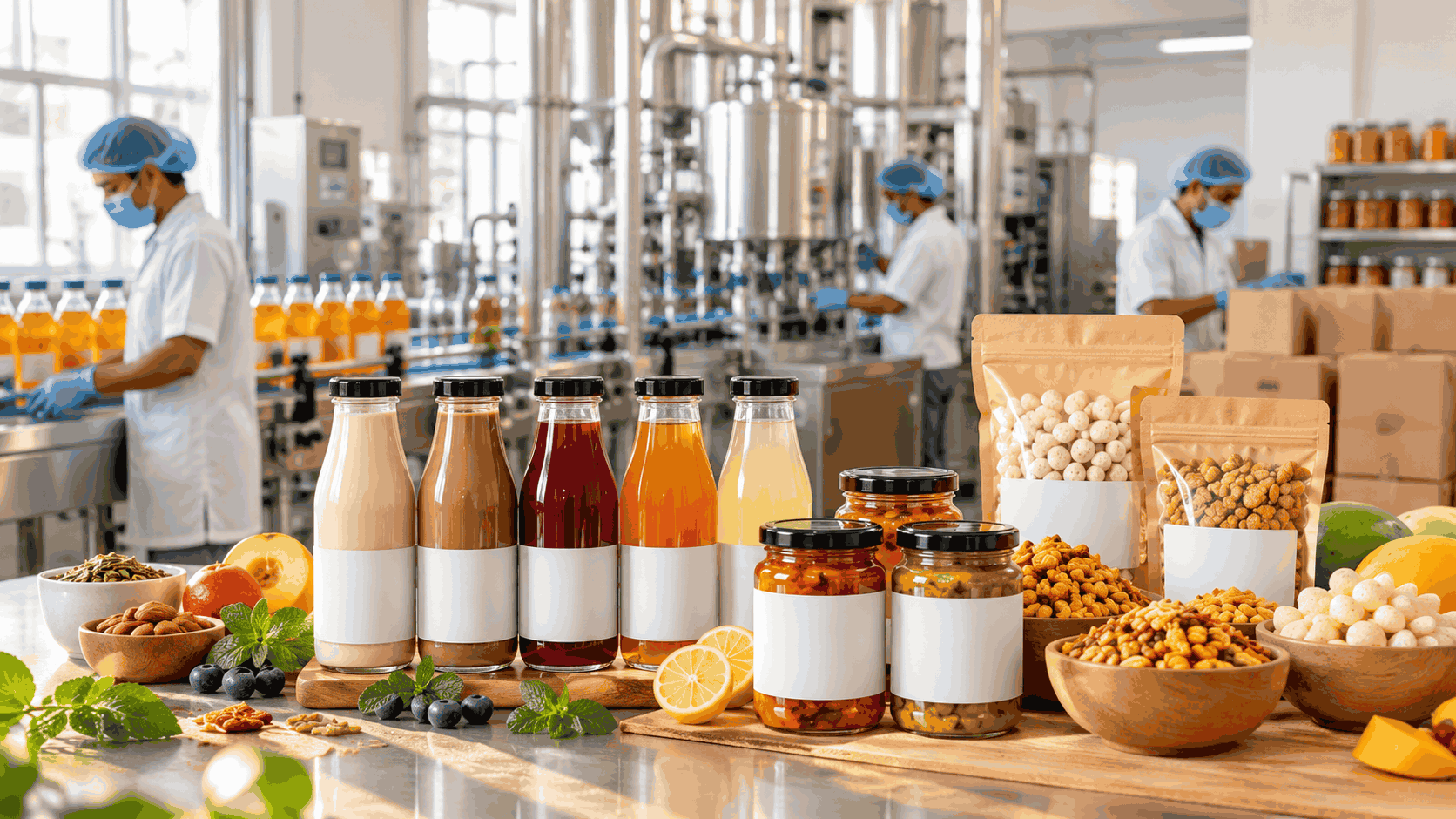
A consistent Food Manufacturing Process helps ensure that products are produced according to approved specifications. Depending on the product, manufacturing may involve ingredient inspection, weighing, mixing, processing, filling, sealing, labelling, and finished-product checks.
Quality management should cover incoming raw materials, production conditions, packaging materials, and finished goods. Businesses should discuss relevant quality documentation, testing requirements, shelf-life validation, and applicable food safety regulations with their manufacturing partner.
Private Label Packaging also plays an important role in product presentation and protection. The packaging format should suit the product, storage conditions, transportation requirements, and target market. Labels must provide accurate product information and comply with applicable regulations.
EXIITO outlines its quality approach on its Quality Assurance page.
Benefits and Challenges for New Food Brands
One of the main benefits of private labelling is that businesses may avoid the substantial investment involved in establishing their own manufacturing facility. It can also provide access to existing production infrastructure and manufacturing expertise, depending on the partner selected.
However, new brands must consider challenges such as minimum order quantities, product development costs, supplier dependence, changing ingredient prices, and competition. A product that performs well during sampling may also require further evaluation before commercial production.
Businesses entering the Private Label Business in India should pay particular attention to applicable FSSAI licensing and labelling requirements, product specifications, shelf-life information, and commercial agreements. Requirements can vary according to the product and the business arrangement.
Conclusion
Private Label Food Manufacturing offers entrepreneurs an opportunity to introduce food products under their own brand without necessarily establishing an independent production facility. With careful product selection, suitable manufacturing support, effective packaging, and consistent quality management, new businesses can build a structured foundation for entering the food market.
The key is to choose a manufacturing partner whose capabilities match the product requirements and business goals.
Planning to launch your own food or beverage brand? Explore EXIITO Beverages to learn about its manufacturing and product development services. You can also contact the EXIITO team to discuss your product concept, formulation, packaging preferences, and manufacturing requirements.